Boom! Bang! God!
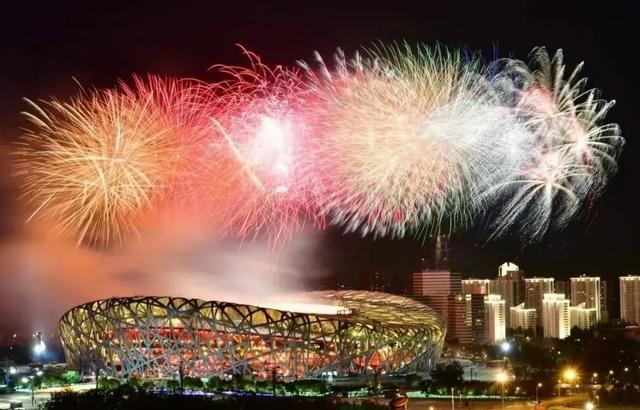
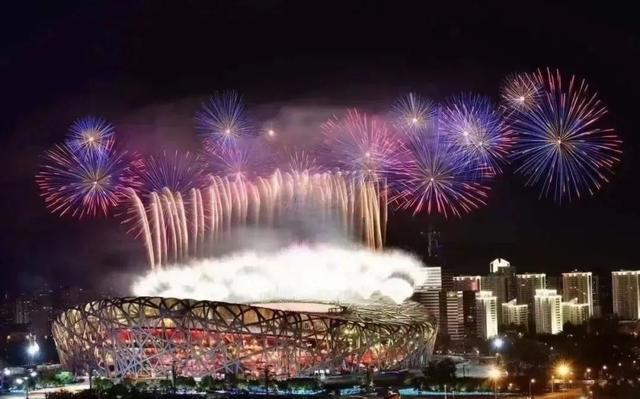
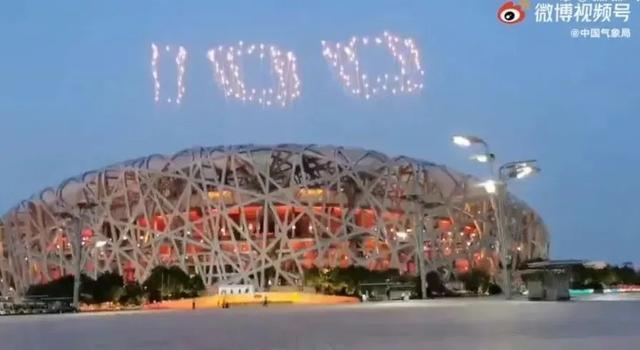
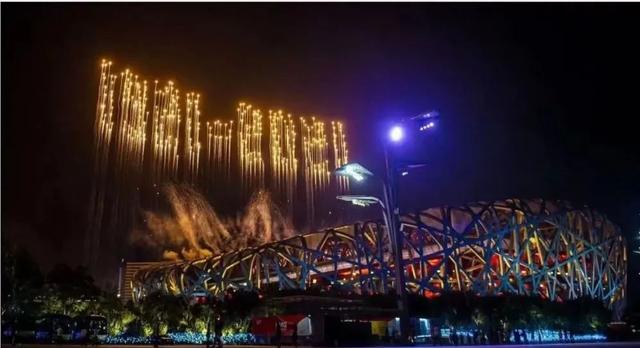
The fireworks set off in the Bird’s Nest the other night must have surprised you in front of the screen. What, you didn’t see it? Don’t panic! This will take you back to the fireworks you missed.
1. The origin and history of fireworks
Fireworks, also known as fireworks, fireworks, firecrackers, fireworks and so on, originated from gunpowder, one of the four great inventions in ancient China. The exact time when fireworks were produced is not available, but Emperor Yangdi of Sui Dynasty wrote a poem "Lights shine on trees, and seven flowers bloom" ("Poem on Building Lights in the thoroughfare on the 15th day of the first month and Rising to the South Tower at night"), which tells the scene of setting off fireworks (that is, fireworks) during the Lantern Festival. This shows that at least in the Sui and Tang Dynasties, there was a rudiment of fireworks used to celebrate festivals and entertain people.
The "shelf fireworks" or "bonsai fireworks" in the Song Dynasty have reached a considerable scale. Xin Qiji, the representative of the unrestrained poet, once wrote the words "Thousands of trees bloom in the east wind night, and the stars are like rain" ("Jade Case, Yuanxi"), which is a vivid and vivid description of it.
During the Yuan and next years, many poets and writers have written accounts of firecrackers and fireworks. For example, Zhao Meng’s poem "Giving Fireworks" in the Yuan Dynasty "is as brilliant as stars and as loud as fire." It describes the lively scene of setting off fireworks on the fifteenth day of the first month, comparing fireworks to meteors and fire attacks.

With the continuous improvement of the production technology and scale of fireworks in the Qing Dynasty, fireworks not only appeared in palaces and the residences of dignitaries, but also became a habit for people to set off fireworks during festivals. In order to strengthen the management of fireworks, the Qing Dynasty’s "Laws of the Qing Dynasty" stipulates that all fireworks workshops must be approved by the government before they can be listed, and fireworks must be set off in specified places.
2. Why can fireworks explode?
After understanding the history of fireworks, what is it? Xiaobian, this will take you to understand.
Fireworks,It is an object made of gunpowder and metal powder, which will burn, explode and bloom with colorful light after being ignited by fire, and is usually used outdoors.

black powder
The principle of fireworks is similar to that of firecrackers, and its structure includesblack powderandYaoyin(fuse) Black powder is what we often call "one sulfur, two nitrates and three charcoal":
S + 2KNO3+ 3C = K2S + N2↑+ 3CO2↑
The condition of the above reaction is ignition, and sulfur and potassium nitrate are oxidants.
Sulfur,It is a light yellow brittle crystal or powder with a special odor. It is a flammable solid, which can be made from natural sulfur ore or pyrite, carbon and oxygen at high temperature.

sulphur
potassium nitrateIt can be extracted from nitrate soil. The main principle is to use potassium ions in plant ash to replace sodium ions in nitrate soil, thus generating potassium nitrate. Contact with organic matter can cause combustion and explosion.

potassium nitrate
charcoalIt is the dark brown or black porous solid fuel left by incomplete combustion of wood or wood raw materials or pyrolysis under the condition of air isolation.

charcoal
A heat source is provided externally to ignite the fuel. The oxygen released by the decomposition of potassium nitrate makes charcoal and sulfur burn violently, producing a lot of heat, nitrogen, carbon dioxide and other gases instantly. The chemical reaction caused the explosion, and most of the energy released during the explosion was converted into light and appeared in our eyes.

3. How do fireworks?
HeavenAnd produce different colors?
Fireworks are generally sealed, and after the explosion reaction, a lot of heat and gas will be generated. In a closed environment, due to the poor sealing of the upper and lower ends, gas will be ejected from below. According to Newton’s third law, the fireworks get upward power, and the internal energy of gunpowder is converted into heat energy, kinetic energy and potential energy of the fireworks. When the gunpowder is exhausted, the fireworks bomb continues to rise due to inertia, and at this time, the internal explosives are ignited and explode in the sky.

Internal structure of fireworks
In the process of making fireworks, some luminescent agents and chromophores are usually added to make fireworks emit colorful colors. Both the luminous machine and the chromogenic agent contain metal compounds, and different kinds of metal compounds will emit different colors of light when burning. This is what we often say.flame reaction.

Flame reaction color of common metals
Xiaobian reminds everyone to pay attention, flame reaction isphysical changeDon’t remember wrong.natureEvery element has its own unique spectrum. When heated, atoms’ electrons will absorb energy and jump to a higher unstable energy level, and then return to the previous low energy level and release electromagnetic waves with a specific wavelength. The electromagnetic waves released by some metals are just in the visible light band, and we see colorful colors.

A colorful fireworks display at a party
4. Xiaobian has something to say
Presumably, now that you have a better understanding of fireworks, you can tell (chui) to (xu) other people (bo) the next time you watch fireworks. Fireworks have a history of thousands of years in China, and it has long been our habit to set off fireworks on holidays. Everyone should abide by relevant regulations and pay attention to safety when setting off fireworks ~
Finally, let’s enjoy the beautiful fireworks again ~


Note: The pictures in the article come from Baidu, Weibo and other networks; If there is any infringement, please contact to delete it.
Source: Institute of Semiconductors, Chinese Academy of Sciences
Editor: dogcraft
Reporting/feedback