Taiping Heavenly Kingdom-Christian or Heresy: Europeans’ Understanding of God’s Religion
[Editor’s note]2021 is the 170th anniversary of the Taiping Heavenly Kingdom jintian uprising. The Paper Liu Chen, assistant professor of the Department of Private History and Peking University History, invited scholars at home and abroad to write a series of manuscripts to introduce readers to the new direction and achievements of the research on Taishi, hoping to help related research.
Through the efforts of predecessors, a large number of relevant materials have been excavated and published after the Taiping Heavenly Kingdom established Nanjing as its capital. Most of these historical materials are written by Jiangnan literati, and all of them describe Taiping Army as a "thief". Some of them are western-language materials recorded by missionaries after their visit to the Taiping Heavenly Kingdom, which mainly describes the activities of the Taiping Heavenly Kingdom after its March to Shanghai in the 1960s. This period has been the decline of the Taiping Heavenly Kingdom, and the discipline of the soldiers was lax. Most of the data described the Taiping Heavenly Kingdom, which was very different from that before the Tianjing Incident.
The materials introduced in this paper have never been noticeable in the past. In the 1950s, Europeans introduced and commented on the materials of the Taiping Heavenly Kingdom, which are currently collected by George Fornest Morrison; in oriental library, Japan. 1862-1920) library. These new historical materials mainly show the religious orientation of the Taiping Heavenly Kingdom, but also some scenes describing people’s life under the rule of the Taiping Heavenly Kingdom, especially some portraits worthy of attention.
Revolution in China: Causes of Revolution.
The first book to be introduced is The Chinese Revolution: The Causes Which Led to It. There is a portrait on the cover of the book, with the cross as a weapon (Figure 1), which reflects the expectations of Europeans for the Taiping Heavenly Kingdom at that time, hoping that it would be a Christian movement to civilize China. The book is strongly impressed by two illustrations, Rejoicing at Nanking after the Siege (Figures 2 and 3).
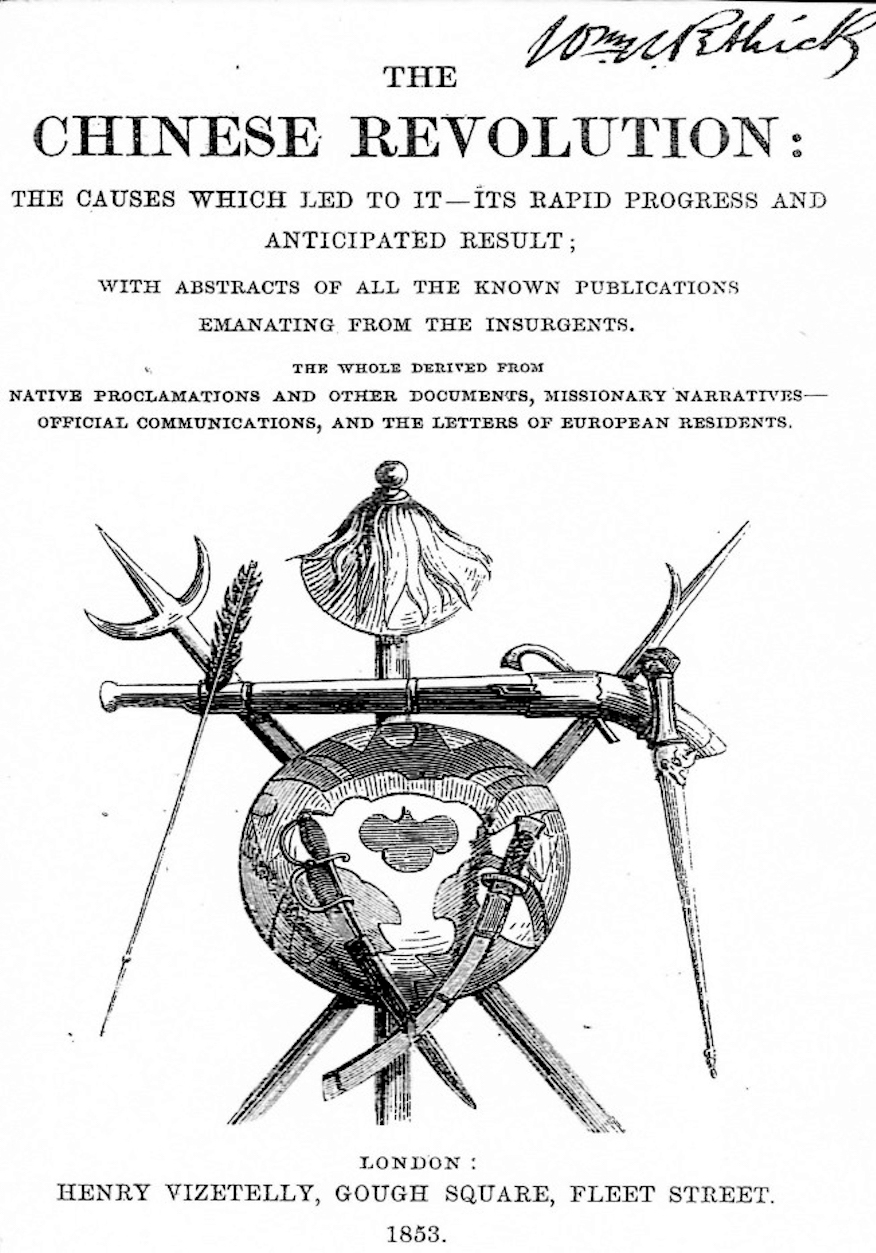
Figure 1 The cover of "Revolution in China: Causes of Revolution"
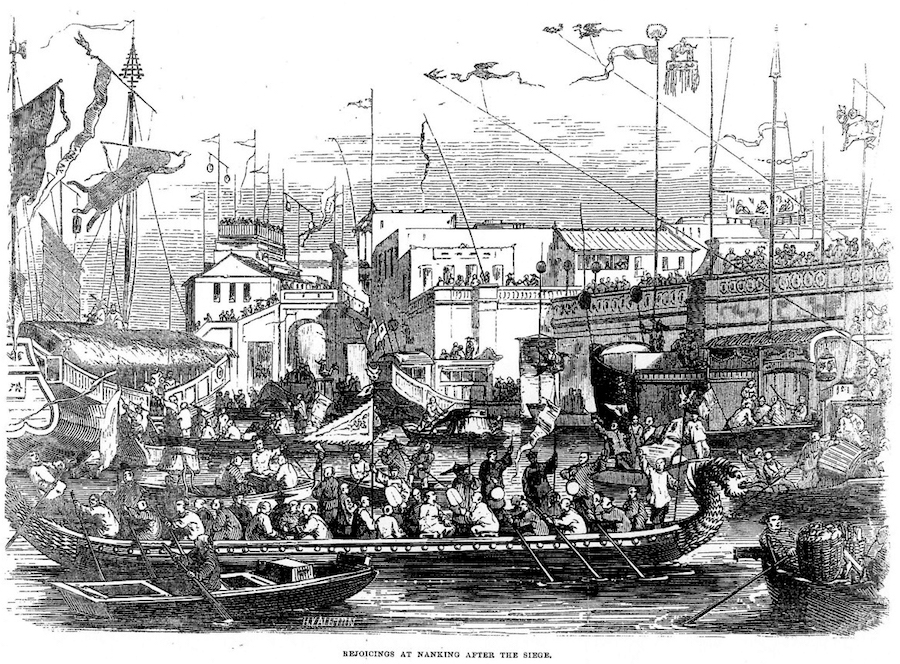
Fig. 2 One of Celebrating the Occupation of Nanking is contained in the anonymous Revolution in China: Causes of the Revolution.
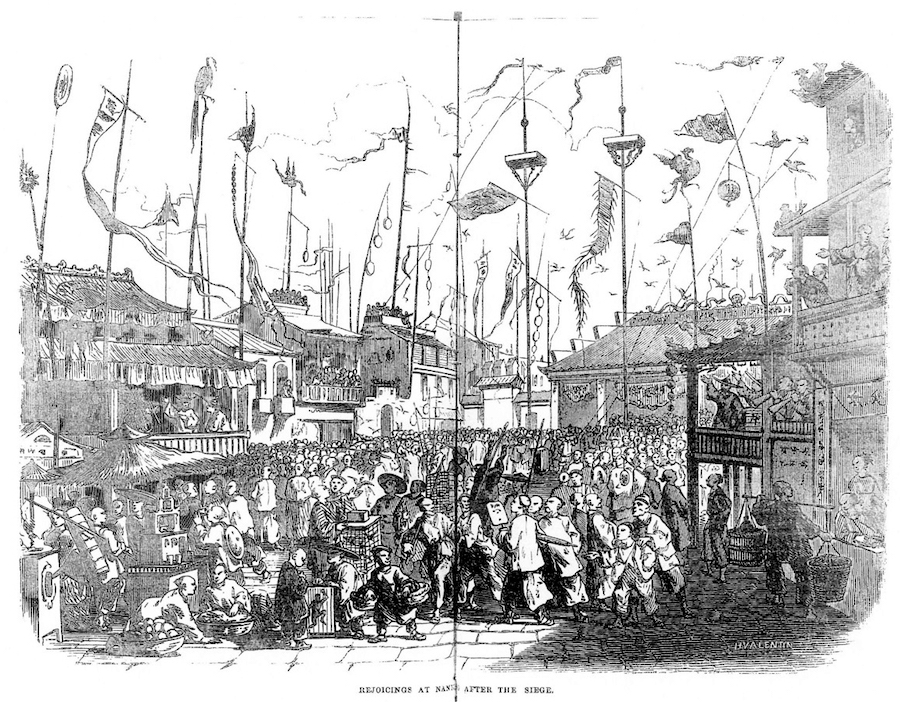
Fig. 3 Celebrating the Occupation of Nanking (Part II) is published in the anonymous Revolution in China: Causes of the Revolution.
The author of the book is unknown. From the preface, it can be seen that the author has not visited Nanjing. However, in the fifth chapter "Going to Nanjing", there is a detailed description of Nanjing by the British minister S.G.Bonham. It can be inferred that the author described the vibrant appearance of Nanjing at that time according to the minister’s report.
This book is notable for meeting with T.T.Meadows in Nanjing with Lieutenant Sprat, the British captain in Wei Changhui, the northern king. He described that the Taiping Army had a strong sense of mission, the Qing army was incompetent, the Taiping Army was supported by the people, and was keen to break the existing social order, especially the idolatry. Now he described it as follows:
They believe they have a mission from heaven to kill all the Mantchoos, and they certainly put this in execution as far as they can; and, without attempting to justify this practice, I believe that nothing short of driving the Tartars out of the country can make civilization progressive in China……
Confidence was said to be on the increase among the old population, and they were gradually returning to their homes, and I fully believe this to be the case, as we saw many carrying furniture and clothes, etc., into the city. We observed, also, that the houses of the better classes of Chinese were sealed up by the insurgent chiefs, I fancy to prevent their being plundered; not so those of the Mantchoos, which they evidently consider fair game─the disgorgement of unjust gain and plunder from them for other Chinese. Their clear principle is, China for Chinese.(p.127)
From this, it can be seen that the generals of the Taiping Heavenly Kingdom believe that it is a mission entrusted by God to destroy all Manchus. Although they didn’t use theory to justify this behavior, Sprat also thought that the Qing Dynasty should be expelled for the sake of China’s "civilization progress". In addition, the description that they saw that Nanjing’s population was gradually recovering and people were moving their belongings and clothes to the city gave a clear message that this was "China of Chinese", and it was unreasonable to blame those rich people whose mansions were occupied by the leaders of Taiping Army and their property was confiscated.
Secondly, Sprat pointed out that people in the Taiping Heavenly Kingdom have strict ethical norms, they try to separate men and women, and their courts are open to litigants, which is different from the practice of torture in the yamen of the Qing government. People call Taiping Army "Holy Army", Nanjing "Holy Capital" and "Brothers" to each other. Sprat also made the following comments on the incident of killing the flag bearer when the Taiping Heavenly Kingdom occupied Nanjing:
It is horrible to think that they cut off 20,000 Mantchoos, even to the infant at breast, but they seem hostile only to them; but it is still more horrible to think that the Mantchoos, in two of the many provinces, cut off as many in the name of justice within the year(we know of 2,000 in six weeks); and this in the name of justice! The former is the exception, the latter is the rule. It may prove the least sanguinary practice in the end. Like Cromwell’s severity at Drogheda, it has struck terror into their opponents; the Mantchoos are chapfallen and almost afraid to approach them; they say that six of them would beat any twenty imperialists; They talk of their strength, when we know a multitude of them are but boys, and or their red eyes, etc.
If they succeed,─and I fancy they will, and soon─they will deliver three hundred millions from the grossest of immoralities, the most grovelling of idolatries, and the most grinding of tyrannies. China will be opened to light, life and civilization, all which will be thrown with all their influences and importance into the Anglo-Saxon scale.(pp.128)
Sprat was really horrified at the massacre of more than 20,000 banners, including children, by the Taiping Army, but the targets of the massacre by the Taiping Army were limited to hostile people. He believes that the Taiping Army’s practices are different from those of the Qing Dynasty in the name of justice during this year. The massacre of Taiping Army was a case. On the contrary, the Qing Dynasty regarded the massacre as a means of rule, which was even more terrible. This is quite different from the view of E.G Fishbourne, who visited Nanjing at the same time. Fei did not believe that such an incident had happened, but Sprat’s view was actually relatively calm. Sprat also pointed out that after the Nanjing incident, the Manchu people were depressed and did not dare to confront the Taiping Army. On the contrary, even children in the Taiping Heavenly Kingdom were not afraid of the Qing Army at all. According to these facts, Sprat thinks that if the Taiping Heavenly Kingdom succeeds, 300 million people in China may be liberated from immoral, idolatrous and autocratic rule, and a civilization like that of Europeans will emerge, so he is full of expectations.
Wen Han, the British minister, and his party went to Zhenjiang after their visit to Nanjing, met with Luo Outline, exchanged some views, and discussed the prospect of Britain’s cooperation with or war with the Taiping Heavenly Kingdom in the future. This part of the content is basically the same as that described in Fei Shenbang’s book Impression of China. At that time, English historical materials often quoted each other, but from the time of publication, the content of this book can be considered to be relatively primitive. Chapters 5 and 9 of this book and The Doctrines of the Insurgents introduce the documents of the Taiping Heavenly Kingdom, Medhurst’s comments and the pastor’s letters published in the North China News, and also introduce Yang Xiuqing’s essays included in the Issuing Letters, recounting Yang Xiuqing’s proposition of expelling Manchus who were idolatrous and worshiping God.
From the foregoing curious documents, we are justified in inferring that there is evidently a tingle of fanaticism and of imposture in the religious cry raised by the insurgents, for, while they profess to venerate the religion of Jesus Christ, they do not scruple to style their own leader the younger brother of our load, who, they say, came down from heaven for the instruction of mankind in the Ting-yew year(1837), so that, although the foundation of their faith may be Christian, there is nothing to show that the superstructure is not as extravagant a superstition as Mormonism itself; and, as in the course of this narrative we have too frequently seen, they proselytize by massacre as much as by faith. Their belief in a special mission to destroy the Mantchoos—man, woman, and child , so that there may not be left a sprout for the race to reproduce itself—must certainly prove a bar to our perfect sympathy with them; and we are not surprised at the assiduity with which the English are recommending to their notice the New Testament in preference to the Old.(pp.166)
From this, the author believes that there are pains of fanaticism and fraud in the religious cry of the Taiping Heavenly Kingdom. Its foundation is Christianity. Although they are not as superstitious as Mormonism (a Christian sect that appeared in the United States in the 19th century), they use faith and cruelty to force others to convert. The Taiping Heavenly Kingdom took the mission of eliminating Manchu, and this belief became a stumbling block for Europeans to sympathize with them. It is understandable that the British advised them to attach importance to the New Testament and not to believe in the Old Testament. In other paragraphs, the book also compares the strong aggressiveness in the teachings of the Taiping Heavenly Kingdom with Islam and Mormons, and has doubts about the Taiping Heavenly Kingdom’s revenge on the flag bearer, polygamy (the lust of the leaders) and the desire for sovereignty.
Chapter 10 of this book "On the Political and Commercial Aspects of Revolution" predicts that after the continuous development of the Taiping Heavenly Kingdom, the demand for merchants to carry gold conveniently will continue to increase. Legalization of opium trade in Qing Dynasty will bring great influence to India and Britain (East India Company). It also pointed out that, unlike the progress of the revolution, the export volume of tea and inland commodities will decrease. In Chapter 11, "The Present Situation and Future of Guangdong and Beijing", the author has seen that under martial law, due to the influence of secret societies, Guangdong residents will appear anti-Qing movements. Rich people will take their property out to take refuge, Guangdong will be easily occupied, and once Beijing falls, Guangdong people will support the Taiping Heavenly Kingdom.
What is more interesting is the author’s account of Beijing. Unable to support the huge military expenditure, many banks have closed down one after another, and the price of rice has soared, which has dealt a great blow to the poor. Beijing’s grain has always relied on the transportation of the Grand Canal, and recently some maritime transportation has been opened. However, since the fall of Nanking, the Grand Canal can’t be transported, so we have stepped up planning to transport rice from Taiwan Province. However, it is doubtful how effective it is. The Qing government, which was in financial difficulties, confiscated the property of the defeated imperial envoys Sai Shang ‘a and Xu Guang ‘an, and executed some military generals. This was in fact a government suicide. Lu Jianying’s family, who was killed by the Taiping Army in Nanjing, was also severely punished, and the donation of rich nobles such as Mu Zhang ‘a and Jie Ying also aroused social resentment. It can be seen that Europeans at that time collected various information and paid attention to the success of the Taiping Heavenly Kingdom and its impact on the economy.
Revolution in China: Habits, Manners and Customs of China and Chinese.
The book to be introduced below is The Chinese Revolution, With Details of the Habits, Manners, and Customs of China and the Chinese, written by Charles Macfarlane. The author is famous all over the world with two books: Japan and the Life of Wellington. The main body of this book is divided into three chapters, which describes the process from the Qing Dynasty’s entry into the customs to the Taiping Heavenly Kingdom’s occupation of Nanjing. The appendix contains 10 kinds of historical materials related to the Taiping Heavenly Kingdom. What is striking is the relevant historical materials in Appendix 3, Religious belief, which lists seven categories of "Good points" and "errors" of God’s teaching.
In terms of "advantages", the first is their Belief in the One True God. The author points out that the teaching of God comes from the Old Testament Bible and the classics of China. According to the Taiping Heavenly Kingdom, ancient Chinese worshipped the true God. Before the birth of Christianity, Qin Shihuang began idolatry and gave up his belief in God. This statement is regarded as an example of China’s Origin of Western Learning, which holds that European ideas and cultures originated from Chinese civilization. However, the author did not criticize this argument as absurd, but evaluated it as their loyalty to the one true god. The second is "Adoption of the Decalogue of Moses". Regarding the fact that idolatry was strictly prohibited in the Taiping Heavenly Kingdom, he took the fifth rule "Be filial to parents" praised by most non-Christians as a teaching instruction, and compared with the indifferent attitude of the world not worshiping God, the father and the emperor, better explained the necessity of worshiping God. In addition, he also specifically described the fact that the Taiping Heavenly Kingdom prohibited adultery. On the seventh day, he advocated "it is not good to commit adultery" and "it is a crime to blow foreign cigarettes and sing evil songs". The third is the evaluation of their "Recognition of the Future State", thinking that they hold the concepts of heaven and hell.
Commentators list the "mistakes" of the Taiping Heavenly Kingdom: First, their understanding of Christian truth is incomplete. Second, they deny the "trinity" theory. As we all know, Hong Xiuquan later argued with missionaries about the "Trinity" theory. However, due to the lack of documents collected by Europeans at that time, even though the Taiping Heavenly Kingdom ignored the teaching of the New Testament, critics took a cautious attitude towards the criticism of the Taiping Heavenly Kingdom. In addition, the third and fourth "mistakes" of the Taiping Heavenly Kingdom were "Polygamy". Their comments are as follows:
I can not condemn them on account of these things so immediately and strongly as many do. Their obtaining among them, illustrates and confirms the view that they have not got the New Testament Scriptures, nor learned much from European or American missionaries. It is, believing this, that I cannot think very unfavourably or unhopefully of them, because of their offerings and their many wives. Should it turn out that they do those things, having the whole revealed will of God before them, and having had it enforced upon them in those very points by instructors, my opinion of them in those will be greatly modified. But at present, while from other grounds I infer their ignorance of our Christian records, there does not appear to me anything very culpable in the practices we are considering.(p.216)
It can be seen that the practice of polygamy by the leaders of the Taiping Heavenly Kingdom is the result of their failure to study the New Testament and the teachings of European and American missionaries. However, critics did not accuse the Taiping Heavenly Kingdom of polygamy or look at it with disappointment, but held a sympathetic mood. He thinks that since this is also the will of God, now they ignore the values of European Christianity, which has not caused much disappointment. As long as they improve their ethics, they will give up polygamy. Therefore, he thinks it is necessary to educate them fully and let them know the story about Adam and Eve in the second chapter of Genesis.
Polygamy of the leaders of the Taiping Heavenly Kingdom later became an important argument for European and American missionaries to accuse them of heresy, especially the fact that Hong Rengan, who lived in Hong Kong, had multiple wives was strongly criticized. Sprat also talked about this problem in his letter, saying that the Taiping King had 36 wives, but the general Taiping Army could not do so. They believe that this is the result of the lack of knowledge of the leaders of the Taiping Heavenly Kingdom. They only know the Old Testament and don’t know the New Testament. From this, it can be seen that for Europeans, polygamy has become their concern since they first came into contact with the Taiping Heavenly Kingdom.
Charles Macfarlane’s works also include important historical materials of missionaries’ understanding of the Taiping Heavenly Kingdom. One of them is a letter from J. Smith, bishop of the Victoria)J. Smith Hong Kong. His religious comments on the Taiping Heavenly Kingdom have many versions, similar to Mormons and Puritans, but their true image is unknown. In the information collected by Wen Han and his party, the religion of Taiping Heavenly Kingdom is a mixture of Christianity, superstition and China’s unique ideas, but the Bible translated by K. Karl Gützlaff can be seen everywhere in their tents. They are uncompromising iconoclasts and seem to have no communication with Catholicism. In addition, they call foreigners "foreign brothers" and have a friendly attitude. Except opium, they all intend to do business with foreigners. Wen Han and others predicted that the Taiping Heavenly Kingdom only took Nanjing as its temporary capital, and in the near future, they would attack Beijing.
According to this information, Smith made a positive evaluation, and thought that the Taiping rebels’ honesty to religion and patriotism of citizens could be seen from the leaders of the Taiping Heavenly Kingdom. Now China is facing great social changes, and the British Church should send outstanding talents from its own country to China to improve the level of Christianization in China. He also warned that Britain, as an empire with colonies, would eventually fall from the glorious throne if it failed to accomplish these missions and only pursued its own prosperity and wealth.
Regarding Smith’s evaluation of the Taiping Heavenly Kingdom, A.F. Lindley mentioned it in the History of the Taiping Heavenly Kingdom Revolution. However, the article "The Religion Character of Insurances" sent to the editor of China Mail by the missionaries in Guangdong at that time was quoted by the priest.
The Characteristics of Rebel Religion introduces in detail how Hong Xiuquan studied in Luo Xiaoquan after reading Good Advice to the World, and talks about the testimony of Hong Rengan after he fled to Hong Kong in 1852. Characteristics of Rebel Religion is similar to Luo Xiaoquan’s The Truth of Hong Xiuquan’s Revolution, but the author is not Luo Xiaoquan. The Characteristics of Rebel Religion also describes the rumor that Hong Rengan met T. Hamberg. However, the author is not Han Shanwen, but probably A.P.Happer who has done missionary, medical and educational work in Guangzhou.
The characteristic of the article "The Characteristics of Rebel Religion" is that although it talks about the persecution and suffering of worshipping God, it denies the armed uprising of the Taiping Heavenly Kingdom. The article holds that none of the Taiping Heavenly Kingdom’s doctrines and actions can satisfy people. What they did with the help of "the miracle hand of God" was a naked killing behavior full of hatred and fanaticism. Under the influence of the Old Testament, they destroyed idols and killed Buddhist monks, which was not so much what Jesus did as what Berial, the demon king of hell, did. The article also revealed the following killings initiated by the Taiping Heavenly Kingdom:
What has marked the whole course of this desolating scourge but plunder and exaction, bloodshed and murder─in many cases the most wanton and brutal murder of the peaceful and unresisting people, as well as of the officers and Tartars. The ears of the Canton people yet tingle at the mention of the wholesale and indiscriminate massacre of men, women, and children, at Tsiuen-chau city, in the north east corner of Kwang-si province. The number massacred at the capture of the three cities of Wu-chang, Han-yang, and Han-kau, will never be accurately known. Some letters state, that they themselves spoke, with the greatest coldness of feeling, of having massacred twenty-five thousand persons at the capture of Nankin.(p.132)
The author has mentioned in other papers that the massacre launched by the Taiping Heavenly Kingdom in Quanzhou, Guangxi in June 1852 described here is not a fact, but a fictional plot by people who were shocked by the uncompromising fighting image of the Taiping Army. However, from the historical data, we can know that this information has a great impact on people, and it has spread to all parts of Guangdong together with the news that the number of dead people in three towns in Wuhan is unknown and the number of dead people in Nanjing is as high as 25,000. The article holds that although the Bible forbids idolatry, it does not command them to destroy idols and temples by violent means, nor does it command them to kill monks and banners. The article also argues that missionaries in Shanghai should teach them well, and Christianity does not allow people to use weapons to resist persecution.
Charles Macfarlane pointed out that the two missionaries’ comments were too extreme, and in The Characteristics of Rebel Religion, they also agreed that the Taiping Heavenly Kingdom had a belief in the existence beyond the world. Confucianism has no feelings of faith, and people who converted to Buddhism can only worship idols if they are not satisfied in that cold philosophy. He thought that China needed a new religion at that time, and the Taiping Heavenly Kingdom was a movement initiated by people suffering from the cruel rule of the empire. Charles Macfarlane expressed the following views on the right and wrong of the Taiping Heavenly Kingdom using violent means:
As to the deduction of“conservative,”that these people cannot be Chriatians of any kind, because they wage war and shed blood, it is to be observed that Christianity never yet, immediately and on its first introduction, changed the whole character of a people. The English, the French, the Germans, the Spanish, the Italians, all engaged in wars after their conversion, and continued to carry on wars with ferocity and cruelty mane ages after Christianity had been preached to them, and their countries covered with Christian churches. One of the very first results of the Reformation was a long and bloody war, in which it can scarcely be said that the Protestants were much more gentle or merciful than the Romanist. The true Christian spirits was developed in Europe by very slow degrees; and how far we are, even at this days, from possessing it in fullness and purity, the last Annual Register , or the last newspapers, the records of a single week, or a glance at the actual condition of Europe(where the flames of war may be rekindled tomorrow), will give us sufficient proof and conviction.
We confess that we cling to the belief or hope that, however imperfectly, some seeds of the pure faith have been sown in China, and that great and happy results may be anticipated therefrom. At least this is clear, ─the Chinese have had awakening. Better almost anything than the dead sleep in which they have been lying for so many ages. Their condition, their vices, their government, their irreligion, were all so bad, that almost any change must be for the better. The empire was as a gangrened, putrefying corpse. There is at least life in this insurrectional movement. (p.137)
The above points out that there have been many wars and violence in Europe after accepting Christianity, and the result of religious reform is also a long-term bloody war. We can’t say whether Christianity is more gentlemanly or compassionate than Catholicism. Even the true Christian spirit developed in a very slow process in Europe. What is certain now is that Christianity spread in China, even though it is not complete, has already sown the seeds, and contacted China, who was awakening at that time.
Charles Macfarlane, after discovering the offensive intolerance in the religions of the Taiping Heavenly Kingdom, did not regard them as heresies, but made an internal reflection on the Christian society in Europe and made a positive evaluation of the Taiping Heavenly Kingdom. This argument is a missing part in past studies. In order to criticize Britain’s policy towards China, and in order to justify the "Taiping Christianity" advocated by Jane Eyre, there was a tendency to simplify the nature of God’s religion, and then the tendency of Europeans to regard the Taiping Heavenly Kingdom as a heresy began to strengthen. However, in July, 1860, a commentary was published in the North China News, pointing out that the Christian history in Europe is also bloody, because the Taiping Army, like the orthodox Christians in Europe in the past, carried out excessive idol destruction, and it was wrong to criticize the Taiping Heavenly Kingdom as a heresy. The exclusiveness of the Taiping Heavenly Kingdom, which was manifested in the massacre of flag-bearers, was the product of Jewish and Christian thoughts spread from modern Europe to the whole world together with evangelical enthusiasm. It can be said that the Taiping Heavenly Kingdom has prompted Europeans to reflect on this situation.
The Life of King Taiping-Rebel Leader in China, etc.
Next, I will introduce the book Life of Tai-Ping-Wang (Chief of the Chinese Insurrection) by J. Milton Mackie. The book was published later in 1857. Based on the information of Taiping Heavenly Kingdom introduced in magazines and books, it describes Hong Xiuquan’s career from childhood to Nanjing occupation in 47 chapters. In the 43rd chapter "The insurgent Creed", which recorded the religious thoughts of the Taiping Heavenly Kingdom, the idea of God teaching was summarized in a short sentence, that is, "There is only one God, and the Taiping King is the brother of Jesus (There is no God but God; and Tai-ping-Wang is the younger brother of Jesus.)”。 In addition, there are several interesting illustrations in the book, depicting Hong Xiuquan’s dream in 1837, the uprising of the God-worshipping army, the battle with the Qing army, and the offensive and defensive warfare near Hoonji, Nanjing (Figure 4-6). The God in white and the Taiping Army reminiscent of the Crusaders can be said to be the image of the Taiping Heavenly Kingdom held by Europeans.
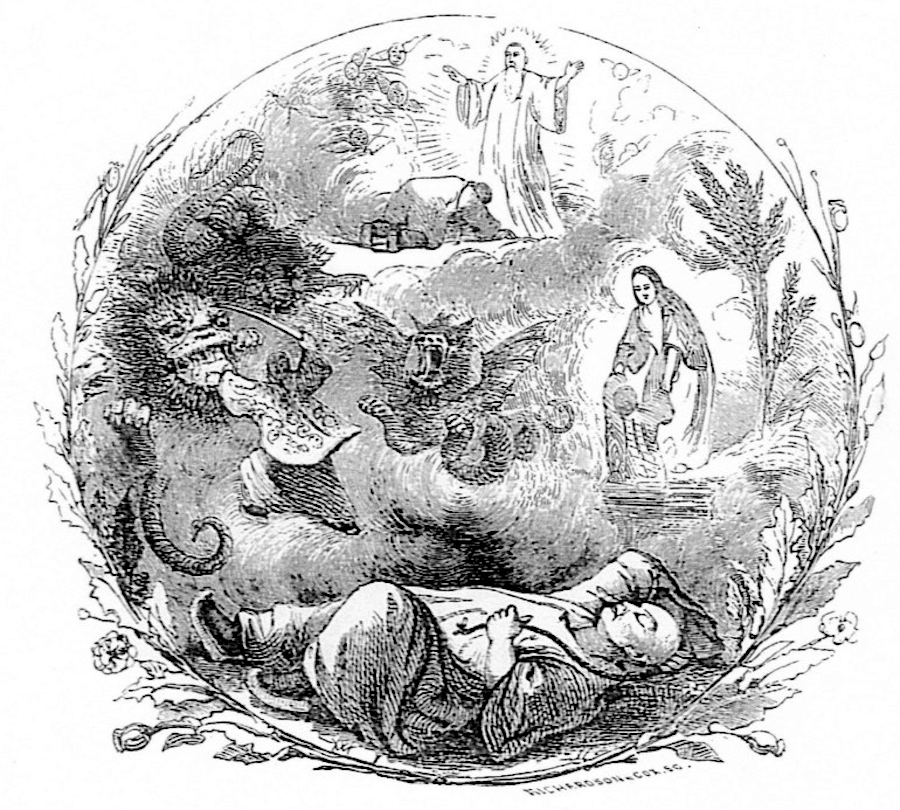
Fig. 4 Hong Xiuquan’s dream, contained in J. Milton Mackie’s The Life of King Taiping-Rebel Leader in China.
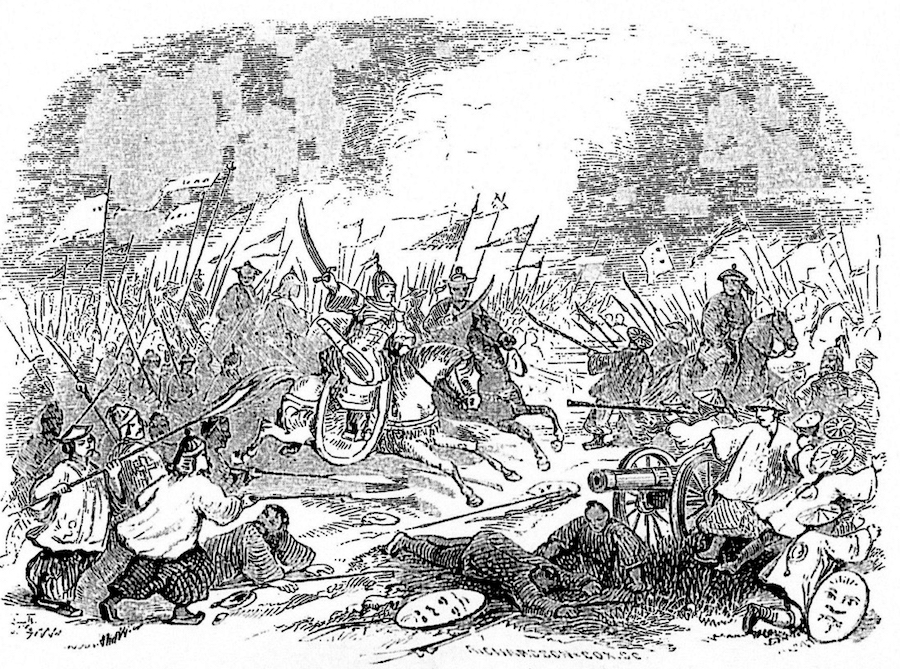
Fig. 5 Taiping Army defeated Qing Army, in J. Milton Mackie’s Life of Taiping King-Rebel Leader in China.
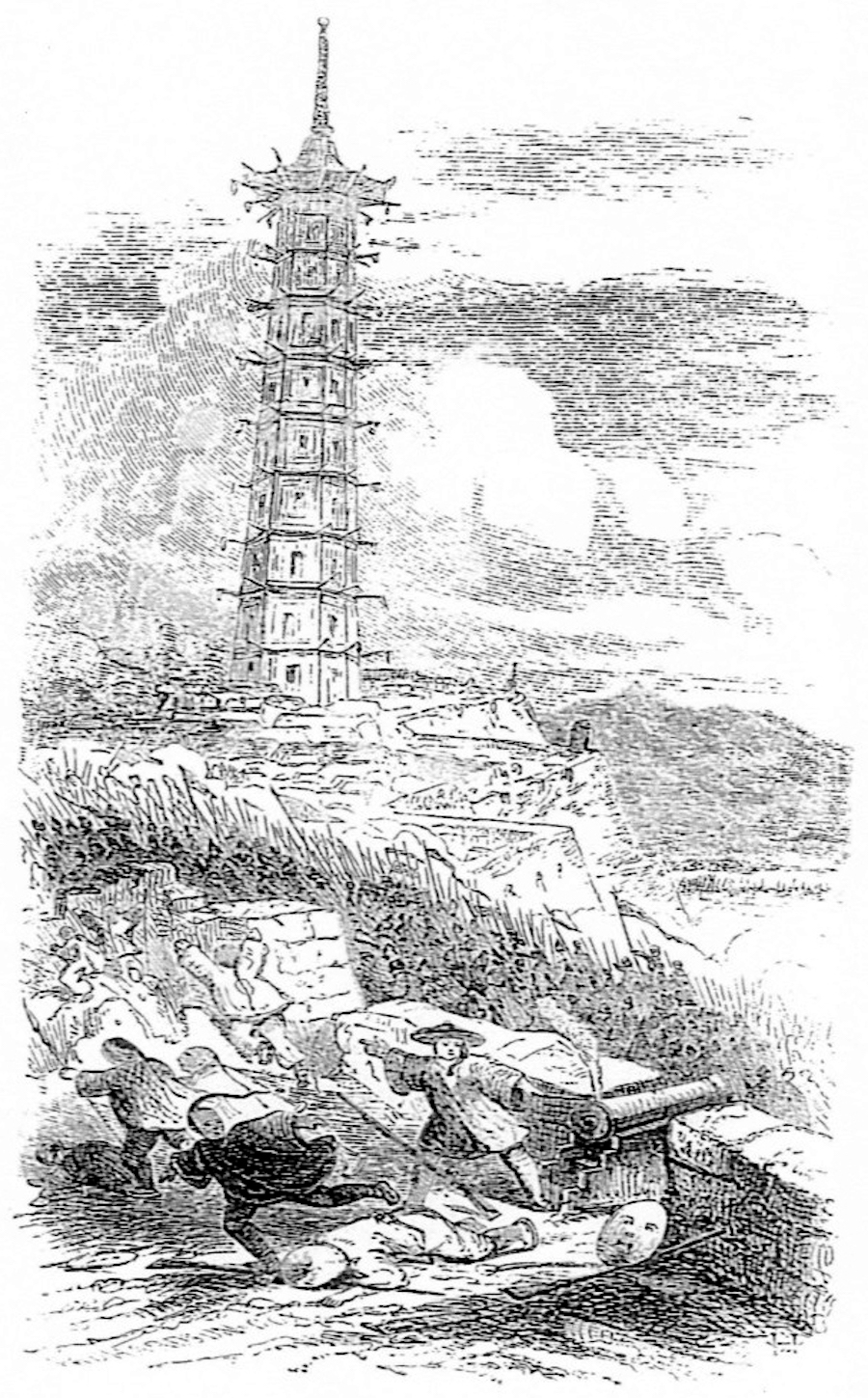
Fig. 6 Taiping Army captured Nanjing, in J. Milton Mackie’s Life of Taiping King-Rebel Leader in China.
Several letters from missionaries are also included in this book. For example, Tian Jiabi, a Catholic bishop, recorded in his letter that people in Jiangxi were expecting the arrival of the Taiping Army in 1852, and Luo Xiaoquan, who received a letter from Hong Xiuquan in 1853, sent a letter to the American Commissioner in China, Mashali, asking about the possibility of missionary work in the areas occupied by the Taiping Heavenly Kingdom. There is also a historical material that was not paid attention to before, which is a letter from Mgr. Rizzolati, Bishop of Huguang Region of Catholicism, to the Central Council in Lyon and Paris, France in August 1853:
They(the insurgent kings)have placed all the resources in a common treasury, and reorganized society on a new plan, that is, in groups of a certain number of persons of both sexes, who are prohibited from cohabiting together, under the most severe penalties. This rule is to be observed until the whole China shall have been conquered. All honorary titles are abolished, except those of officers in the army. The men are to adopt the appellation of brothers, and the women that of sisters. Each family has two chiefs; a man for government of the male members, and a woman for the females; and over all these individual dignitaries a hierarchy is established, comprising general presidents of both sexes. All these confraternities live in common, at the expense of the public treasury; and all of them are bound to perform military service, the men under the command of a male leader, and the women under that of the female; for there are captains of both sexes. After the conquest of the empire, the families, whose military services may no longer be deemed necessary, are to return to their cities, where there is to be no distinction of rich and poor, but perfect equality. However, according to the laws of their communism, the king, the princes, and generals are to have the exclusive right of possession and acquisition, and the subalterns are to remain in the service of their chiefs, and to receive, in reward for these services, such food and clothing as the generosity of their masters may induce them to bestow.(Note C, p.280)
The letter introduced the sacred storehouse system implemented by the Taiping Heavenly Kingdom in Yong ‘an Prefecture, Wuchang and Nanjing, and described the situation of dissolving families, managing separate camps for men and women, denying the gap between the rich and the poor, and implementing "perfect equality" before the Qing Dynasty was completely overthrown. In addition, it is mentioned that kings and generals can get privileges according to the laws they have made, and people serving in their palaces can get clothes and food there. G. J. Wolseley, a British general who visited Nanjing in 1861, also said that "people serve under the flag of their masters, who provide them with daily food, clothes and all daily necessities". Therefore, it can be seen that the ability of the king can be inferred from the degree of support of each palace for its subordinate personnel.
There is also a book "Christianity in China-its missionary history and present rebellion" (The Christianity in China, the history of Christian Missions, and of the present insurrection) in oriental library, and its title page contains portraits of Emperor Xianfeng and Hong Xiuquan (Figure 7). Chapter 12, "The Origin of the Rebellion in China and the Victory and Development of Christianity", introduces the process of the Taiping Heavenly Kingdom at great length. In addition, although there are not many descriptions of the Taiping Heavenly Kingdom in "China Mission, Embracing a History of the Various Missions of All Denominations About the Chinese", there are many biographies of missionaries related to the Taiping Heavenly Kingdom, but Luo Xiaoquan’s biography can’t be found. It is conceivable that Luo Xiaoquan was not highly praised by the missionary groups at that time.
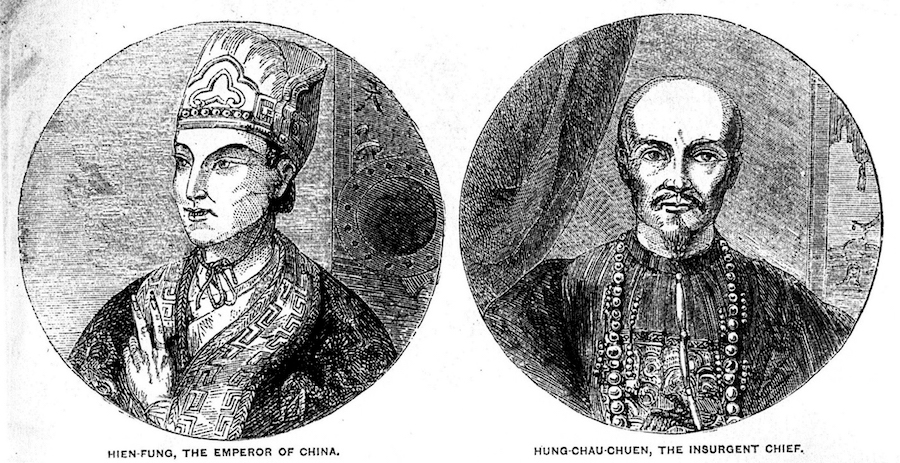
Figure 7: Emperor Xianfeng and Hong Xiuquan, contained in Christianity in China-The History of its Missionary and the Rebellion Now.
conclusion
Based on the English historical materials related to the Taiping Heavenly Kingdom in Nanjing, the capital of oriental library, this paper discusses the understanding of God in Europe. When most of them heard the news that the Taiping Heavenly Kingdom built Nanjing as its capital, they all looked forward to the opportunity for China to become a Christian country. At the same time, they also have many doubts about the Taiping Heavenly Kingdom’s tendency to attach importance to the Old Testament, the slaughter of the flag bearer, polygamy which deviates from European customs and so on.
In fact, the Taiping Heavenly Kingdom attached importance to the Old Testament, which was a direct result of the influence of missionaries in China at that time. As a Hakka, Hong Xiuquan is often treated unfairly because of his status, and naturally he will be strongly attracted by the contents of the Old Testament holy books of Jews who have scattered around the country because of the loss of their motherland. Retaliatory violence caused by the theory of relief of the oppressed people promoted the massacre of flag-bearer idolaters by the Taiping Heavenly Kingdom, and many missionaries who knew about this situation opposed the violent revolution. In addition, among those who have sympathy for the Taiping Heavenly Kingdom, they think that the history of Christianity in Europe is also accompanied by war and violence. Just because the Taiping Heavenly Kingdom is aggressive for the sake of justice for the weak, they cannot be defined as "heresies".
Christopher Lloyd’s What on Earth Happened? In The Complete Story of the Planet, Life and People from the Big Bang to the Present Day, China civilization, as a rare and strong civilization in history, has been highly appraised to this day. But on the other hand, he thought that the Taiping Heavenly Kingdom was "the worst military dispute in human history", and the victims of this war exceeded 20 million. One of the reasons for such a great sacrifice is obviously the relief thought of Jewish-Christian Millennium Kingdom accepted by Taiping Heavenly Kingdom. In the past, such cruel reality was over-beautified, or some people labeled the religion of the Taiping Heavenly Kingdom as a cult, thus exonerating the Jewish relief thought.