The original global intelligence agent Global intelligence agent is included in the topic # South Asia Insight 1
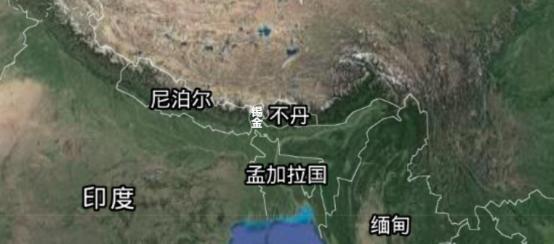
Indonesia’s relations with three countries
Author | Blue Sky and Clear Away
Editor | |Thomas
As a major country in South Asia, India accounts for 70% of the local area and 75% of the total population in South Asia. With its volume advantage, India has always claimed to be the hegemon of South Asia.
Apart from Pakistan, India exerts varying degrees of influence on other countries in South Asia, especially Nepal and Bhutan in the southern foothills of the Himalayas.
Due to traffic congestion, the import and export channels of Nepal and Burundi are controlled by India, and they rely on India in many fields such as economy and energy, and they can never get rid of India’s control politically.
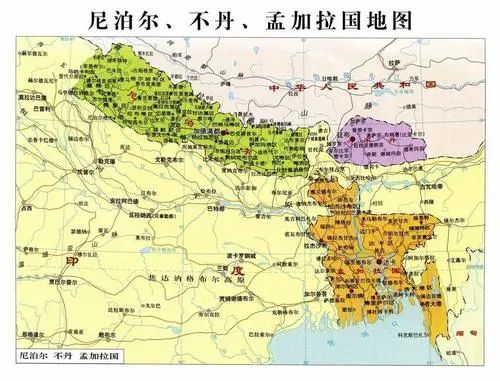
▲ India is a giant in front of other countries in South Asia.
The combined population of the two countries accounts for only 2% of India, and the combined territory accounts for 6% of India. India exerts all-round control over the two countries in economy and diplomacy. There was once a country called Sikkim between Nepal and Bhutan, which was openly annexed by India in the 1970s.
What is the difference between India-controlled Nepal and Bhutan and Sikkim? Can they follow the old path of Sikkim and be annexed by India?
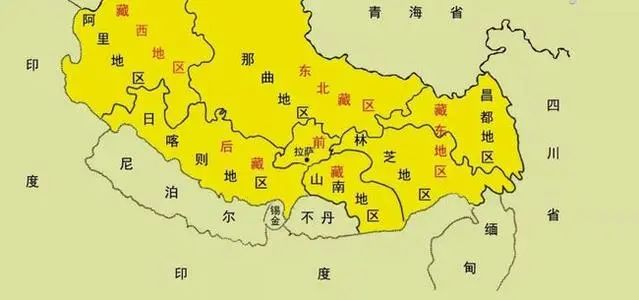
▲ All three countries are close to Xizang.
First, the undercurrent under the Himalayas
Since ancient times, the towering Himalayas have been the political and geographical dividing line between the traditional East Asian dynasty and the South Asian regime. During the Tang Dynasty, the powerful Tibetan army once crossed the mountains and went south to drink horses in the Ganges Plain. During the Yuan and Ming Dynasties, the Qinghai-Tibet Plateau was incorporated into the political system of the Central Plains Dynasty, but the control over the Qinghai-Tibet Plateau in the Ming Dynasty was far less than that in the Yuan Dynasty.
In the first half of the seventeenth century, the peasant uprising and foreign invasion made the Ming dynasty busy. Mongolians living in Qinghai, Xinjiang and other places entered Xizang, and they cooperated with Tibetan factions to compete for control of Xizang.
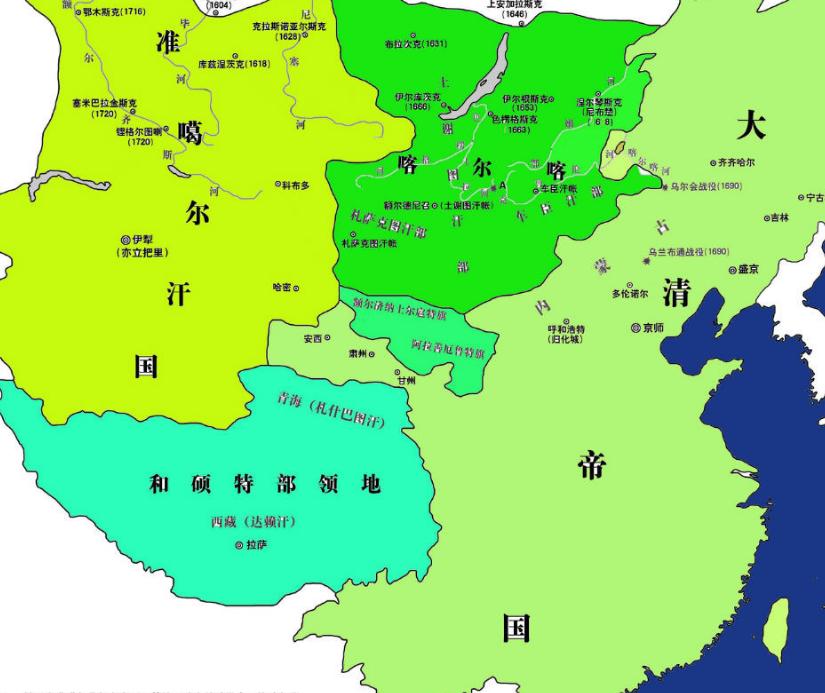
▲ Xizang in the early Qing Dynasty
The turbulent situation caused many monks and nobles to leave Xizang. Awang Langjie, a religious figure of the Kagyu Sect of Tibetan Buddhism (one of the four major sects of Tibetan Buddhism), led his followers to Bhutan, which is located on the border of Xizang, and established his own religious kingdom here in 1616.
In 1642, located in Zhemengxiong area in the west of Bhutan, the local religious forces established the Sikkim Kingdom with the descendants of Xizang nobles living here. Since then, Bhutan and Sikkim have been transformed into independent feudal kingdoms from the border areas of Xizang.
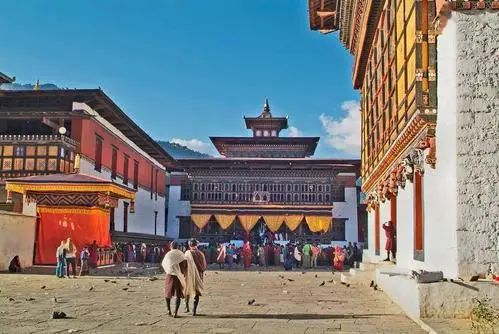
▲ Bhutan’s culture and architecture are similar to those of Xizang.
Bhutan and Sikkim were founded, but the local government in Xizang still maintained great influence on the two countries. After the change of dynasties in Ming and Qing Dynasties, the Qing Dynasty allowed the local government of Xizang to have its own vassal state, and Bhutan and Sikkim were the vassals of Xizang. The local culture is no different from that of Xizang, and Tibetan Buddhism is also an unquestionable national belief.
Bhutan and Sikkim are the marginal areas of Xizang’s cultural influence, and the altitude will decrease rapidly further south. This is the endless Ganges Plain. Although there has been no "unified" dynasty in the Indian Peninsula for centuries, Hindu belief is the undisputed protagonist here.
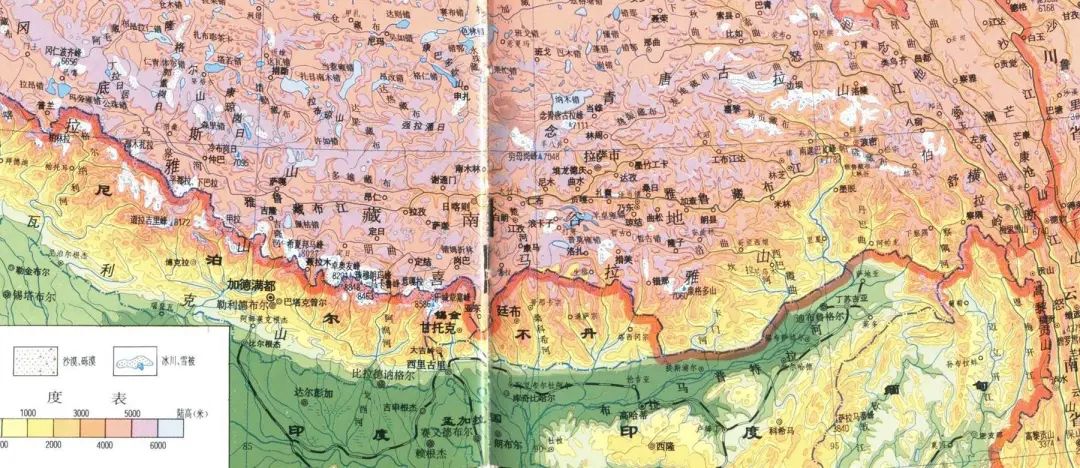
▲ Almost all the three countries are mountainous, and only the south facing India is the plain.
Nepal also rose rapidly in the 18th century. It used to be the birthplace of Buddhism, but after thousands of years of development and evolution, Nepal has different characteristics from Bhutan and Sikkim, two "Xizang-style" countries.
The influence of Buddhism in Nepal has gradually declined, but because it is closer to the core area of Indian culture, a large number of Indians moved to Nepal to escape the war or for pilgrimage. This also makes Nepal’s population composition more complicated. There are both Xizang-faced mountain aborigines and South Asian-faced immigrants among the residents.
The mixed race born after the combination of the two also occupies an important position in Nepalese society, which injects cultural genes different from Bhutan and Sikkim into Nepal, and even India’s caste system is copied in Nepal.
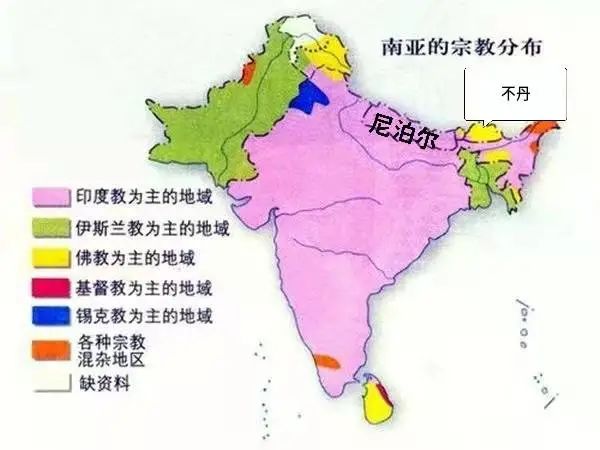
▲ The composition of religions in South Asia is complex.
In the 16th century, Mughals who believed in Islam invaded India to establish political power. Islam immediately spread widely in the northwest of Indian Peninsula and Bangladesh in the lower reaches of Ganges River. Islamic belief has also been introduced into Nepal, but it has not changed the mainstream position of Hindu culture.
In the early 18th century, the Mughal Empire, which ruled most of the Indian Peninsula, began to decline. The country has once again fallen into war, and European colonists led by Britain have also taken advantage of the situation to turn more and more areas on the Indian Peninsula into their own colonies.
In 1772, the British who occupied Bangladesh invaded Bhutan, forcing Bhutan to cede a large territory in the south to Britain. But at this time, the British have limited energy and have not targeted the three Himalayan countries for the time being.
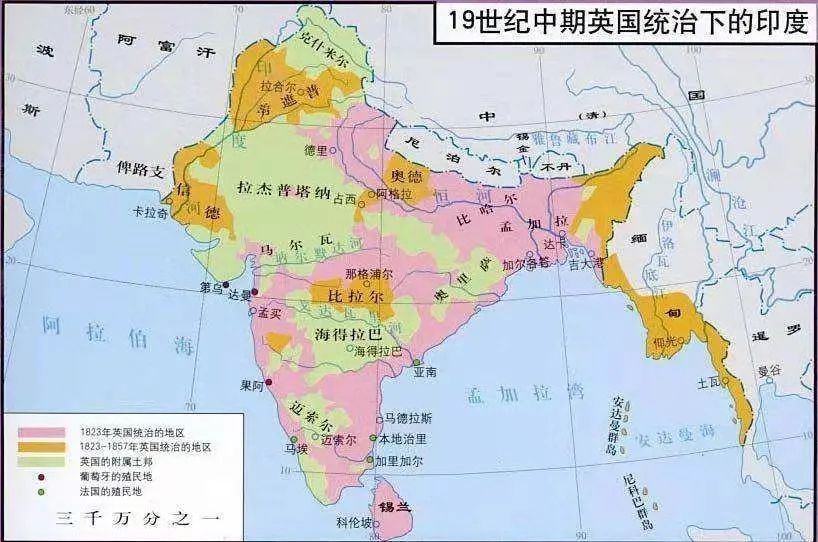
▲ Bhutan is close to Bangladesh
In 1788, Nepalese troops annexed Sikkim, and the Sikkim royal family was forced to flee to Xizang to take refuge. Shah (King) of Nepal has long heard that there are a lot of treasures hidden in the major Buddhist temples in Xizang. Before that, Nepal also had contradictions in the exchange of money and land distribution with the local government of Xizang, and the Nepalese simply turned their troops to invade Xizang.
The Tibetan army was unable to resist, and many towns on the border were captured by the Nigerian army. The Minister in Tibet of the Qing Dynasty and the upper echelons of Xizang made peace with Nepal privately. After receiving the promise of compensation, the Nepalese army withdrew from Xizang.
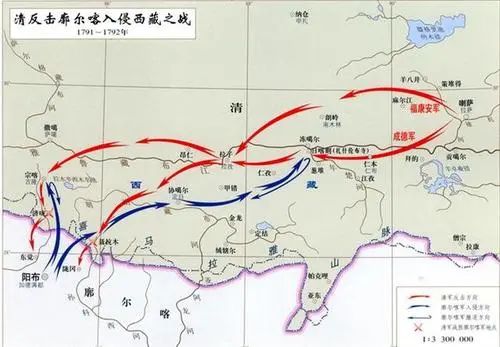
▲ Pinggurkha
But the Nepalese did not wait for the reparations, and the angry Shah of Nepal led the army into Xizang again. After they occupied it, they hid and looted Tashilhunpo Temple, the Panchen Lama’s residence. The Nepalese behavior annoyed Emperor Qianlong, who ordered Fu Kangan to lead the army into Tibet, and the Qing army went all the way to Kathmandu, the capital of Nepal. Nepal was forced to surrender and recognized the suzerain status of the Qing Dynasty.
After this battle, Sikkim annexed by Nepal was restored to the motherland, but the western part of Sikkim was still controlled by Nepalese. During the war, Bhutanese also occupied backstab Sikkim, occupying part of the territory in the east of Sikkim. After the restoration of the country, the territory of Sikkim has shrunk a lot, inevitably becoming the weakest of the three mountainous countries.
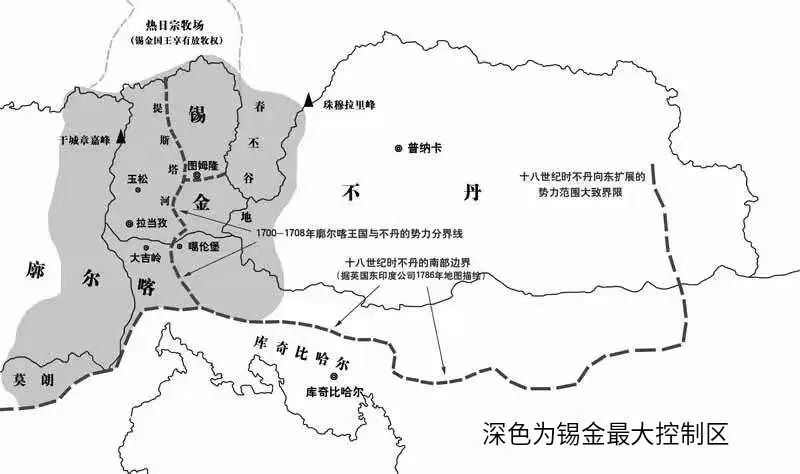
▲ Smaller and smaller Sikkim
Nepalese who failed to go north began to plan to invade India south, and India’s political division gave Nepal an excellent opportunity to invade. By 1814, Nepal had conquered many areas north of the Ganges. But the Nepalese were not happy for long because they had a head-on collision with the British going north.
Nepali expansion blocked the trade between the British colony and Xizang, and the British did not want a strong local regime to emerge in the South Asian subcontinent. In 1814, the British used the border dispute as an excuse to launch a war against Nepal. The Nigerian army was weaker than the British in terms of strength and equipment, and finally had to surrender.
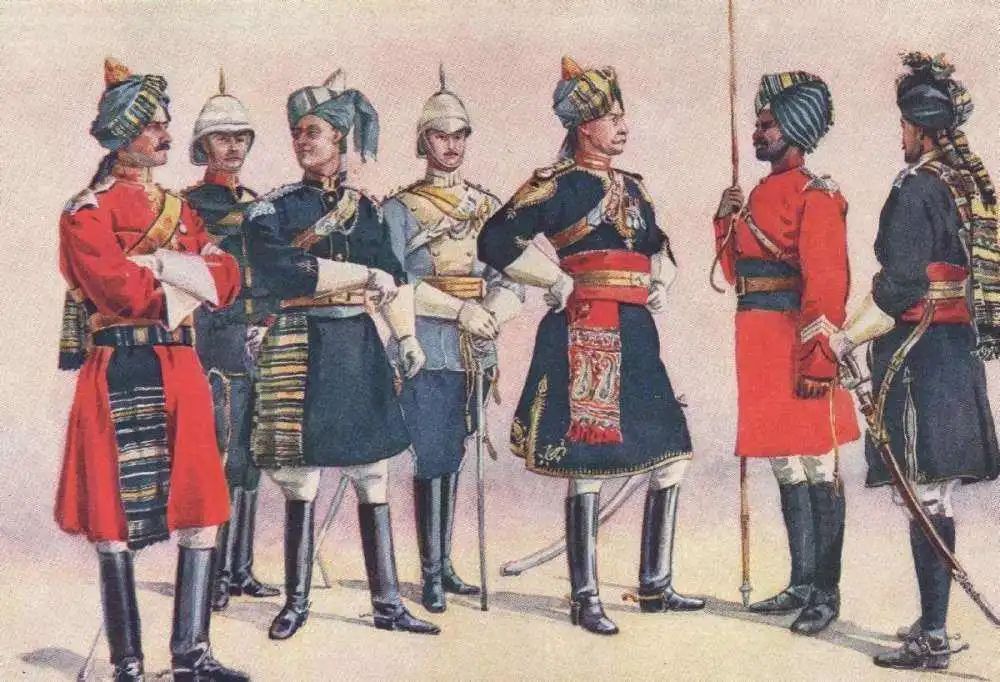
▲ British-Indian colonial army
The Sagory Treaty signed by Britain and Nepal made Nepal pay a heavy price. One third of its territory was ceded to the British East India Company, and a large area of land attached to Nepal north of the Ganges River was also taken away by the British. In this way, the British curbed the expansion momentum of the Nepalese and further consolidated their power in the Indian Peninsula. The Gurkhas of Nepal also began to provide high-quality troops for the British army.
The British will not stop there. Nepal, Bhutan and Sikkim will be forcibly dragged into modern society by the British, and the history of national independent development will be interrupted.
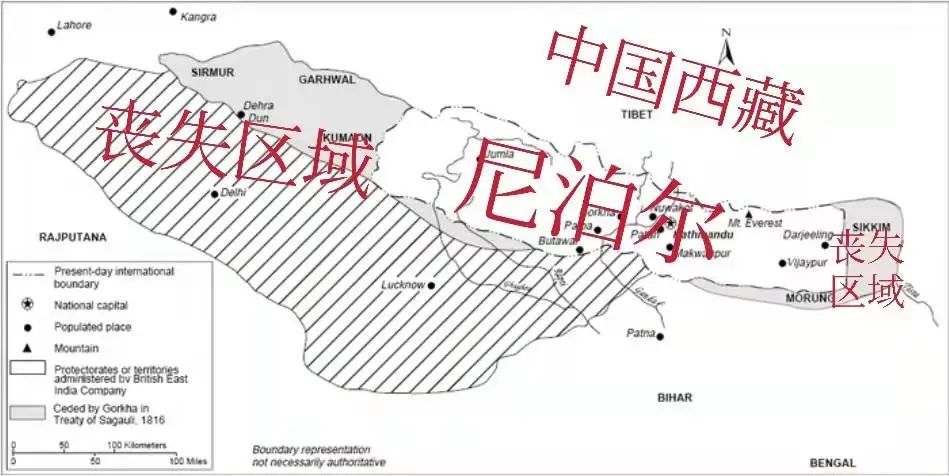
▲ Treaty of Sagory
Two, three-pronged approach
While Britain subdued Nepal, the British East India Company reached into Sikkim on the pretext of mediating the territorial dispute between Nepal and Sikkim.
In 1835, the British asked Sikkim to lease Darjeeling and other places in the south, but Sikkim was weak and had to agree to the lease request. The British immediately introduced a large number of Indian and Nepalese laborers to Darjeeling to promote tea cultivation there. Because of its important geographical position, Darjeeling has also become an important bridgehead for Britain to control the three mountainous countries and even to leave Tibet, China.
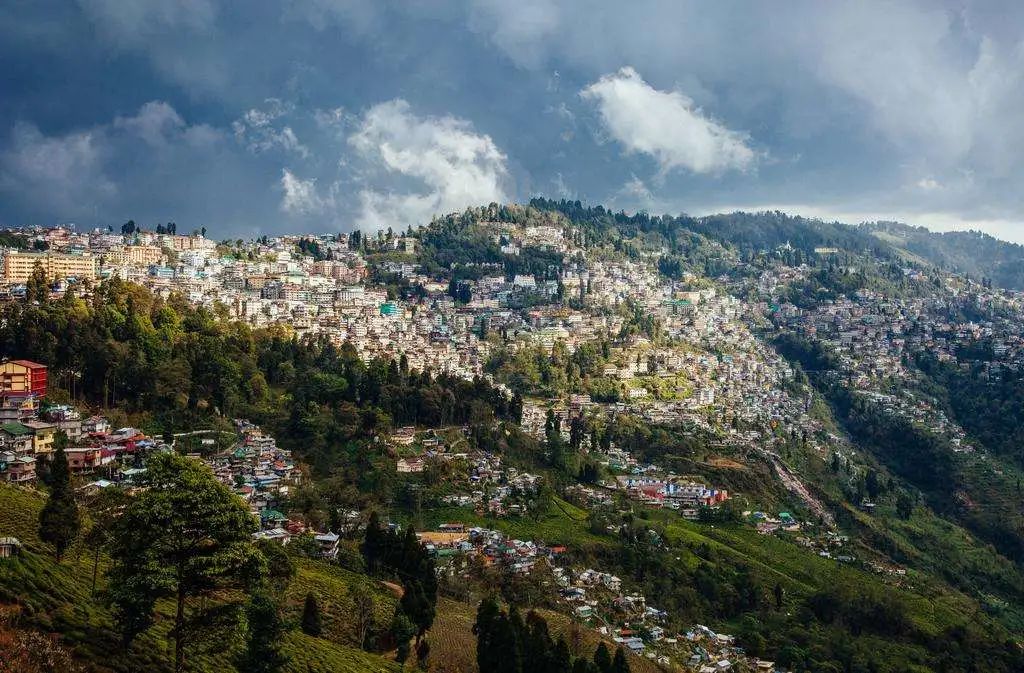
▲ Darjeeling has become an Indian territory.
In 1858, the jurisdiction of the British East India Company over Indian colonies was abolished. The British government began to exercise direct rule over India and British India was formally established.
In British India, in addition to the British colony, it also includes a large number of soil states. Tubang retained the original ruling family, but in fact it has become a vassal of the British. After integrating the colonial system on the Indian peninsula, the British set their sights on three small countries under the Himalayas.
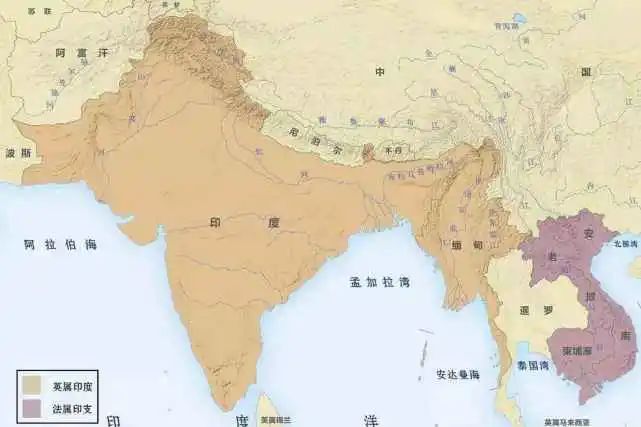
▲ British India
The British carried out different expansion and control policies towards the three countries. For Nepal, which has the largest volume, the British support the pro-British faction to master the Nepalese regime and bring Nepal into the sphere of influence. But Britain did not annex Nepal, only regarded it as the northern barrier of British India. Nepal’s upper class also completely fell to the British. He helped the British suppress the British Indian resistance activities, and even repeatedly harassed the Tibet, China border with the encouragement and support of Britain.
For the weakest Sikkim, in 1861, the British forced Sikkim to hand over diplomatic rights. Since then, in 1889, Britain set up an "Administrative Officer in Sikkim", who was the actual controller of Sikkim, the king of Sikkim was put on hold, and Sikkim became a British protectorate.
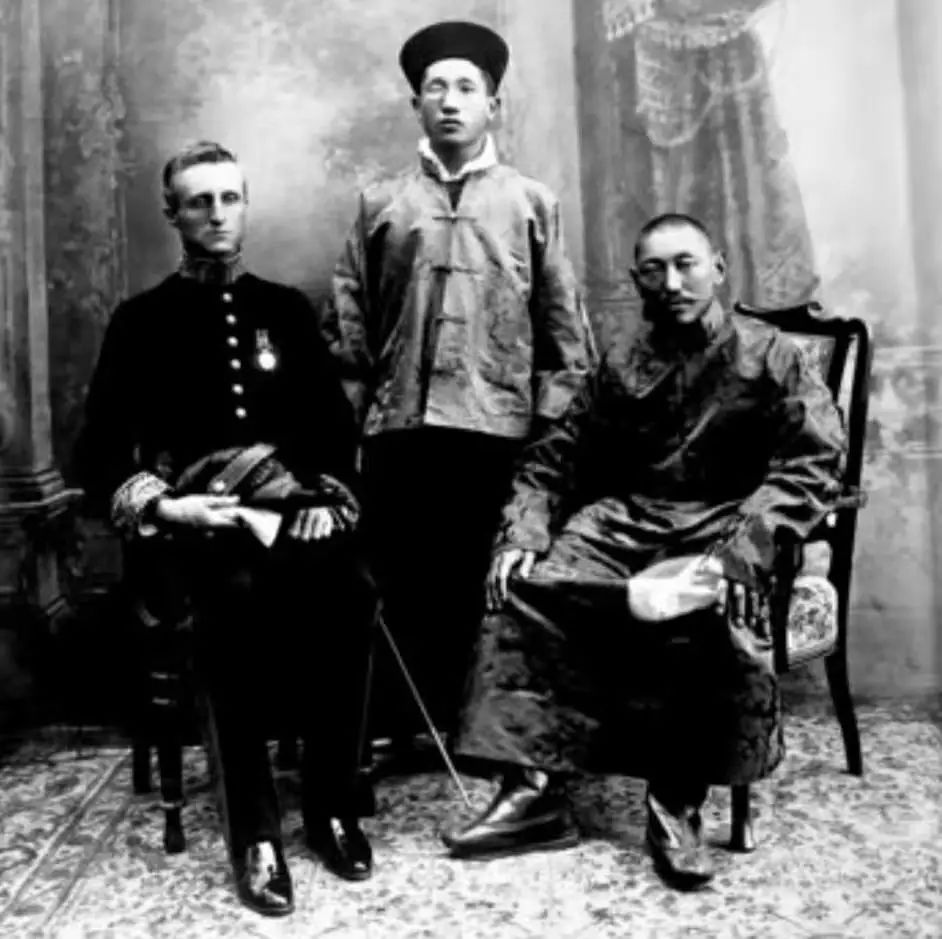
▲ The Administrative Officer (left) is sitting, and King Sikkim is standing.
As for Bhutan, because it is located on the trade route from India to Xizang, British India controls a large area of land in southern Bhutan in the form of lease. In addition, the British continued to encroach on the remaining territory of Bhutan, which eventually led to the war in 1864. The Bhutanese army was no match for the British army at all, and the British completely incorporated the previously leased or encroached land into British India.
Since then, Bhutan’s political situation has also been controlled by pro-British factions. In 1910, Britain did not sign the Punaka Treaty, and Bhutan handed over diplomatic rights to Britain and became a British protectorate.
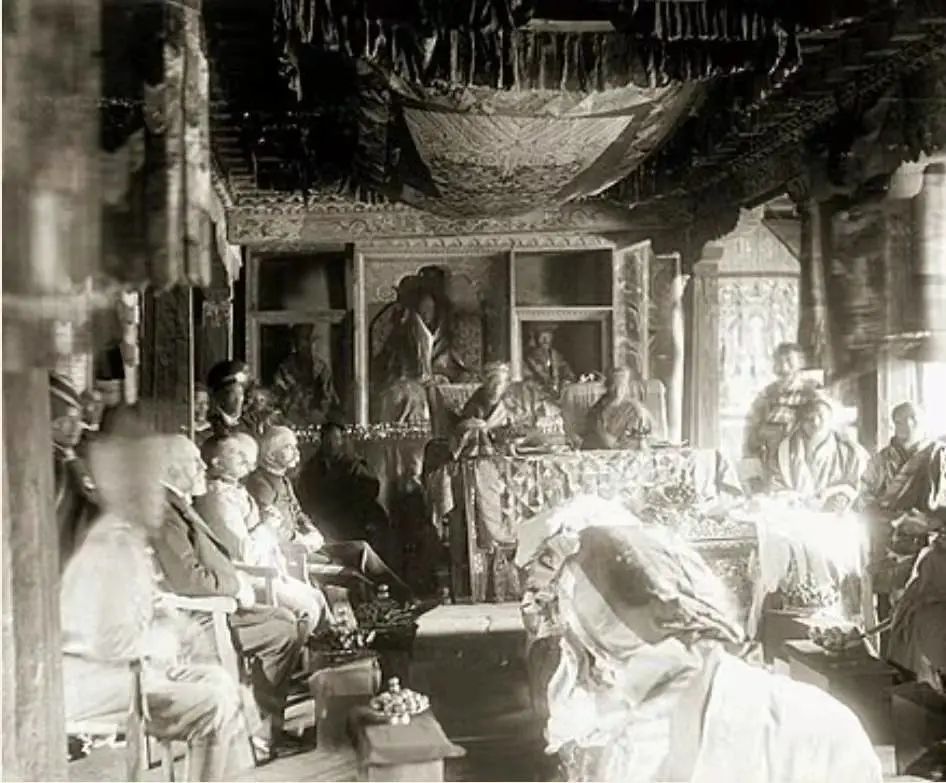
▲ Britain does not negotiate.
Although all three countries are included in the British sphere of influence, they are still nominally independent countries. The Three Kingdoms are not directly under the jurisdiction of the British, nor are they Indian territories, which are essentially different from the colonial nature of British India.
In 1947, the British, whose strength was damaged in World War II, were forced to leave South Asia. Lord mountbatten, Governor-General of British India, put forward the "partition of india" plan. The Hindu-majority areas in its directly administered colonies belong to India, and the Muslim-majority areas belong to Pakistan. The native states of former British India are free to join India and Pakistan.
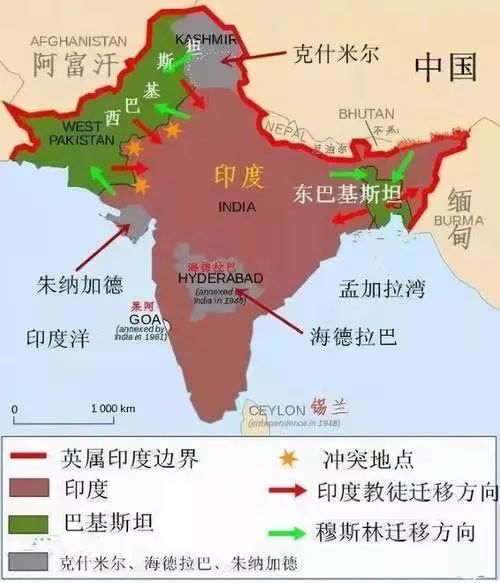
▲ partition of india
India and Pakistan did not give the maharaja a a choice. For those princes who want to be independent, the Indian and Pakistani troops choose to give them physical elimination. Pakistan, for example, annexed Karat State, which declared independence, by force, while India annexed Hyderabad State, which was similar in size to Britain.
The British plan makes the sensitive religious issues more complicated, and the contradiction between Muslims and Hindus is getting deeper and deeper. Nepal, Bhutan and Sikkim do not belong to British India, but Indians have completely inherited the influence of the British and still control the three mountainous countries.
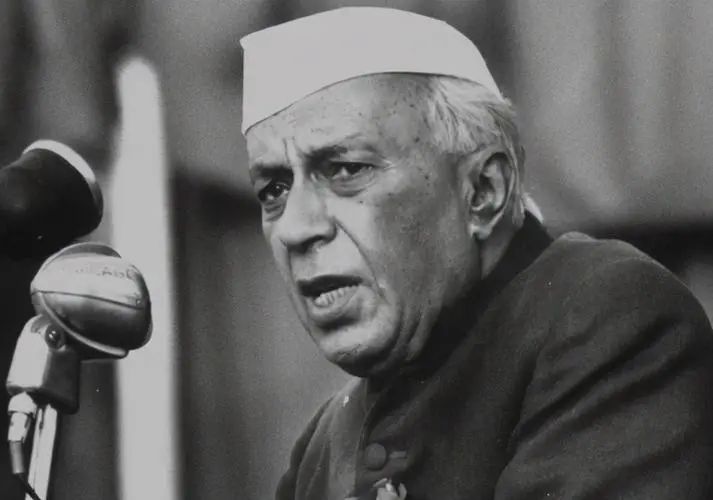
▲ Indian Prime Minister Nehru
In order to establish India’s dominant position in South Asia and strengthen its control over the three mountainous countries. In 1950, India and Nepal signed a friendship treaty, which stipulated the free movement of people and goods between the two countries. The influx of Indians has squeezed the limited local resources, and the trade with India accounts for 95% of Nepal’s total trade. Nepal’s economic dependence on India is getting stronger and stronger.
Bhutan was also forced to sign a similar treaty with India, and its diplomacy was "guided" by India. Bhutan’s government is full of various Indian consultants, and India has taken control of Bhutan’s core sectors such as transportation and finance. India even sent teachers to Bhutan to let this country with rich Tibetan culture receive Indian education.
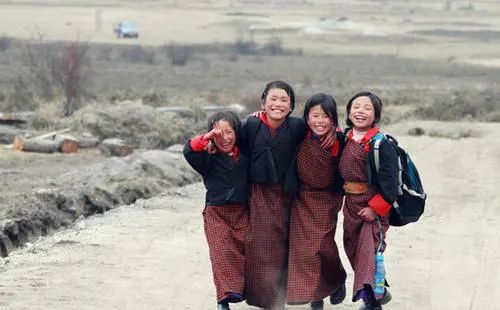
▲ Bhutanese children
Sikkim is the worst of the three countries. Because of its small country and few people, India immigrated to the local area unscrupulously, which changed the local ethnic composition. Indians have inherited the post of "Administrative Officer in Sikkim" established by the British, and the Indian Administrative Officer is like the emperor of Sikkim.
In this way, India took over the mantle of the British, established a "special relationship" with the three countries, and brought the three countries into its sphere of influence.
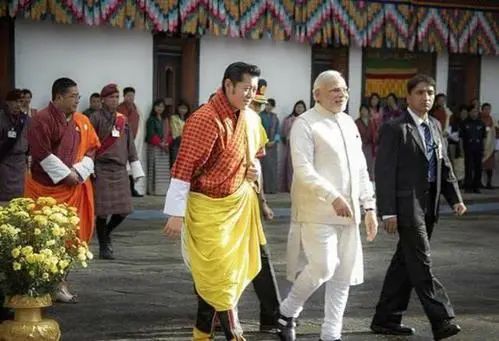
▲ Indian Prime Minister visits Bhutan
Third, the counterattack of fish
India’s control has aroused resentment among the three countries, among which Nepal, with an area of about 150,000 square kilometers and a population of more than 20 million, is undoubtedly the strongest among the three countries. Nepal has also become the hardest of the three countries.
Nepal actively developed its diplomacy with the United States and China, and the King of Nepal asked India to withdraw its military advisory group in Nepal and the personnel of the monitoring station on the border between China and Nepal, and even bought military equipment from China.
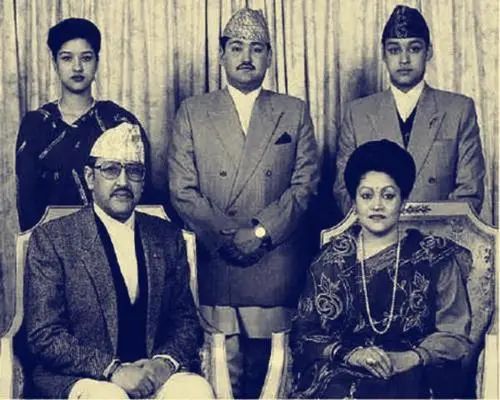
▲ Nepalese royal family
However, more than 40% of the population in Nepal is descended from the combination of India and local aborigines, and 80% of the population in Nepal also believes in Hinduism. In addition, there are a large number of Indian immigrants in Nepal, who do not want Nepal to be excessively separated from India.
The Indian government has also cancelled its financial subsidies to Nepal and imposed a blockade on Nepal’s foreign trade. By the 1960s, the struggle between control and anti-control between Nigeria and India had become superficial.
Bhutan covers an area of less than 40,000 square kilometers, which is similar to that of Taiwan, China. Although there are almost all Buddhists in China, the total population is less than one million. I really don’t have the strength to harden India. On the basis of not denying India’s "guiding right" to its diplomacy, the Bhutanese government stated that "Bhutan has the freedom not to accept India’s opinions in foreign affairs".
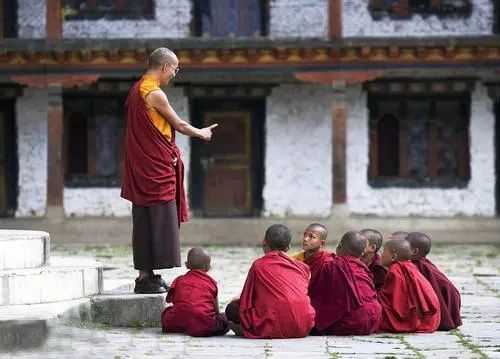
▲ The monks in Bhutan seem to be not much different from Xizang.
Bhutan also demanded to reduce the number of Indian consultants, and in 1971, it issued its own currency, Numza, in an attempt to weaken India’s overall control over Bhutan’s finance.
The strength of Sikkim is even weaker, with a total area of only 0.7 million square kilometers, which is not much bigger than that of Shanghai. In the 1970s, the population was less than half a million. Originally, Buddhists were the dominant population, but as a result, the proportion of Buddhist population was continuously reduced with the influx of a large number of Indians.
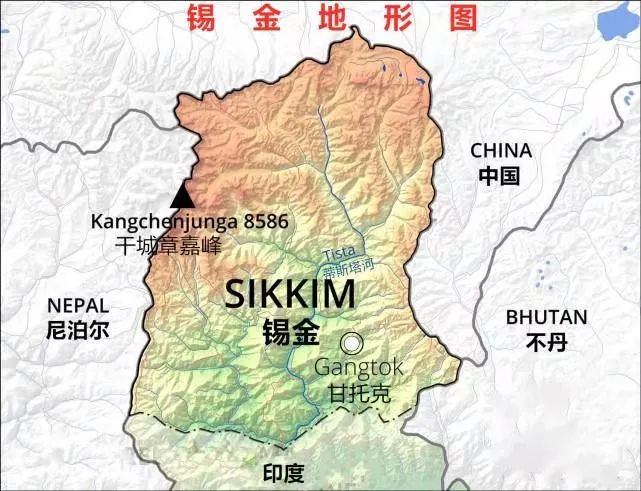
▲ Sikkim
In 1968, King Sikkim secretly supported people to take to the streets to protest against Indian control. In order to prevent Sikkim from going astray, India "guided" the Sikkim Parliament to pass the Sikkim Constitution drafted by India.
King Sikkim refused to let the country fall into the hands of India, and boycotted the pro-Indian political parties in the next year’s general election. In March 1975, the Indian army surrounded the palace and placed the king under house arrest, and immediately held a referendum to decide whether Sikkim should be incorporated into India. At this time, half of Sikkim’s population were Indian immigrants. Under the "protection" of the Indian army, the referendum decided to merge Sikkim into India with a support rate of 97%.
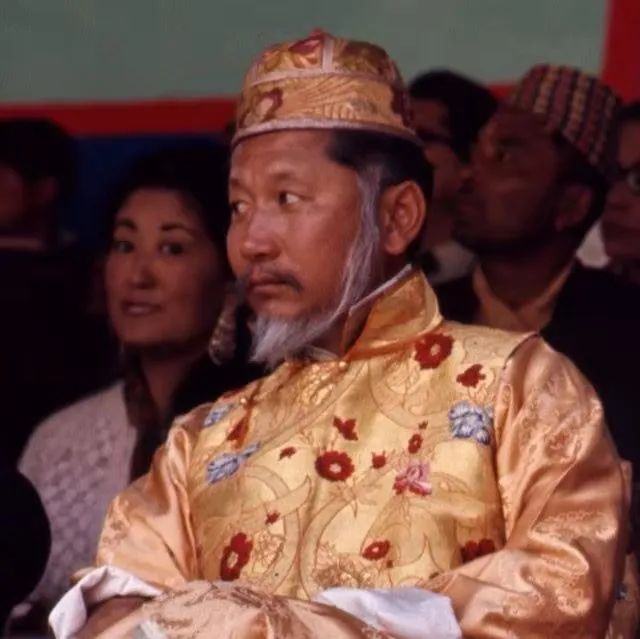
▲ Sikkim’s last Kejia (King)
In the Cold War, the United States and the Soviet Union acquiesced in India’s annexation of Sikkim in order to win over India. However, this has aroused the worries of Nepal and Bhutan. In 1975, the King of Nepal announced that he would make his country a "zone of peace", adhered to the principle of non-alignment, and opposed the establishment of military bases in Nepal by other countries. Bhutan also joined the United Nations in 1978 and actively integrated into the international arena.
The actions of Nepal and Burundi cannot fundamentally lift India’s control over the country. Nepal is restricted by geographical conditions and its trade is concentrated on the southern side of the border with India. Despite the unremitting efforts of the Nepalese government, its foreign trade has shown a diversified momentum, but by 2020, its trade with India still accounts for about 60% of its total trade, and India’s position in Nepal’s economy and society remains unshakable.
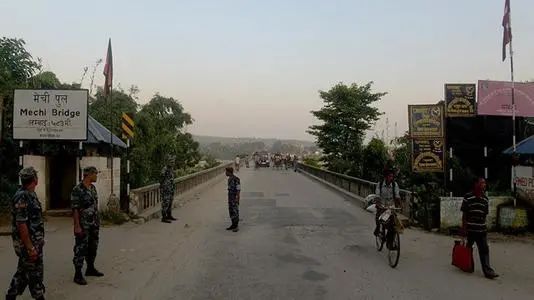
▲ Nepal-India border crossing
The acceptance of Hinduism in Nepal is also getting higher and higher, and the similar cultures of the two countries are an invisible bond. Moreover, Nepal plays an important role in India’s national security strategy, guarding the security of northern India, and India will not let Nepal get rid of the shackles of "special relations."
Bhutan is much smaller than Nepal, and its centrifugal force to India is much smaller. The two countries have frequent high-level visits and close economic and trade relations. In Bhutan’s past ten five-year plans, India has invested more than 50 billion rupees, accounting for more than 60% of the total plan funds.
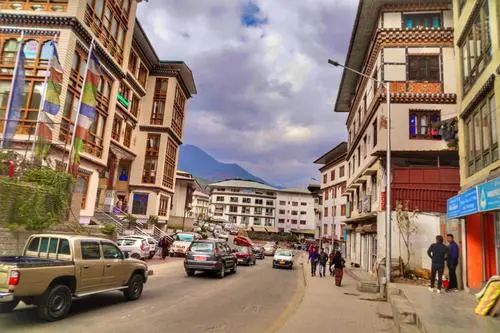
▲ Bhutan street
Today, 78% of Bhutan’s imported goods come from India, and 94% of its exported goods are also destined for India. More than three-quarters of Bhutan’s annual foreign financial assistance is provided by India. India has supported the development of Bhutan’s power industry, making it a pillar industry, contributing 12% of Bhutan’s GDP, and almost all of this power has been delivered to India.
The weapons, equipment and logistical support of the Bhutanese army are provided by India. There are a large number of Indian army consultants in the Bhutanese army, and Bhutanese officers will also go to India for military training.
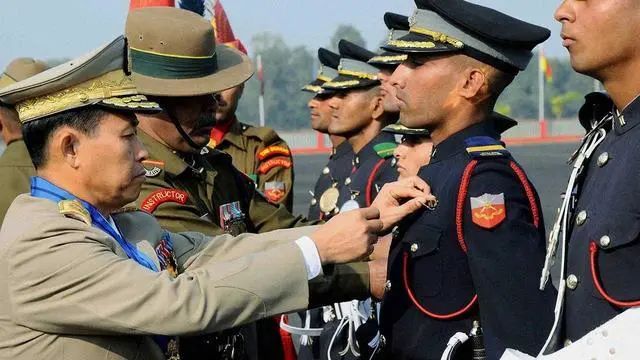
▲ India does not have military exchanges.
It should be noted that the tragedy of Sikkim’s annexation will be difficult to perform in Nepal and Bhutan. Compared with Sikkim, Bhutan and Nepal are bigger, and Nepal’s population of 30 million should not be underestimated. India’s internal ethnic contradictions are constant, but the annexation of the two countries will make India’s ethnic problems more complicated. Nepal, with its mountainous areas and fierce folk customs, may become "India’s Afghanistan".
Secondly, it is difficult for India to find the international environment when it annexed Sikkim in 1975. Nepal and Bhutan are members of the United Nations, but once it is annexed, it will inevitably lead to a strong rebound from the international community. Moreover, through existing means, India has maximized its interests in Nepal and Bhutan.
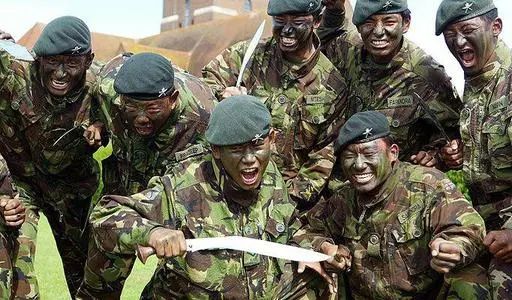
▲ Gurkhas in Nepal provide high-quality mercenaries for Britain, India, Singapore and other countries.
India is not the only neighboring country between Nepal and Bhutan, but their borders with their northern neighbors are all towering snow-capped mountains. Nepal’s 15 major foreign trade ports are all located on the Indian border. India closed 13 of these ports in the diplomatic dispute between Nepal and India in 1989, which caused turmoil in Nepal. In 2019, India cut off Nepal’s oil supply again, and the lives of Nepalese people were seriously affected.
Bhutan’s economy is limited, but India’s penetration control over it has penetrated into all levels of the country, and it is impossible for Bhutan to move the Buddha of India out of its own house on its own. India will remain under the control of the two countries for a long time to come, and this special state-to-state relationship will continue to exist.
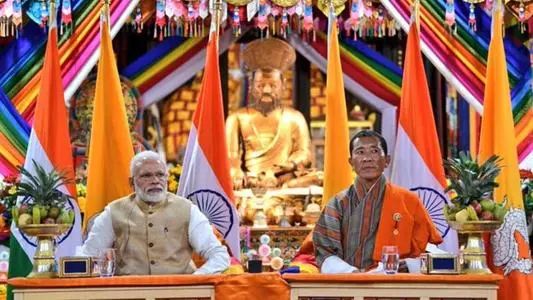
▲ Modi visits Bhutan
Long-term author | Blue sky and clear distance
A veteran lover of history
Editor in charge | |Thomas
Graduate of London School of Economics and Political Science | Editor-in-Chief of Global Intelligence
—(End of full text)—
This article is the original content of "Global Intelligence Agent"
Unauthorized reprinting is prohibited.
Welcome and share in the circle of friends and friends.
Original title: "India’s annexation of Sikkim, will Nepal and Bhutan follow suit?" 》
Read the original text