How to protect farmers’ interests? The amendment of land management law reforms "three plots of land"

  Rural land system is a national basic system, and the reform of rural land system is related to the vital interests of farmers. The revision of the land management law has made the latest provisions on rural "three plots of land" such as rural land expropriation, collective management construction land entering the market, and homestead system reform. While protecting farmers’ land rights and interests, it has realized a major institutional innovation in rural land management — —

  At the 12th meeting of the 13th the National People’s Congress Standing Committee (NPCSC), which closed on August 26th, the decision on amending the Land Management Law and the Urban Real Estate Management Law was voted by the meeting. Because the law involves the reform of "three plots of land" in rural areas — — Rural land expropriation, collective construction land entering the market and homestead system reform have attracted much attention.

  The subjects involved in the reform of rural land system and the interests involved are very complicated, which will affect the whole body and must be promoted cautiously and steadily. In this regard, the National People’s Congress Standing Committee (NPCSC) authorized the State Council three times to actively and steadily promote the pilot reform of rural land system. Since 2015, the relevant reform pilot work has been carried out in 33 regions across the country, forming a number of institutional innovations that can be replicated, promoted and facilitated.

  On the basis of summing up the pilot experience and absorbing the reform results, the newly adopted amendment to the land management law insists on unshakable public ownership of land, the interests of farmers are not damaged, the strictest farmland protection system and the strictest economical and intensive land use system, which has upgraded the successful experience of the CPC Central Committee in the rural land system reform and made a number of innovative provisions in the rural "three plots" reform.

  Rural land expropriation:

  Give more protection to land-expropriated farmers.

  In the reform of "three plots of land" in rural areas, the reform of land acquisition system is called the most difficult bone to chew. The current land expropriation system in China has some defects, such as too wide scope of land expropriation right, low compensation standard and single resettlement way. In view of these problems, the Third Plenary Session of the 18th CPC Central Committee proposed to narrow the scope of land acquisition, standardize the procedures of land acquisition, and improve the reasonable, standardized and diversified security mechanism for land-expropriated farmers. In the pilot process, the reform of land acquisition system in various places made great efforts to make breakthroughs in narrowing the scope of land acquisition and actively practiced in standardizing land acquisition procedures.

  "The amendment clearly defines the public interest of land acquisition for the first time. It turns out that both the Constitution and the Land Administration Law stipulate that the state can expropriate land for the needs of public interest, but there is no clear legal provision on what is public interest. At the same time, the Land Management Law also stipulates that any unit or individual must use state-owned land when using land, which leads to expropriation becoming the only way to obtain land. " Wei Lihua, director of the Regulation Department of the Ministry of Natural Resources, said that on the basis of summing up the pilot experience, the revision adopted the enumeration method, which clearly defined what is public interest and which can use the state expropriation right.

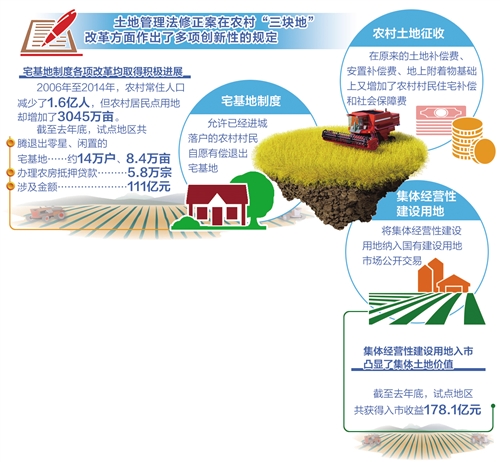
  In addition, the amendment to the Land Management Law also made it clear for the first time that the basic principle of land expropriation compensation is to ensure that the original living standards of landless farmers are not reduced and their long-term livelihood is guaranteed. "The regulations have changed the original purpose of land expropriation to determine land compensation in the past, the land compensation fee and resettlement subsidy are determined by the annual output value multiple method, and the original annual output value multiple method of land is replaced by the comprehensive land price of the district. On the basis of the original land compensation fee, resettlement compensation fee and ground attachments, rural villagers’ housing compensation and social security fee have been added, thus legally constructing a more perfect security system for landless farmers. " Wei Lihua said.

  Yang Heqing, deputy director of the Economic Law Office of the Legal Affairs Committee of the National People’s Congress Standing Committee (NPCSC), pointed out that this revision has also improved the procedures for land expropriation, requiring the government to conduct land survey and information disclosure before land expropriation, and to consult with the landless farmers, organize hearings when necessary, and sign an agreement with them before applying for land expropriation, thus greatly protecting the interests of farmers.

  Collective operating construction land entering the market:

  Pave the way for the development of urban-rural integration

  In Wei Lihua’s view, the entry of collectively operated construction land into the market is the biggest highlight of the revision of the land management law. Previously, it was stipulated that collectively-operated construction land could not enter the market. If it is to enter the market, it must be changed to state-owned land.

  "The amendment to the Land Management Law has broken the legal barriers for rural collective construction land to enter the market. Article 43 of the original land management law was deleted, and any unit or individual who needs to use land must use state-owned land. It is added that rural collective construction land can be directly used by units or individuals other than rural collective economic organizations by means of transfer or lease, provided that it conforms to the plan and is registered according to law, and with the consent of more than two-thirds of the members of the collective economic organizations. At the same time, users can transfer it again by means of transfer, exchange and mortgage after obtaining rural collective construction land. " Wei Lihua said that this is a major institutional innovation, which cancels the dual system that collective construction land cannot directly enter the market for many years, and removes institutional obstacles for the integration of urban and rural areas.

  Experts said that giving collective construction land the same power as state-owned construction land, and bringing collectively-operated construction land into the state-owned construction land market for public trading, has given full play to the decisive role of the market in the allocation of land resources, and achieved equal access to the market and fair competition between urban and rural land.

  In addition, the industry believes that this move is conducive to revitalizing rural collective assets and improving land security. During the pilot project, Deqing, Zhejiang, Changyuan, Zezhou, Shanxi, Haicheng, Liaoning and other places entered the market to build township (town) industrial parks through collective construction land adjustment, which provided an effective platform for promoting rural industrial agglomeration and transformation and development. By the end of last year, the pilot areas had gained a total income of 17.81 billion yuan. Among them, Zhejiang Deqing has entered the market with 183 cases and 1,347 mu of collective construction land, and rural collective economic organizations and farmers have gained a net income of 270 million yuan, benefiting more than 180,000 farmers, covering 65%.

  Reform of homestead system:

  Allow villagers to voluntarily withdraw with compensation.

  "Old houses can’t be demolished, and the new population has no land for approval". Before the pilot reform, the basic characteristics of the rural homestead system were free acquisition, one house for one household, legal area and restricted transfer. However, with the young and middle-aged people entering the city, many rural homesteads are idle, and there are problems such as "one household has more houses". The data shows that by the end of 2015, the land for rural residential areas in China was 285 million mu. Among them, from 2006 to 2014, the permanent population in rural areas decreased by 160 million, while the land for rural residential areas increased by 30.45 million mu.

  Driven by the reform of the homestead system and the unified registration of rural real estate, all the reforms of the homestead system have made positive progress, from the registration and certification of confirmation of rights to the self-management of villagers to the voluntary paid exit of the homestead. By the end of last year, about 140,000 households and 84,000 mu of scattered and idle homesteads had been withdrawn from the pilot areas, and 58,000 rural housing mortgage loans were handled, involving an amount of 11.1 billion yuan. Experts said that the reform of the homestead system has guaranteed farmers’ land rights and interests and effectively met farmers’ diversified housing needs by solving problems left over from history. The system design of rural housing mortgage, paid withdrawal and circulation has increased farmers’ property income.

  Wei Lihua said that at present, some rural villagers have settled in the city. Regarding the question of whether their original homestead in rural areas is allowed to withdraw, this amendment proposes to allow rural villagers who have settled in the city to voluntarily withdraw from the homestead with compensation. "If farmers are unwilling to withdraw from the homestead, the local government cannot force them to withdraw from the homestead, and it must be on a voluntary and paid basis."

  Yang Heqing introduced that China implements the basic management system of one household and one house for homesteads, which will lead to the shortage of homestead land in some places with few people and lots of land. In this regard, the revision of the law requires local governments to find other ways to ensure the realization of rural residents’ right to live. In addition, the authority to examine and approve rural residential sites has been delegated, and it is clearly required to arrange rural residential sites reasonably through planning to facilitate the improvement of rural living conditions.

  Reporter Zhang Xue

China’s national comprehensive fire rescue team rescued and evacuated more than 660,000 people in distress a year.

  China news agency, Beijing, November 6 (Huang Yuqin) Shen Zhanli, spokesman of the Emergency Management Department of China, revealed in Beijing on the 6th that since the first anniversary of the establishment of the national comprehensive fire rescue team, more than 1.2 million emergency rescue missions have been completed, and more than 660,000 people in distress have been rescued and evacuated.

  On November 6th, China the State Council Press Office held a press conference. Shen Zhanli, spokesperson of the Emergency Management Department and director of the news and propaganda department, introduced the construction and development of the first anniversary of the establishment of the national comprehensive fire rescue team and answered questions from reporters. China News Service reporter Yang Kejia photo

  China the State Council Press Office held a press conference that morning, and Shen Zhanli introduced to the media the relevant situation since the first anniversary of the establishment of the national comprehensive fire rescue team.

  In introducing the improvement of the team’s ability to perform their duties, Shen Zhanli said that the team’s transformation and upgrading should be promoted from six aspects: rescue concept, function, ability, equipment, methods and mechanism. Twenty-seven earthquake, mountain, water and aircrew professional rescue teams and six cross-border forest and grassland fire fighting teams were set up in different regions of the country, and the Chinese rescue team was set up and carried out the first cross-border rescue. Recently, the Chinese rescue team and the China International Rescue Team successfully passed the evaluation and retest of the United Nations International Heavy Rescue Team, and China became the first country in Asia to have two international heavy rescue teams certified by the United Nations.

  Shen Zhanli also said that in the past year, the national comprehensive fire rescue team has completed more than 1.2 million emergency rescue tasks and rescued and evacuated more than 660,000 people in distress. We successfully dealt with serious disasters such as floods in Shouguang, Shandong Province, mudslides in Malipo, Yunnan Province, four dammed lakes in Jinsha River and Yarlung Zangbo River, forest fire in Qinyuan, Shanxi Province, explosion in Xiangshui Chemical Plant in Jiangsu Province, earthquake with magnitude of 6.0 in Changning, Sichuan Province, landslide in Shuicheng, Guizhou Province, and super typhoon Likima. (End)

Will the three early warnings issued by the Central Meteorological Observatory affect the second peak of Spring Festival travel rush’s return trip?

The first cold wave in the Year of the Loong came to an end today, and the Central Meteorological Observatory lifted the orange warning of cold wave and the snowstorm warning at 18: 00 on the 22nd. At the same time, however, the Central Meteorological Observatory issued a blue warning of strong wind, a yellow warning of low temperature and a yellow warning of freezing. It is expected that the freezing weather in many places in the south will continue.

The Spring Festival holiday has passed. According to the forecast of the Ministry of Transport, the return passenger flow will have the second peak on February 25th (January 16th). Freezing rain, snow and freezing weather have a great impact on land traffic. Freezing rain and snowstorms in various places have caused high-speed rail to be delayed and highways to be congested or restricted. How will the weather develop in the second half of Spring Festival travel rush’s return trip?

High-speed control in many places in the south, delaying the start of school, and emergency closure of several scenic spots.

On February 20th, the first cold wave in the Year of the Loong and a wide range of rain, snow and freezing weather occurred in the central and eastern regions of China. It is worth noting that in this freezing rain and snow weather, freezing rain affects a wide range, and freezing rain has appeared in parts of Hunan, Hubei, central and northern Anhui and Henan. Freezing rain will cause the road to freeze, making it difficult for vehicles to drive and easily causing traffic accidents.

In these two days, Shandong Province ushered in the first cold wave in the Year of the Loong, with heavy snowstorms from west to east in southern Linyi, Liaocheng, Dezhou, Binzhou, Dongying and Jinan, which had a great impact on traffic. Before the snow, there appeared a "small ball" like snow but not snow, which was white and opaque and more "hit the floor" than snow. According to the local meteorological department, this is a relatively rare graupel.

Recently, a snowfall swept across most of Shandong. On February 22nd, Pingdu Station Police Station organized police to clean up the frozen sections around the railway station to ensure passengers’ travel. The Beijing News (photo by Qiao Liming)

In Hubei, graupel is mixed with rain, snow, freezing rain and ice particles, resulting in extremely complicated precipitation weather. On the morning of February 21st, several cars and motorcycles were trapped in Huanhu Road, Guanyinhu Scenic Area, Xiaochang County, Xiaogan City, Hubei Province. As of 15: 00 on February 22, many high-speed entrances such as Xingou Station of Hubei G0421 Xuguang Expressway and Hekou West to Xuanhuadian Section of G0424 Wuda Expressway were temporarily closed due to rain and snow.

Since the 20th, Hunan has experienced the strongest cold wave in the past 50 years. According to the Hunan Meteorological Bureau, 57 counties (cities, districts) including Huarong, Yueyang and Linxiang in the province have reached the standard of super cold wave. According to the monitoring of the meteorological department, from 7: 00 yesterday (21st) to 7: 00 today, due to the freezing rain, there were 11 cities (states) and 39 counties (cities, districts) with wire icing, the largest being Nanyue Station, which was 141 mm, followed by Hengshan Station, which was 4 mm.

According to local media reports, at 10: 00 am on the 21st, the traffic police in Ningxiang, Hunan Province released traffic information, and there was ice on the top of Jiuzhelun Mountain on Xiangwei Highway. At 8 o’clock on the 22 nd, due to bad weather, Hunan Province involved 25 expressways and a total of 180 toll stations to take control measures for all vehicles; A total of 35 expressways are involved, and a total of 307 toll stations take control measures to restrict vehicle types. By 10: 00 on the 22nd, Changsha West Bus Station had stopped 293 flights and 40 lines.

Due to the freezing rain, snow and freezing weather, many places in Hunan have adjusted the arrangements for returning to school. On February 22nd, Changsha City and Yueyang City adjusted the arrangement of school registration, and schools and kindergartens at all levels canceled the arrangement of students returning to school on February 25th, and tentatively scheduled students to report to school on February 26th.

On the same day, Changde City announced that it would adjust the opening time. On Monday, February 26th, students will formally attend classes after reporting to the school, and the school will not make attendance requirements when it starts. If schools in severely frozen areas need to postpone the start of school, the education bureaus of counties and cities can adjust themselves. Yiyang announced that all kinds of schools (except the third grade of senior high school, where students have been reviewing) and other grades (including kindergartens) will be postponed until February 28 or 29.

Affected by the cold weather, some primary and secondary schools in Wuhu, Anhui Province have delayed school registration, and other schools have taken other forms such as online registration to carry out enrollment registration and other matters.

In addition, on the 21st and 22nd, due to the freezing rain and snow, Jiuhuashan Scenic Area, Tianzhu Mountain Scenic Area, Wanfoshan Scenic Area and many other scenic spots in Anhui Province were closed urgently.

Snow melting and deicing are uninterrupted, and traffic is guaranteed in Hubei and Hunan.

The reporter learned from the Hubei Meteorological Observatory that it is expected that the snowfall and freezing rain in Hubei will be maintained and the intensity will be weakened from the 23rd to 24th. In view of the fact that this round of low temperature, rain, snow and freezing weather will continue, which has caused congestion on many expressways, high traffic volume in Spring Festival travel rush, severe traffic situation and further development of the disaster, Hubei Provincial Emergency Management Department decided to upgrade the emergency response of low temperature, rain, snow and freezing disaster from level 4 to level 3 at 10: 00 on February 22.

By 12: 00 on February 21st, seven supervision teams in Hubei Province had supervised 464 key points, covering all 33 business units and 7,701 kilometers of expressways in the province. The province has assembled 6,539 emergency personnel, 41,949 tons of snow melting agent, 294 spreading equipment, 322 snow removing equipment, 100 snow removing and spreading machines, 127 graders, 191 deicers, 411 loaders and 988 other equipment.

According to public reports, Hubei Expressway has introduced an oil-fired steam road snow-removing and ice-melting vehicle, which is called "snow iron", which can realize "sucking while walking, stopping the vehicle to clear the snow" and carry out "hard-core" organization operations. In areas with severe snow and ice, the vehicles are used to work in echelon cycles in turn, which greatly improves the efficiency of snow shoveling and deicing and ensures smooth operation to the maximum extent.

Since February 20, there has been a large range of rain and snow cooling and blowing weather in Shaanxi. The transportation system of Shaanxi Province is fully engaged in anti-icing and snow removal, road traffic protection and service guarantee. In response to the impact of this special weather, Xi’ an Highway Bureau promptly warned and responded quickly according to the road conditions. By 11: 00 on the 21st, 46 snow removal machines, 47 tons of snow melting agent and 18 cubic meters of anti-skid materials had been dispatched. All the snow in the plain area has been cleared, and the snow in the mountain area is being cleared. On the night of the 20th, freezing rain and snowfall continued in Xianyang area, and the surrounding highways were closed. Xianyang Highway Bureau strengthened road inspection at night, and continuously spread snow melting agent to ensure the smooth flow of the second half of Spring Festival travel rush’s trip.

From last night to this morning, Anhui Hefei Municipal Emergency Team dispatched 16 patrol vehicles, 10 emergency teams, more than 240 emergency team members, and spread more than 320 tons of snow melting agent. On the morning rush hour of February 22, 15 viaducts and 142 kilometers of main lanes in Hefei were unblocked.

There will still be freezing rain in Hunan, Hubei, Anhui and other places today and tomorrow, and the temperature in most parts of China will continue to be low in the coming week.

At 18: 00 on February 22, the Central Meteorological Observatory lifted the orange warning of cold wave and the yellow warning of blizzard, which means that the cooling process has basically ended, the temperature has "bottomed out" and the snowfall range has also decreased. However, it should be noted that the Central Meteorological Observatory also issued a low-temperature yellow warning and continued to issue a frozen yellow warning.

According to the forecast of the Central Meteorological Observatory, the rain and snow in China will weaken today and tomorrow (February 22-23), and the dividing line between rain and snow will continue to press south. The day after tomorrow, most of the snowfall in the north will basically stop, while the rainy and snowy weather in the south will continue until the end of this month. It is necessary to pay attention to prevent the adverse effects of rain, snow and freezing on travel in Spring Festival travel rush. Under the suppression of rain and snow, the low temperature in most parts of the south will continue until around the 27th, and most parts of the north will slowly heat up from now on.

The Central Meteorological Observatory continued to issue a frozen yellow warning at 18: 00 on February 22. It is estimated that from 20: 00 on February 22 to 20: 00 on February 23, there will be freezing rain or ice particles in parts of central and southern Anhui, southwestern Jiangsu, northwestern Zhejiang, central and eastern Hubei, most of Hunan, northwestern Jiangxi, eastern Guizhou and southeastern Chongqing. The freezing rainfall is 1 ~ 5 mm and the local area is about 10 mm.

National freezing rain regional early warning map. Photo courtesy of Central Meteorological Observatory

At 18: 00 on February 22, the gale blue warning continued to be issued. It is estimated that from 20: 00 on February 22 to 20: 00 on February 23, some areas in central and western Tibet, southwestern Qinghai and eastern Yunnan will have strong winds of 5-6, with gusts of 7-8; There will be 7-8 northeast winds with gusts of 9 in the southern part of the East China Sea, the Taiwan Province Strait, the east of Taiwan Province and the northeast of the South China Sea.

National gale forecast map. Photo courtesy of Central Meteorological Observatory

A low-temperature yellow warning was issued at 18: 00 on February 22. In the coming week, the temperature in most parts of China will continue to be low. It is estimated that from 20: 00 on February 22nd to 20: 00 on February 25th, the daily average temperature in Huanghuai, Jianghuai, Jianghan, most of the south of the Yangtze River, north-central South China, eastern Southwest China, southwestern Shaanxi, Xinjiang along Tianshan Mountain and western Tibet will be more than 5℃ lower than the historical period, among which the daily average temperature in Jianghan, western Jianghuai, central and western Jiangnan, northern South China and central and eastern Guizhou will be more than 7℃ lower than the historical period, with the lowest temperature of 0.

National average temperature anomaly forecast map. Photo courtesy of Central Meteorological Observatory

In addition, due to the reduction of snowfall range and intensity, the yellow warning of blizzard has been lifted. However, it is estimated that there will be moderate to heavy snow or sleet in parts of central and southern Anhui, eastern and southern Hubei, southern Jiangsu, central and northern Hunan, northern Sichuan Plateau, eastern Tibet, southern Qinghai and southeastern Gansu from 20: 00 on February 22nd to 20: 00 on 23rd, and there will be heavy snow (10 ~ 12mm) in parts of eastern Tibet and eastern Hubei.

(Original title: Will the three early warnings issued by the Central Meteorological Observatory affect the second peak of Spring Festival travel rush’s return trip? )

(Source: Beijing News Author: Wang Jingxi Editor: Guo Manru)

The Ministry of Agriculture and Rural Affairs issued a plan to scientifically deal with the impact of El Niñ o on agriculture

  Guangming Daily, Beijing, December 8th (Reporter chenchen)Under the influence of moderate intensity El Nino event and the background of global warming, it is predicted that cold air will be active in most parts of China this winter and next spring, extreme weather may occur frequently, and the situation of agricultural disaster prevention and mitigation is complicated and severe. In order to do a good job in agricultural disaster prevention, mitigation and relief in winter and spring, win the initiative of grain and oil harvest in summer, and ensure the stable supply of vegetables and other "vegetable basket" products, the general office of the Ministry of Agriculture and Rural Affairs recently issued the "Pre-plan for scientifically coping with El Niñ o disaster prevention and mitigation this winter and next spring to ensure safe and stable supply" (hereinafter referred to as the "Pre-plan"), requiring all localities to firmly establish the concepts of "disaster prevention is to increase production, and loss is to increase grain" and "prevention is more important than rescue", and actively respond,

  The "Pre-plan" puts forward the main measures for agricultural disaster prevention, mitigation and relief by region and disaster species. The first is to prevent the possible low temperature freezing injury in the northern winter wheat area. Carry out pre-winter suppression and classify winter irrigation; Strengthen field management in early spring, pay close attention to weather changes, and timely irrigate before cooling to improve soil moisture and prevent freezing injury; For wheat fields suffering from freezing injury, classified fertilization is used to remedy and promote the recovery of growth. The second is to prevent the possible spring drought in the northern winter wheat area. Overhaul irrigation facilities in advance, and once drought occurs, concentrate limited water sources to water seedlings; In early spring, vigorously promote measures such as harrowing, hoeing, weeding and suppression to promote green growth; Spraying drought-resistant water-retaining agent on leaves can enhance the drought resistance of plants. The third is to prevent possible rain, snow and freezing disasters in open fields and protected vegetables. Overhaul the shed in advance and clear the snow in time; Heat preservation quilts and grass mats should be added to the protected vegetables in time to prevent the cold, and the open vegetables should be strengthened with intertillage and soil cultivation, and covered with sunshade after the cold wave to prevent freezing injury; Scientifically manage fertilizer and water, and do a good job in the prevention and control of aphids, soft rot, downy mildew and other diseases and pests; Pay close attention to market dynamics, timely release supply and demand information, promote the convergence of production and marketing, and arrange emergency supply and production in large and medium-sized cities in advance. The fourth is to prevent possible waterlogging and freezing disasters of rape in Jiangnan. Clear ditches in advance to reduce stains and keep the "three ditches" unblocked; Timely intertillage and weeding to control prosperity and promote strength; Before the cold wave comes, spray growth regulators in advance to prevent cold and freeze; For frozen rape, clear the frozen leaves in time and topdressing to promote growth; In spring, according to the seedling situation, timely and appropriate topdressing fertilizer should be applied. The fifth is to prevent the possible freezing injury of rain and snow in livestock and poultry aquaculture. Check and maintain livestock sheds and ponds and ridges, and do a good job in keeping warm and preventing freezing of breeding facilities and equipment such as pens and ponds.Strengthen feeding management and scientific feeding, strengthen the storage of forage and other materials and the sale of livestock and poultry, strengthen the monitoring and prevention of major animal diseases, and prevent seasonal rebound. The sixth is to prevent possible spring floods in the central and eastern parts of Northeast China. Early stubble preparation to disperse soil moisture, determine suitable mature varieties and prepare seeds; Strengthen the scheduling of machines and tools, organize the mechanical ploughing and sowing operations, and improve the sowing quality. The seventh is to guard against the possible spring drought in the northeast and west. Reasonably adjust the structure to avoid disasters; Popularize no-tillage sowing, drought-resistant "sowing with water", plastic film mulching, drip irrigation under plastic film and other drought-resistant technologies; Scientifically determine the main varieties and do a good job in seed adjustment and transportation as soon as possible. Eight is to prevent possible drought in winter and spring in southwest China. Do everything possible to broaden water sources and repair and build farmland rainwater collection and storage facilities; The winter fallow field stores water in advance for ploughing; Popularize techniques such as centralized rice seedling raising and dry rice seedling raising; Water the seedlings in time in areas with water sources; Spray drought-resistant water-retaining agent on plots without water source in time, and replant plots due to drought according to local conditions.

  Guangming Daily (December 9, 2023, 03 edition)

Jiang Xiangyu: Research on Legislation and Supervision of Financial Data Protection in China

Original Jiang Xiangyu Shanghai Law Society

Jiang Xiangyu, director of the Financial Law Research Association of Shanghai Law Society, secretary-general of the Special Committee on Fund Law, senior consultant of Shanghai Xieli Law Firm, doctor of law.

First, the concept and scope of financial data

Regarding data and information, academic and practical circles have different understandings on the use of concepts. In the discussion of most researchers at home and abroad, "data" emphasizes the characteristics that can be automatically processed by machinery and equipment, while "information" emphasizes the transmission of content. Although these two words are semantically different, and countries have different choices when expressing related meanings in legislation, because data protection is inseparable from the use of information technologies such as computers and networks, the two concepts of "data" and "information" are often common. Sometimes it is difficult to distinguish data from information. Information always depends on data storage and transmission, especially in the digital environment, information is transformed into meaningless data "0" and "1", which can only be read and understood by a specific system. In this case, data and information are equivalent. The concept of "data" is used uniformly here.

At present, there is no clear definition of financial data in China’s legislation. Generally speaking, financial data is data collected and used by financial institutions. For personal financial data, Article 27 of the Implementation Measures of the People’s Bank of China for the Protection of Financial Consumers’ Rights and Interests stipulates: "Personal financial information as mentioned in these Measures refers to personal information obtained, processed and kept by financial institutions through business or other channels, including personal identity information, property information, account information, credit information, financial transaction information and other information that reflects certain situations of specific individuals." The "Trial Measures for the Protection of Personal Financial Information (Data)" drafted by the People’s Bank of China pointed out that personal financial information "refers to natural person information obtained, processed and preserved by financial institutions through business or other channels, including but not limited to natural person identity information, property information, account information, credit information, financial transaction information and other information reflecting certain situations of specific natural persons, but excluding natural person information that cannot be identified or associated with specific individuals after technical processing and cannot be recovered". The Technical Specification for the Protection of Personal Financial Information issued by the People’s Bank of China on February 13, 2020 stipulates that "personal financial information" refers to personal information obtained, processed and saved by financial institutions through providing financial products and services or other channels, mainly including account information, identification information, financial transaction information, personal identity information, property information, loan information and other information that reflects certain situations of specific individuals.

What is a financial institution has always been controversial. From the data controller’s point of view, in addition to traditional licensed financial institutions, financial institutions should also include new licensed financial institutions related to the Internet and local financial organizations (institutions). The Technical Specification for the Protection of Personal Financial Information stipulates that "financial institutions refer to licensed financial institutions supervised and managed by the national financial management department and related institutions involved in personal financial information processing".

According to the focus of data supervision, financial data can be divided into three parts: personal financial data, important financial data and other financial data. Personal financial data and important financial data are regulated by special legislation and subject to special regulatory requirements, while other financial data are mainly subject to general data supervision laws and regulations. Personal financial data is a part of personal data and the most sensitive part of financial data, because it involves all kinds of personal sensitive information. Personal financial data comes from many financial activities, such as securities, banking, insurance, macroeconomic supervision, etc., including static basic personal information of customers and dynamic transaction data obtained by financial institutions in the transaction process. As for the important data in financial data, because it is of great significance to national financial security and risk prevention, it also needs to be highly concerned and valued, and its scope and protection methods should be clarified as soon as possible.

The Technical Specification for Personal Financial Information Protection classifies personal financial information into C3, C2 and C1 according to the sensitivity from high to low according to the influence and harm caused by unauthorized viewing or unauthorized change of information. C3 information is mainly user authentication information. Once this kind of information is viewed or changed without authorization, it will cause serious harm to the information security and property security of the subject of personal financial information. C2 category information mainly refers to personal financial information that can identify the subject identity and financial status of specific personal financial information, and key information used for financial products and services; Category C1 information mainly refers to the information assets within the institution, and mainly refers to the personal financial information for internal use of financial institutions. "Financial institutions" should first identify the personal financial information involved in the daily operation process, classify it according to the sensitivity of "C3, C2, C1" in the Code, and try to link and coordinate it with the internal existing data assets classification. In addition to the classification of personal financial information with the above sensitivity according to the Code, it is especially necessary to pay attention to the high-sensitivity information that may be generated by the correlation, combination or analysis of low-sensitivity information.

Financial data covers two parts in content, one is the original information collected in various ways in business activities, and the other is the secondary information obtained after the original information is analyzed, sorted and processed by big data. When defining financial data, we should not be limited to the data itself, but should comprehensively consider the process of data generation, conversion, use, transmission, storage, encryption, decryption, destruction, etc. In this process, financial data has undergone different forms of evolution, under the control of different subjects, and plays different forms of functions.

Second, the background and characteristics of financial data protection

(1) Financial data protection and confidentiality obligations of financial institutions’ customers

The financial industry attaches natural importance to data protection. Compared with other fields, the financial industry’s protection of data can be said to be earlier and stronger than other fields in terms of ideas and measures. Because it involves the safety of personal assets, the financial industry has put forward higher requirements for the confidentiality obligation of financial institutions at the beginning of its formation (financial data can basically be included in the scope of "sensitive information"), and the financial supervision department has always regarded the confidentiality obligation as the focus of financial supervision. This was formed before the era of big data. For example, financial institutions are required to keep confidential the identity data, account information and transaction information of customers, and shall not provide or allow inquiries to the outside world unless otherwise stipulated by laws and regulations. The People’s Bank of China also emphasizes the protection of personal information/data from the perspective of protecting the rights and interests of financial consumers.

However, these traditions of keeping confidential the customer information of financial institutions and protecting the rights and interests of financial consumers are in different dimensions from the protection of customer information and data in the era of big data. After entering the era of big data, customer information has been generally informationized and digitized, and the tradition of confidentiality of customer information and the protection of financial consumers will inevitably extend to the protection of customer financial information and data. Article 23 of the Trial Measures for the Protection of Personal Financial Information (Data) of the People’s Bank of China stipulates that "financial institutions shall establish and improve the personal financial information protection system in the whole life cycle according to the laws, regulations and rules on personal information protection, data security and network security and the provisions of relevant competent departments."

The Technical Specification for Personal Financial Information Protection issued by the People’s Bank of China on February 13, 2020 puts forward comprehensive and systematic system requirements for financial institutions’ financial data protection obligations, which is of symbolic significance. The regulation requires financial institutions to establish a personal financial information protection system, clarify their work responsibilities and standardize their work processes. The management scope of the system should cover the institution, outsourcing service institutions and external cooperation institutions, and ensure that relevant systems are issued and communicated to employees of the institution and external cooperation parties. Relevant systems should at least include personal financial information protection management regulations, daily management and operation procedures, management of outsourcing service institutions and external cooperation institutions, internal and external inspection and supervision mechanisms, emergency handling procedures and plans. The specification also stipulates specific requirements: 1. Formulate regulations on the protection and management of personal financial information, and put forward the guidelines, objectives and principles for the protection of personal financial information of this institution. 2. Carry out classified management of personal financial information. Corresponding security strategies and safeguards should be implemented for personal financial information with different categories and sensitivities. 3. Establish daily management and operation process. Specific protection requirements should be put forward for the collection, transmission, storage, use, deletion and destruction of personal financial information, and the timeliness management regulations of personal financial information should be formulated to ensure compliance with laws and regulations and relevant regulations of the competent departments of the industry. 4. Establish a hierarchical authorization management mechanism for information systems. Under the premise of not affecting the performance of legal obligations such as anti-money laundering, the authority and scope of use of personal financial information of personnel of this institution shall be formulated, and a special authorization approval process shall be formulated.5. Establish management norms and systems for desensitization of personal financial information (such as shielding, de-labeling, anonymization, etc.), and clarify desensitization rules, desensitization methods and use restrictions of desensitized data of personal financial information at different sensitive levels. 6. Establish a personal financial information security impact assessment system according to relevant national and industry standards, and conduct personal financial information security impact assessment regularly (at least once a year). 7. Establish a management system for outsourcing service institutions and external cooperation institutions, including but not limited to: a. Review and evaluate the relevant outsourcing service institutions and external cooperation institutions during the life cycle of personal financial information, and assess whether their personal financial information protection ability meets the requirements of the state, industry authorities and financial institutions; restrict outsourcing service institutions and external cooperation institutions from retaining C2 and C3 information through agreements or contracts; If it is really necessary to keep the payment account number and other information in C2 information due to business needs such as clearing, error handling, etc., financial institutions should clarify their confidentiality obligations and responsibilities, implement security control measures according to security requirements, and keep relevant information on file for future reference; For outsourcing service agencies, external cooperation agencies and their personnel who may access personal financial information, financial institutions should require outsourcing service agencies and external cooperation agencies to convey personal financial information protection security requirements to relevant personnel, sign confidentiality agreements with them, and supervise the implementation of the agreements. B the database storing personal financial information should not be handed over to an external cooperative organization for operation and maintenance.C the implementation of personal financial information protection measures of outsourcing service institutions and external cooperation institutions shall be confirmed regularly, including but not limited to external information security assessment and on-site inspection. D. If it is otherwise stipulated by national laws and regulations and the competent department of industry, it shall be implemented in accordance with relevant requirements. 8. Establish a personal financial information security inspection and supervision mechanism. We should establish a daily inspection mechanism and workflow for personal financial information security, regularly evaluate the shortcomings in personal financial information management, and adjust the inspection mechanism and workflow in time. 9. Personal financial information disclosure and other related incidents should be incorporated into the emergency response mechanism of institutional information security incidents, and special processes and plans should be formulated. Regularly evaluate emergency handling processes and plans, timely safeguard and effectively respond to personal financial information security incidents, and reduce the losses and adverse effects caused by security incidents. 10. Establish personal financial information complaints and complaint handling procedures, clarify the complaint and complaint acceptance departments and handling procedures, and accept and verify the personal financial information collected by financial institutions when the subject of personal financial information requests correction or deletion, and handle it according to the requirements of the state and industry authorities. 11 clear personal financial information sharing, storage, use and destruction of the period, with the ability to control the timeliness of personal financial information storage.

(2) The traditional protection concept of financial institutions and digital economy and digital finance.

There is competition between the requirements of customer data confidentiality in the traditional financial industry and data protection in the data age. However, under the traditional financial services, financial institutions’ security obligations mainly focus on protecting customers’ personal and property safety, preventing customers’ funds from being lost or stolen, and protecting customers’ financial information. In the era of big data and artificial intelligence, customers’ information security (data security) and capital security have gradually become the focus, and information security (data security) has become the core content of financial institutions’ security obligations. The traditional concept of protecting financial data can no longer be used. While ensuring data security, the sharing and use of financial data is of increasing significance to the business development and risk control of the financial industry, that is, data-driven artificial intelligence will play an increasing commercial value. In the era of big data sharing and rational use, data-driven is also facing the problem of protecting personal information, and the financial field urgently needs to integrate the concept of data protection in the era of big data and artificial intelligence.

At the same time, in view of the fact that financial data protection usually involves personal sensitive information and is highly accurate, especially information such as account data, transaction data and credit data may be used by counterparties or the outside world, which may cause possible economic losses to customers. At the same time, due to the magnitude and complexity of financial industry data, the actual risk of financial data leakage is greater, and higher requirements are put forward for risk control, information security and data protection capabilities and technical processing means of financial data.

(C) changes in financial data controllers

With the advent of the digital economy, excluding the financial supervision department, the controllers of financial data are not limited to traditional licensed financial institutions, such as banks, securities companies and insurance companies. Large technology companies and Internet companies have entered the financial field. For example, Alibaba Group and Tencent Company have obtained numerous financial licenses, and Ant Financial has been included in the pilot scope of the national financial holding company, which can carry out new financial services that combine finance with the Internet, such as payment services, online banking and online insurance. There are hundreds of millions of users in these companies, and the amount of personal financial data and important data collected is huge. The reasonable sharing and use of the massive data they control can bring huge positive benefits to the society. However, from another perspective, Internet companies are also faced with the problem that risk preference and risk culture need time to accumulate when they enter the financial field. The combination of Internet and finance is essentially a financial business, which requires strict financial supervision, and this concept needs time to be truly recognized by Internet companies. Therefore, if these large Internet platform enterprises are not subject to necessary financial supervision or monopolize data for their own fields to form "data islands", it will bring great potential risks to public interests and personal privacy.

In recent years, problems such as P2P and risk control outsourcing of financial institutions have emerged in the field of Internet finance. Data companies other than traditional financial institutions or so-called financial technology companies collect and use a large amount of personal financial data by means of illegal data crawlers, helping financial institutions or P2P companies to achieve loan risk control or debt collection without legitimacy, which has caused negative social consequences.

It must be noted that financial data controllers have evolved from traditional financial licensees to new licensed financial institutions born out of internet companies, and even non-financial institutions. Specifically, financial data controllers mainly include three types of subjects: first, traditional financial institutions, including banks, securities companies, insurance companies, etc., involving users’ financial assets, liabilities, and transaction information; Second, third-party organizations, including payment platforms, e-commerce platforms, logistics channels, etc., and their combinations, involve users’ non-financial transaction information (such as shopping, sales, logistics, etc., which is helpful for users’ behavior pattern analysis) and some financial transaction information; Third, platforms involving cross-institutional and cross-platform full transaction data (such as UnionPay, Network Link, etc.) and credit information platforms (such as People’s Bank of China Credit Information, Hundred Banks Credit Information, etc.).

III. Overview of legislation and supervision of financial data

(1) Legislation on overseas financial data

1. Legislative model

With the advent of the digital economy era, it has become an important legislative task for all countries in the world to formulate laws and regulations on data protection. The European Union and the United States are two main representatives of data legislation and have adopted different legislative models. The EU has adopted a comprehensive legislative model for the protection of personal information, with the General Data Protection Ordinance (GDPR) as the core legislation. The GDPR is very strict, which regards data as the basic right of the information subject and establishes the highest protection standard characterized by the right to be forgotten. The United States has adopted legislation in different fields. At the federal level, there is no comprehensive personal information protection bill similar to GDPR. Instead, in addition to the general laws on privacy law and personal information protection, special provisions are made for personal information protection in the financial field, supplemented by strict illegal penalties. If the EU is a model based on "basic data rights", then the United States is a model based on "free market and strong supervision".

2. Overview of legislation in EU and USA

The main financial data-related legislation in EU includes GDPR and Payment Service Directive 2 (PSD2). EU legislation does not give a special definition of financial data, nor does it recognize financial data as a special type of personal data.

The main legislation related to financial data in the United States includes the Gramm-Leach-Bliley Act (GLBA) and the Regulation P: Privacy of Consumer Financial Information (hereinafter referred to as "Regulation P"). GLBA indicates that the U.S. Congress has begun to pay attention to the privacy protection of users’ financial information under the background of the Internet. The fifth chapter of the bill is dedicated to the privacy protection policy of financial institutions, which is applicable to all financial institutions. At the same time, the bill further requires financial institutions to explain in detail how they collect, share and protect personal information of financial consumers. In order to implement the Act, major financial regulators in the United States have issued a series of industry rules and supplementary rules to clarify the restrictions on information flow, the voluntary withdrawal mechanism and the specific requirements for consumer notification clarity. Regulation P stipulates: (1) Financial institutions must inform consumers in a clear, clear and significant way under what circumstances financial institutions will disclose consumer non-public information to affiliated enterprises or non-affiliated third parties; (2) Financial institutions must regularly inform customers of their privacy policies in a clear, clear and significant way; (3) Financial institutions must provide consumers with an election mechanism to prevent personal information from being illegally disclosed to other third parties. All of them are subject to the Federal Reserve Board, Office of the Comptroller of the Currency, Office of the Superintendent of Savings and Loans (OTS)Financial institutions supervised by eight federal regulatory agencies, such as deposit insurance companies, securities exchange maintainers’ association, National Credit Cooperative Administration, Federal Trade Commission and Commodity Futures Trading Commission, shall abide by the P Regulation. At the same time, the above-mentioned regulatory agencies have also specially issued the "Standards for the Security and Confidentiality Protection of Customer Information", which set the security standards for consumers’ personal information and transaction records in terms of management, technology and inspection procedures, so as to specifically implement the information security requirements of GLBA.

(B) Overview of China’s financial data protection legislation

At present, there is no separate legislation on personal information protection and data protection in China, and the Cyber Security Law and related laws in the financial industry only make some general and principled provisions. The specific legislation of financial data protection is mainly reflected in departmental regulations and national standards. For example, in December 2016, the Implementation Measures of the People’s Bank of China for the Protection of Financial Consumers’ Rights and Interests was promulgated, which clearly required financial institutions to establish and improve various internal control systems for the protection of financial consumers’ rights and interests. The third chapter of the measures stipulated the institutional framework for the protection of personal financial information in the form of a special chapter. Although China’s legislation has initially regulated the protection of personal financial information, due to the new problems and risks caused by the era of big data, the pace of legislation is slightly lagging behind the development of the times. In the era of big data, financial information has a more dynamic and broad trend, including non-content metadata in addition to general financial information, which is not involved in traditional information protection legislation. Specifically, the current situation of China’s financial data legislation mainly has the following characteristics:

(1) The legal provisions on financial data are mainly reflected in the policy documents and departmental rules of the financial supervision department, and a preliminary normative system has been formed, but the level is not high and it is distributed in various departmental laws, which is relatively scattered.

(2) The legislative idea is to legislate mainly from the traditional perspective and concept of customer information confidentiality in financial business, rather than from the perspective of personal information protection from the aspects of information collection, control, processing and sharing, which is insufficient for the legislative supply of digital finance.

(3) The provisions on the rights and obligations of financial data protection are generally comparative, and the binding and legal consequences of legislative implementation are relatively extensive, and the actual implementation and supervision are weak.

It is noteworthy that the specialized legislation "Personal Information Protection Law" and "Data Security Law" have been included in the 13th legislative plan of the National People’s Congress Standing Committee (NPCSC) and are expected to be promulgated soon. The People’s Bank of China has also issued the "Trial Measures for Personal Financial Information (Data) Protection (Draft)" for comments. The above problems need to be solved after the top-level design of Personal Information Protection Law and Data Security Law is completed.

At present, the specific legal norms, policy documents and standards related to financial data protection in China are summarized as follows:

1. Legal level

At the legal level, there are provisions on the protection of financial data: Civil Code (draft for comment), General Principles of Civil Law, Network Security Law, Consumer Protection Law, Electronic Commerce Law and Criminal Law. Among them, the Cyber Security Law provided the most comprehensive legal provisions for data security and personal information protection before the promulgation of the Personal Information Protection Law and the Data Security Law. The Cyber Security Law is conceptually in line with the current international rules and the legislation on personal information protection in Europe and America, and incorporates the main principles of personal information protection, including the principle of clear purpose, the principle of consent and choice, the principle of minimum sufficiency, the principle of openness and transparency, the principle of quality assurance, the principle of ensuring security, the principle of subject participation, the principle of clear responsibility and the principle of disclosure restriction.

In addition, legislative documents at the legal level include the Decision of the Standing Committee of the National People’s Congress on Strengthening the Protection of Network Information adopted in 2012, the Criminal Law Amendment VII adopted in 2009, and the Criminal Law Amendment IX adopted in 2015. At the same time, the national legislature has scattered departmental laws on the protection of financial data in the separate financial laws of securities, banks, funds, insurance and other industries, mainly from the perspective of customer confidentiality. For example, Article 6 of the Law on Commercial Banks stipulates: "Commercial banks should protect the legitimate rights and interests of depositors from any unit or individual." Article 29 stipulates: "Commercial banks should follow the principle of … keeping depositors confidential when handling personal savings deposit business. For personal savings deposits, commercial banks have the right to refuse any unit or individual to inquire, freeze or deduct, except as otherwise provided by law. " Paragraph 1 of Article 5 of the Anti-Money Laundering Law stipulates: "Customer identity information and transaction information obtained by performing anti-money laundering duties or obligations according to law shall be kept confidential; It shall not be provided to any unit or individual except in accordance with the law. " Article 41 of the Securities Law revised in 2019 stipulates: "Securities trading places, securities companies, securities registration and settlement institutions, securities service institutions and their staff shall keep investors’ information confidential according to law, and shall not illegally buy, sell, provide or disclose investors’ information. Securities trading places, securities companies, securities registration and settlement institutions, securities service institutions and their staff shall not disclose the business secrets they know.

2. Administrative regulations and departmental rules

Administrative regulations and departmental rules that provide for the protection of financial data mainly include: real-name registration system Provisions on Personal Deposit Accounts (Order No.285 of the State Council), Measures for the Administration of RMB Bank Settlement Accounts (Order No.5 of the People’s Bank of China [2003]), Measures for the Administration of Customer Identification and Customer Identity Information and Transaction Records of Financial Institutions (Order No.2 of the People’s Bank of China [2007]), Interim Measures for the Administration of Basic Database of Personal Credit Information (Order No.3 [2005] of the People’s Bank of China), Regulations on the Administration of Credit Information Industry (Order No.631 of the State Council), Regulations on the Protection of Personal Information of Telecommunications and Internet Users (Order No.24 of the Ministry of Industry and Information Technology), Measures for the Assessment of Exit Safety of Personal Information and Important Data (Draft for Comment) (April 2017), Guidelines on Information Disclosure of Business Activities of Information Intermediaries in peer-to-peer lending (No.113 [2017] of the Banking Commission), Guidelines on Data Governance of Banking Financial Institutions (No.22 [2018] of the Banking Commission), Measures for the Supervision and Management of Financial Services of Commercial Banks (Order No.6 of China Banking and Insurance Regulatory Commission in 2018) and Provisions on the Management of Financial Information Services (issued by the Internet Office in December 2018).

In May 2019, the Internet Information Office issued several draft regulations for comments, all of which involved the protection of financial data, including: Measures for Network Security Review (draft for comments), Measures for Data Security Management (draft for comments) and Measures for the Administration of Personal Information Exit (draft for comments). In addition, the People’s Bank of China issued the Trial Measures for the Protection of Personal Financial Information (Data) (Draft) and the Implementation Measures for the Protection of Financial Consumers’ Rights and Interests (Draft) in 2019.

3. Policy document level

Policy documents related to the protection of financial data mainly include: Notice of the People’s Bank of China on the Protection of Personal Financial Information by Banking Financial Institutions (Yinfa [2011] No.17), Notice of Shanghai Branch of the People’s Bank of China on Issues Related to the Protection of Personal Financial Information by Banking Financial Institutions (Yinfa [2011] No.17), Notice of the People’s Bank of China on Banking Financial Institutions to Further Protect Customers’ Personal Financial Information (Y.F. [2012] No.80), Notice of the People’s Bank of China on Further Strengthening the Security Management of Credit Information (Y.F. [2018] No.102), Notice of China Banking Regulatory Commission on Strengthening the Customer Information Management of Electronic Banking (Y.J.F. [2011] No.86), Circular of the General Office of the People’s Bank of China on the Special Inspection of Personal Financial Information Protection in 2013 (No.131 [2014] of the Bank of China) and Notice of the People’s Bank of on Printing and Distributing the Implementation Measures for the Protection of Financial Consumers’ Rights and Interests of the People’s Bank of China (No.314 [2016] of the Bank of).

4. National standards and industry standards.

National standards and industry standards related to financial data protection mainly include: Information Security Technology Personal Information Security Specification (GB/T 35273—2020, issued by State Administration of Markets and State Standardization Administration on March 6, 2020), Personal Financial Information Protection Technical Specification (issued by China People’s Bank and National Financial Standardization Committee on February 13, 2020), and Payment Information Protection Technical Specification (GB/T 35273—2020).

IV. Overview of Financial Data Protection Supervision in China

China has implemented strict supervision and strong supervision in the financial sector for a long time, and the requirements for licensed operation in the financial sector have always been stronger than those in other fields, and it adheres to the regulatory idea of separate operation. In banking, securities, insurance and other financial fields, ministerial-level financial supervision departments have been established with the People’s Bank of China as the central bank, such as China Banking and Insurance Regulatory Commission and China Securities Regulatory Commission.

For financial data supervision, the whole network security legislation and personal information protection and data security legislation mostly highlight the role of the network information department. Article 8 of the Network Security Law stipulates: "The national network information department is responsible for coordinating network security work and related supervision and management work. The State Council telecommunications authorities, public security departments and other relevant organs shall be responsible for network security protection, supervision and management within their respective functions and duties in accordance with this Law and relevant laws and administrative regulations. " Therefore, China’s thinking on financial data supervision is to emphasize the unified supervision of the departments such as network information, public security, and industrial information, and also to give full play to the advantages of industry supervisors or regulatory departments in different industries. Because financial data and financial business are closely related, the protection of financial data can be included in the existing financial business supervision, that is, it is included in the scope of supervision by the existing financial supervision departments, so it is likely to form the problem of data protection supervision concurrence in the field of financial supervision in the future (it may also occur in other fields).

At present, the supervision of financial data in China is as follows:

(1) Functional supervision of data security and protection

From the legislative point of view, the network information department is responsible for the supervision of personal information security, and the Ministry of Industry and Information Technology, the Ministry of Public Security, the Ministry of National Security, and the State Secrecy Bureau all have the right to punish issues involving personal information security within their scope of duties according to relevant legislation.

(B) the financial sector supervision

1. From the perspective of financial industry supervision, the financial supervision departments of traditional financial institutions such as securities, banks and insurance are in a favorable position and can supervise and punish the financial data protection of financial institutions on a daily basis.

2. Financial supervision of Internet enterprises and technology enterprises. In practice, a large number of financial data controllers are not financial institutions, but large-scale technology companies and Internet enterprises. If such enterprises engage in financial licensing business such as payment, credit and insurance, they will control and process financial data, and their supervision should be subject to departmental supervision according to the types of financial business they are engaged in.

(3) Supervision of competition order involving data competition

In the process of sharing and using financial data, it is easy to produce "data islands" and unfair competition behaviors, and national and local market supervision departments, including anti-monopoly departments, have the right to investigate and punish them.

It can be seen that if only the financial supervision department supervises financial data, there will be a lack of professional knowledge in the field of data, and if it is completely supervised by the network security protection department such as the Network Information Office, it may lose consideration of the financial attributes of data; At the same time, the entry of large-scale technology companies and internet companies into the financial sector has increased the complexity and potential risks of supervision, and also posed new regulatory challenges to the data competition in the data age.

Therefore, in the Personal Information Protection Law and the Data Security Law being formulated, the first thing to be solved is the confusion of the legal system caused by the current decentralized legislation on personal data protection, and the general issues of personal data protection are clearly defined to enhance the stability of legal application and the predictability of legal results. At the same time, the coordination of financial data supervision should also be stipulated, and it is imperative to establish an effective financial data supervision mechanism oriented to the future of digital economy.

Article 5 of the Measures for the Administration of Data Security (Draft for Comment) stipulates that under the leadership of the Central Cyber Security and Informatization Committee, the national network information department shall coordinate, guide and supervise the security protection of personal information and important data, which is more practical. For financial data supervision, the national network information department can coordinate, guide and supervise, and the competent supervision department of the financial industry conducts daily supervision.

In addition, the supervision of financial data should play the role of industry associations, which can encourage financial institutions to provide financial privacy protection higher than legal standards by promoting core enterprises to conclude self-discipline conventions on financial privacy protection. In order to avoid the self-discipline convention becoming a mere formality, trade associations can join relevant enterprises in the self-discipline convention to voluntarily accept the supervision and inspection of the association, assess the implementation of the privacy policies of financial institutions, and announce the terms of the inspection results to the public, so as to improve the transparency of the implementation of the self-discipline convention and privacy policies, thus forming public pressure on financial institutions to improve their privacy protection level.

Shanghai Law Society welcomes your contribution.

fxhgzh@vip.163.com

Related links

Original title: Jiang Xiangyu: Research on Legislation and Supervision of Financial Data Protection in China.

Read the original text
Yin Jiaxu was arrested after retiring for three years: he was the chairman of Changan Automobile and promoted the joint venture of Changan Ford.

On October 25th, the Supreme People’s Procuratorate of official website reported that Yin Jiaxu, the former party secretary and chairman of China Ordnance Industry Group Co., Ltd., was suspected of taking bribes and making illegal profits for relatives and friends. The case was investigated by the National Supervisory Commission (NSC) and transferred to the procuratorate for review and prosecution. A few days ago, the Supreme People’s Procuratorate made a decision to arrest Yin Jiaxu on suspicion of accepting bribes and illegally profiting for relatives and friends. The case is being further processed.

In August 2018, Yin Jiaxu, then Party Secretary and Chairman of China Ordnance Industry Corporation, retired early. Yin Jiaxu, 62, said, "I took the initiative to write to the leaders to ask for early retirement." Today, it is only three years before Yin Jiaxu retires.

Before becoming Party Secretary and Chairman of China Ordnance Industry Corporation, Yin Jiaxu was the helm of Changan Automobile. In 1998, Yin Jiaxu was appointed as the executive director, president and deputy secretary of the Party Committee of Changan Automobile Company for 12 years. Yin Jiaxu was regarded as the founder of Changan Automobile, but Changan Automobile also missed Volvo at that time, and the listing of Southern Automobile he had been promoting was never successful.

Being the "Fire Fighting Captain": Creating Changan Automobile with One Hand

The relationship between Yin Jiaxu and Changan Automobile dates back to 1996 at the earliest. In August of that year, Yin Jiaxu, then deputy director of Southwest Ordnance Bureau, was transferred to Changan Automobile to assist in the work, and was appointed as the executive deputy general manager in Changan Automobile; At that time, Changan Automobile was already in a quagmire.

In 1994, Changan Machinery Factory, which produces automobiles, and Jiangling Machinery Factory, which produces engines, were integrated into Changan Automobile. However, at the beginning of its establishment, due to the differences in corporate culture and management mechanism, the two companies failed to form a joint force after integration and suffered losses year after year. In July 1998, Yin Jiaxu officially became the fourth general manager of Changan Automobile.

Yin Jiaxu has publicly stated that when he went to Changan Automobile to take up his post, Changan Automobile was already in great difficulty, and the sales volume of mini-cars dropped from the first in the country to the fourth, with an annual output of only 60,000 to 70,000 vehicles, making it difficult for enterprises to operate. After taking over Changan Automobile for many years, Yin Jiaxu once said in an interview with the media that in the first month of taking over Changan Automobile, the company’s account was only 2 million yuan; In less than two months, other enterprises came to collect debts, with debts as high as $30 million. When clearing the accounts, they found that there were more than 60 million false VAT invoices. According to public information, the cumulative loss of Changan Automobile at that time exceeded 1.4 billion yuan, and the loss in 1998 alone exceeded 300 million yuan.

After taking office, Yin Jiaxu put forward the "three three seven" development plan of Changan Automobile, and at the same time implemented five major projects such as "new products, fine products, cost, marketing and talents". The implementation of a series of measures made the product structure of Changan Automobile change obviously; In the late 1990s, Changan Automobile launched Changan Star, Changan Snow Tiger SC6370 multi-function bus and other models.

The industry believes that Yin Jiaxu’s iron-and-blood rectification and iron-fisted measures really helped Changan Automobile get out of the crisis. In July, 1999, Yin Jiaxu smashed cars and bodies with quality problems in public.

According to public information, one year after Yin Jiaxu took office, Changan Automobile returned to the position of the first mini-car sales, and turned losses into profits in one and a half years; In 2005, the 3 millionth Changan Star of Changan Automobile rolled off the assembly line, and Changan Automobile set a domestic bicycle production record; In 2006, Changan Automobile’s annual sales volume exceeded 530,000 vehicles, and its sales revenue exceeded 25 billion yuan, ranking among the four major automobile groups in China. So far, Changan Automobile has completely got rid of the survival crisis. Since then, Yin Jiaxu has also made every effort to promote the development of Changan Automobile’s own brand and strive for self-development.


Changan Ford joint venture company was established, but the difference between Changan and Suzuki was buried.

After Changan Automobile resumed its normal operation, Yin Jiaxu began to seek joint venture and cooperation, and planned to set up a joint venture with Ford Motor Company, which wanted to build a factory in China at that time.

At that time, Changan Automobile and Suzuki Automobile had already cooperated to form Changan Suzuki Joint Venture Company, but Suzuki Automobile did not expand the scale of cooperation with Changan Automobile to provide advanced models because it was not optimistic about the China market. However, the joint venture between Changan Automobile and Ford Motor Company attracted the opposition of Suzuki Motor Company. It is worth noting that when Changan Automobile went public, it signed an agreement with Suzuki Motor as a strategic investor, and Suzuki Motor required that any major decision of Changan Automobile should be approved by Suzuki Motor.

Although there are clear agreement requirements, it is difficult to promote the joint venture and cooperation between Changan Automobile and Ford Motor Company. However, Yin Jiaxu once said, "If Changan Automobile wants to develop, it must have a joint venture with Ford Motor." In the end, the joint venture project of Changan Ford took shape. Changan Ford was formally established in 2001, and the factory was completed and put into operation 14 months later. However, due to the conflict between Yin Jiaxu and Suzuki, Changan Automobile and Suzuki lost their mutual trust, which also laid a "lightning spot" for their subsequent contradictions.

On the one hand, due to the upgrading of consumption in the domestic automobile market and the intensification of competition, the advantages of Changan Suzuki cars are lost; On the other hand, Changan Suzuki’s new car was introduced slowly. In 2017, Changan Suzuki’s annual sales volume was 86,000 units, down nearly 30% year-on-year, and the loss exceeded 80 million yuan. In 2018, Changan Automobile acquired 40% equity and 10% equity of Changan Suzuki held by Japanese Suzuki and Suzuki China respectively in 1 yuan RMB cash, and Changan Automobile realized 100% shareholding in Changan Suzuki, and Suzuki Automobile officially withdrew from the China market.

Voting against the acquisition of Volvo and promoting the listing of Southern Auto failed.

In 2006, Changan Automobile and Volvo reached a cooperation, and Volvo cars were localized in Changan Ford. The production models mainly included S80L and S40 models. At that time, Ford Motor, Volvo’s parent company, formed a good cooperative relationship with Changan Automobile, so when Ford Motor wanted to sell Volvo, Changan Automobile and its parent company, Bingzhuang Group, were the first consideration.

But at that time, Yin Jiaxu voted against Changan Automobile’s acquisition of Volvo; He once said in an interview with the media, "Ford cars are not doing well, and where are we better than Ford cars?" We don’t have a better solution to transform Volvo. " Finally, Geely Automobile successfully acquired Volvo. Although the OEM cooperation between Changan Ford and Volvo lasted until 2018, the S40 model was discontinued in advance in 2012.

In the early years, Yin Jiaxu had another identity. In 2005, China Ordnance Equipment Group Corporation (China Nanfang Industrial Group) reorganized and set up a joint-stock company and went public overseas. The parent company of Changan Group, Nanfang Industrial Group, bundled 14 enterprises including Changan Group and Hebei Changan to form Nanfang Automobile Holding Co., Ltd., and planned to go public overseas.

With the formation of South Auto, Yin Jiaxu became the president of South Auto. In 2006, Yin Jiaxu said many times that China Southern Automobile is preparing to go public overseas as a whole, targeting Hong Kong and the United States. However, the promotion was unsuccessful. In 2009, Changan Department made it clear that Southern Automobile would not be listed. In fact, during the period of promoting the listing of Southern Automobile, Yin Jiaxu stepped down as the chairman of Changan Automobile, and his position was taken over by Xu Liuping, and Changan Automobile gradually entered the "post-Yin Jiaxu" era.

In 2010, Yin Jiaxu was transferred to China Ordnance Industry Group Co., Ltd. as Party Secretary and Deputy General Manager; In 2013, he became the party secretary and chairman of China Ordnance Industry Group Co., Ltd. until he retired in 2018. When he retired, Yin Jiaxu said, "I mainly asked for early retirement, and said that I don’t pay much attention to cars now, especially enterprises that have worked in the past. I think people should constantly learn to say goodbye to yesterday."

On April 4 this year, the website of the State Supervision Commission of the Central Commission for Discipline Inspection showed that Yin Jiaxu, the former party secretary and chairman of China Ordnance Industry Group Co., Ltd., was suspected of serious violation of the law and was currently undergoing disciplinary review and supervision investigation by the State Supervision Commission of the Central Commission for Discipline Inspection; On September 30th, the website of the State Supervision Commission of the Central Commission for Discipline Inspection reported that Yin Jiaxu, former Party Secretary and Chairman of China Ordnance Industry Group Co., Ltd., was expelled from the Party for "serious violation of discipline and law".

Beijing News Shell Finance Reporter Wang Linlin Editor Song Yuting proofreads Chen Yuyan.

Those who get Chinese get the world? Should we seize the opportunity to distribute life? The results of the senior high school entrance examination in Hangzhou have been announced, and we will sort ou

City Express News Last night, the results of the senior high school entrance examination in Hangzhou were announced.
Good news kept coming from all directions, and the parents got excited. Many people showed their children’s senior high school entrance examination results one after another, some of which were high scores of more than 580 points.
By this morning, the interactive reporter of Orange Persimmon heard more high scores, 593, 592, 591, 589 … There is a class in Yucai Middle School, and the average score of the whole class is over 580.
Not only are there many high-scoring candidates in traditional private schools, but also a number of powerful public junior high schools have achieved good results. For example, Tianhang Education Group and Dongcheng Middle School all have high-scoring candidates with 590 points or more, and there are high-scoring candidates with 580 points or more in public junior high schools.
Late last night, parents in grade three were sleepless. Sister Zhang, who lives in the north of the city, has been worrying about which high school her son’s score of 583 points can be admitted to. Is there any hope for Hanggao Gongyuan?
Sister Zhang’s son is studying in a private junior high school in the north of the city. For various reasons, her son has no choice but to take the entrance examination. "Last night, when I first saw the results, I felt that the results were not bad. However, after other students in the class continued to score, I found that there were too many students with a score of more than 580. Later, I found that there were too many high scores, and with extra points, there were candidates with more than 600 points, and I had no bottom in my heart. "
Sister Zhang sent a report card, and her son’s Chinese score was only 109, which was not satisfactory. "Chinese is a drag, alas! I heard that the highest score of my son’s original counterpart’s public junior high school is 588, which is also very good. "
"Give up distribution, I got 580 points in the senior high school entrance examination."
In the case of higher scores, how did those candidates who gave up the qualification of assigning students do in the exam? Before the middle school entrance examination, Orange Persimmon Interactive reporter interviewed many parents of students who were recommended by distribution students. Today, I contacted them and made a return visit.
Xiaoyu’s mother is a parent of a third-year examinee. She accompanied her children to give up the recommendation qualification for distribution students.
"According to our ranking, there was no allocation of students’ qualifications. Because some students in front gave up, we actually got the recommendation qualification by ranking more than 170 students in the whole school at the allocation site, and we could go to an excellent high school. But after his son took office, he chose to give up. "
At that time, it was not long before the second model came out, and my son’s score was more than 470 points, which was just enough for the score line of this school last year. "So in terms of children’s scores, it is still very risky for him to choose to give up. My son loves to play, and his state is sometimes good and sometimes bad. This year, the new policy for the senior high school entrance examination was launched, and my heart is even more uncertain. At that time, many students who were close to their sons were qualified for distribution. I said to him,’ they have a sword, but we don’t. You have to work harder.’ But the children always advised me not to be anxious. "
After the results came out yesterday, Xiaoyu got 560 points. Xiaoyu’s mother said, "Everyone has a high average score this year. Even if I get this score, I still have no bottom."
A boy from Hi-tech Experimental School got a score of 580 yesterday, and the whole family was very happy.
When he was in the second day of the first grade, his grades were not top-notch. By the third grade, his grades were getting better every time. Because the allocation of students depends on the total score of junior high school for three years, he was originally assigned to a branch school with a high school. My mother took him to see this school, and found everything quite good. My mother was very moved and wanted him to settle down. However, he was unwilling and insisted on giving up assigning students to take the exam himself. Mom and dad couldn’t beat him, so they had to obey his wishes. Mom said that at the beginning, she was really anxious and couldn’t sleep all night. Fortunately, the class teacher advised her: "Little brother will be reliable at a critical time." My son is really high-spirited, and he got 580 points this time. Because their hometown is Xiaoshan, they filled in Xiaoshan Middle School. Mom said happily, this is the best result.
Not all the families who gave up the recommendation qualification of distribution students did well in the exam. There are also parents who have insomnia all night because their children didn’t get competitive scores. A voice began to appear repeatedly in the parents’ group: "In the future, the admission scores will rise, and it is safer to take the distribution when there is an opportunity."
Another junior high school parent didn’t give up distribution, saying: "My children are studying in a public junior high school, but when they accompany their children to the distribution scene, they feel that everyone is conservative, especially in the first eight schools, and almost no one gives up. In the last few schools, some children gave up. My children chose the lower one of the two senior high schools, which was also decided by our family after analysis. I think the atmosphere of this school will be more suitable for children. However, I also thought that if children want to sprint in the final stage and give up assigning students to take naked exams, I will also support them. After all, the senior high school entrance examination is only a small pass in life. The results were announced last night, and the child scored 586 points. He should be able to go to this school without distribution, which also confirms that our choice is correct. "
Parents said: the child’s Chinese is good, and this time he has the advantage.
From the scores of the senior high school entrance examination obtained through various channels, we can see that most of the scores of candidates with scores above 590 are full marks in mathematics, science and sports, and almost all of them are above 110 in Chinese. Among the candidates who scored above 580, mathematics and science also got full marks, but the Chinese scores dropped, ranging from 100 to 110.
A parent of a child with a total score of more than 580 in Wenlan Middle School said that the child got a perfect score in math science and a score of 109 in Chinese, which suddenly opened a gap of five or six points with the students who did well in the exam. His children used to be good at science, and they like to challenge difficult problems. If the test paper is a little harder, he can get full marks. This year’s senior high school entrance examination, mainly relying on Chinese to open the gap, is actually very unfavorable to my son.
A parent of a candidate in Wenhai Experimental School said that the child is also good at science and weak in language. This time, he scored more than 90 points in the language test. The child has tried his best, but compared with the child with good language, the gap is 20 points. "If the senior high school entrance examination is not good, everyone says that there is a playground. It is true."
A candidate in No.13 Middle School who usually gets good grades in Chinese and is relatively weak in math science did well this time. The parents of the candidates said that on the two days of the senior high school entrance examination, the children who came home every day said that they did well in the exam and were in a particularly good mood. Originally, she specially found a math and science tutor for her children, and in the second half of the third semester, she made surprise lessons at home every weekend. This time, the children’s math science is about 10 points lower than that of their classmates, but they got more than 110 points in the Chinese exam, and their total scores rose a lot at once. At first, she thought that children might only be able to read an excellent high, but now it is possible to be heavy.
He who gets Chinese gets the world.
The importance of language ability is almost from primary school to middle school.
This morning, a colleague of Orange Persimmon Interactive reporter, whose child is in primary school, went to the parent-teacher conference at the end of the semester. The Chinese teachers were all concerned about this year’s mid-term examination paper, saying that if the overall difficulty is reduced, the language and literature are not good and a strong competitive point may be lost.
"Those who have a language will win the world." The language here refers not only to language subjects, but to language ability.
"One of the most important Chinese skills is the ability to read and understand. In the past two years, there has been more and more reading of Chinese in the college entrance examination, and the propositional thinking is also in this respect. Because of weak reading ability, I basically lost at the starting line. At the same time, this kind of reading and understanding ability is not only used in Chinese subjects, but also in physics and other sciences. " A senior high school Chinese teacher said.
A senior Chinese teaching and research researcher in Hangzhou said that those who get Chinese won the world, not just in the exam. Chinese is the mother of subjects, an important means to cultivate thinking, and it will also affect a person’s aesthetics, temperament, expression, communication and many other aspects. It can be said that Chinese affects a person’s temperament. It is a good thing to have a large degree of Chinese discrimination, because the quality of Chinese learning is an important factor that determines whether a person can go far or not. Chinese can’t be crammed by learning science for quick success and instant benefit. What is needed is long-term study and accumulation. In addition, by studying the proposition of this year’s senior high school entrance examination, we can see that the scope of concern is very wide, reminding everyone not only to care about things in books, but also to care about current affairs and politics and understand what is happening now.
Teacher Ding, the leader of the Chinese lesson preparation for the third grade of the High-tech Experimental School, said: "The students who did better in the Chinese test in this school are all students who usually read more, accumulate more, think more and slowly. Chinese learning can’t just rely on practice, but requires students to read a wide range, not only books, famous books and newspapers and periodicals. While mastering relevant reading methods, we should also pay attention to the use of situations, learn to think, and strengthen the training of associative thinking and dialectical thinking. "
The headmaster of a public school said: "The importance of Chinese is reflected in this exam. Candidates who are more careful and thoughtful have the upper hand. For example, there is no difference in ability between candidates with a score of 118 and those with a score of 120, but a student may have an advantage if he is more rigorous in study habits and thinking. Such students have advantages in all subjects, not just Chinese. Perhaps among the top masters, everyone has full marks in science, and the performance of Chinese will be more important. "
The proportion of distribution students in the province has gradually increased from 60% to 70%
The announcement of the scores of the senior high school entrance examination is not only concerned by the parents of junior high school students, but also by many parents of primary schools and kindergartens. Among them, the discussion on the topic of distribution students has always been a hot topic.
Next, the number of allocated students will be further improved. Yesterday, the Education Department of Zhejiang Province issued the "Fourteenth Five-Year Plan for the Development of Education in Zhejiang Province", which made a comprehensive plan for the education in the whole province during the Fourteenth Five-Year Plan period. It is clear in the regulations that during the 14 th Five-Year Plan period, the proportion of excellent and high distribution to schools will gradually increase from 60% to 70%, and the proposition of the province’s senior high school entrance examination will be gradually realized.
The proportion of 70% allocated students has little influence on parents who are now in junior high school, but it has great influence on families who are currently attending kindergartens and primary schools. "After 70% distribution, plus 5% special students, there are really not many places left for the naked entrance examination." An insider in the education circle analyzed.
This policy has influenced the educational planning of many families.
A primary school principal said: "If the proportion of allocated students increases, the competition between schools will be weakened and the competition within schools will be intensified. In the future, the competition for distribution students will be fierce in junior high schools, and the situation of going to private schools to take naked exams will also change. Fairness in education is a general trend. "
Why is the score high in the senior high school entrance examination this year?
On the one hand, the proportion of allocated students is expanding, on the other hand, the competition for naked exams is also increasing. Let’s look at a set of data:
There are about 31,000 junior high school graduates in Hangzhou this year. The enrollment plan for ordinary high schools in Hangzhou in 2021, which centralizes and unifies the enrollment of the first batch of enrollment schools, is roughly composed of the following parts.
Step 1 assign students
From 50% last year to 60% this year, the number of places has indeed increased a lot. This year, a total of 14 schools (20 enrollment units) in Hangzhou enrolled 5,178 students, 1,197 more than the 3,981 students who walked in last year.
2. Special students
It mainly includes sports, art and science and technology. Some schools recruit all three categories, and some schools recruit one or two of them. The number of students is also different. Some schools have less than 10 special students, and some schools have more than 30 special students.
In the first batch of 35 enrollment units, 24 schools (or campuses) enrolled special students, with a total of 611 students.
3. Special classes (music, dance, art, media) and Sino-foreign cooperative education projects.
A number of schools hold Sino-foreign cooperation in running schools, which is what parents often call "international classes". There are also some schools that hold special classes in art and media. In the independent enrollment and the first batch of centralized and unified enrollment, there are about 1200 such enrollment plans.
Apart from these three items, it is basically the enrollment plan admitted by the senior high school entrance examination in Hangzhou. So what are the enrollment plans that parents say "just spell the results of the senior high school entrance examination"? According to a preliminary estimate, there are nearly 8,000 students in 35 enrollment units, including 599 people in the "top three" that people often say; There are more than 2,100 people in the "Top Twelve Institutes".
Having said that, let’s answer the biggest doubt of candidates and parents: why is the score in the senior high school entrance examination so high this year? Is it because it’s simpler than usual?
Orange persimmon interactive reporter interviewed several middle school principals and people in the education circle. Everyone’s opinions are relatively consistent, which is really simple for two reasons:
First, the two exams will be integrated this year, and the academic level exam for junior high school graduates and the entrance exam for junior high school graduates will be integrated. It is not only a senior high school entrance examination, but also a graduation examination to meet the needs of further education. In the past, some students who were directly admitted to secondary vocational schools in advance without taking the senior high school entrance examination will also take the senior high school entrance examination this year, so the difficulty will naturally not be great.
The second is to respond to the national policy of "reducing the burden". In recent years, the senior high school entrance examination papers have focused on the basics, reducing off-topic and strange questions.
Seeing more and more high scores, many parents are worried that the scores will rise.
A principal said: "This is the first time to implement the senior high school entrance examination for all staff. In the past, a group of candidates with strong strength were sent directly to high schools, and they did not have to take the senior high school entrance examination, so there was no score in the senior high school entrance examination. This year, this group of outstanding students also participated in the senior high school entrance examination, and the number of high-scoring candidates increased, which is relatively normal and conforms to the principle of normal distribution. " However, parents can relax a little. A group of outstanding candidates have been recommended as quota allocation students and were admitted on July 7. Naturally, it will not affect the scores of high schools when the first batch of enrollment is centralized and unified on July 10.
"However, it is normal to increase the number of allocated students, reduce the number of places admitted through the senior high school entrance examination, and improve the score line."
More than 700 people got extra points for the senior high school entrance examination.
In the process of waiting for the results of the senior high school entrance examination to be announced last night, several results came out, which made parents exclaim, because the total score of these candidates has exceeded 600 points, and the reason behind it is-extra points.
"This year’s senior high school entrance examination is not difficult, and there may be many people with the same score. If you have extra points, it is equivalent to sitting on the rocket. " A parent said.
Before the entrance examination, the website of Hangzhou Education Bureau publicized the list of all kinds of high school candidates in Hangzhou in 2021, and more than 700 candidates in the city got extra points for the entrance examination.
In the publicity list, you can see that candidates get 5-30 points. Most candidates meet the conditions of extra points, which are minority candidates, plus 5 points. In addition, there are children of overseas Chinese, plus 5 points; Children of medical aid team members in Hubei, plus 10 points …
Judging from the data of all the lists, there are about 500 minority candidates who meet the most conditions for extra points.
During the annual enrollment season, many parents pay special attention to extra points. In recent years, the policy of the senior high school entrance examination in Hangzhou has been constantly adjusted, and the items with extra points have been continuously reduced.
Previously, winners in sports, art, science and technology competitions had the opportunity to get extra points. In 2019, Hangzhou Education Bureau announced the "Implementation Opinions on Further Promoting the Reform of Entrance Examination System for Senior High Schools in Hangzhou (Draft for Comment)", indicating that it will implement the requirements of "reducing items and points" and strictly control the bonus items and points. Starting from 2021, that is, this year, bonus points for students in sports, art, science and technology will be cancelled.
Reporting/feedback

Where will e-books go in the future? Trendy things that had high hopes are facing new challenges.

  Parents and children are reading in spring in Binhai New Village Kindergarten, West Coast New District, Qingdao, Shandong Province. Xinhua news agency

  Children read in a multifunctional reading room in Lanzhou, Gansu province. Xinhua news agency

  Citizens read in Qinghe Bookstore, Yueqing City, Zhejiang Province. Xinhua news agency

  Readers read books in the Hongen Temple of Jiangbei District Library in Chongqing. Xinhua news agency

    Is it time to say goodbye to e-books? This trendy thing, which had high hopes more than a decade ago, is now facing some new challenges — —

    In the early spring, the Beijing Book Fair, known as the "wind vane of publishing industry", blew a new wind direction: the e-book booth disappeared, and the center of the exhibition hall was a live broadcast room;

    On June 30 this year, Amazon will stop the operation of China Kindle e-books;

    Recently, an article entitled "Farewell to e-books" attracted attention. The article said that "the domestic e-book business has been very difficult in the past two or three years" and "the development of e-books for more than ten years has proved that they can’t subvert the publishing industry at all".

    Many experts and insiders believe that the current development of e-books has entered a bottleneck period. In just over a decade, the wave of digitalization has been wave after wave, and the emergence of AIGC (Artificial Intelligence Generated Content) technology this year has aroused widespread concern. Great changes have taken place in knowledge dissemination and content production, from electronic batch writing to artificial intelligence generating content.

    Report to the 20th CPC National Congress, the Communist Party of China, put forward the strategy of "implementing the digitalization of national culture", and the "Overall Layout Plan of Digital China Construction" recently issued put forward the idea of "building a confident and prosperous digital culture". Taking the pulse of e-books as an "early" cultural digitalization phenomenon will bring enlightenment to the future digital culture and digital publishing construction.

  Catch the express train: the "spring" of e-books is very short.

    "When I was in high school, our class had a Kindle (e-book reader). Everyone was holding a Kindle to study, but now I haven’t seen anyone use it for a long time." Zhang Chuan, a junior at a university in Wuhan, said that the Kindle he hung on the second-hand trading website has not been successfully sold.

    The e-book platform represented by Amazon Kindle cut its business and withdrew from the market in China, which triggered a great shock to the e-book industry. The article "Farewell to E-books" pointed out that several major e-book platforms "had a hard time", and related businesses and personnel were cut in 2022.

    E-books were once regarded as "substitutes for paper books" and had a golden period of development.

    With the advent of the mobile Internet era, 2009 is called "the first year of e-books". At that time, e-readers and mobile reading were in the ascendant, and enterprises such as Hanwang Technology and Founder Group joined the e-reader industry, and the market became increasingly hot. The three major telecom operators, led by China Mobile, began to lay out mobile reading bases one after another, thus opening the era of mobile reading. Under the expectation or worry of the public, e-books are striding forward towards the goal of "replacing paper books".

    By around 2012, the smart phone has gradually become the first terminal on the Internet, and the "spring" of the rapid development of e-books has officially started — — Business broke out and revenue soared. The data shows that in 2012, the business income of China Mobile’s mobile phone reading base reached 2.5 billion yuan, the number of customers exceeded 100 million, and the average daily webpage visits reached 580 million. Mobile reading has become the main source of digital publishing income of some traditional publishing units, "2014— China Digital Publishing Industry Annual Report 2015 shows that since 2012, the average annual growth rate of e-book revenue has reached 20.5%, showing a rapid growth trend.

    However, the "spring" of e-books is short-lived.

    After 2014, the development of e-books showed a weak trend, and the growth rate of industrial income slowed down. Not long ago, "2021— The Annual Report of China Digital Publishing Industry in 2022 shows that the overall scale of China’s digital publishing industry reached 1,276.264 billion yuan in 2021, of which online games accounted for 296.5 billion yuan, and e-books only accounted for 6.6 billion yuan, and the latter was only a fraction of the former.

    The reporter learned from CITIC Publishing Group that CITIC began its digital transformation in 2013, and e-books are only a small part of its digital reading business. At present, the digital products laid out by CITIC involve multimedia forms such as text, audio and video, including audio books, podcasts and online classes.

    Is there really not much time left for e-books

  Harvest the Fruits: How Big Is the Digital Field of E-books?

    "I am an ordinary migrant worker. I will open an e-book to read after work, and I can read it when I take out my mobile phone in my spare time, which reduces the anxiety of inconvenient carrying of some paper books."

    No matter how you read, the experience and function of reading are the most important.

    — — These are two readers’ messages that the reporter picked up in Guangming Daily’s client. Undoubtedly, after more than ten years of development in technology, media and industry, e-book reading has penetrated into more people’s lives.

    Wang Biao, director of the Digital Publishing Institute of China Press and Publication Research Institute, believes that from the reading level, China’s e-books have gradually entered the stage of in-depth reading. By the end of 2021, there were about 34,468,600 digital reading works in China, including about 1,805,400 e-books. In addition, in 2021, the per capita reading of e-books reached 12.

    The reporter learned from "WeChat Reading" that "WeChat Reading" was launched in August 2015. At present, it has the largest library of published e-books in China. As of December 2022, it has cooperated with more than 600 publishing institutions in China and published 250,000 e-books on the shelf. The total number of registered users in history has also exceeded 300 million, and the monthly active users have exceeded 30 million.

    "At present, the development of China’s e-book industry chain has gradually matured." Wang Biao said that traditional publishing units, as copyright providers of e-books, grant the copyright of e-books to third parties for production and distribution on third-party reading platforms. Some publishers have also built their own e-book platforms. In addition, companies such as Palm Reading and Migu have made full efforts in content, platform and terminal to carry out the full chain layout of e-books.

    There are always many ways to interpret data. The e-book industry mentioned above is only 6.6 billion yuan in 2021, which is a fraction of the online game industry, but in 2012, the revenue of the e-book industry was only 3.1 billion yuan. In the context of development, the scale of e-book industry has been growing continuously in the past decade, but the growth rate is far behind that of online games, animation, digital music and other industries.

    Many fruits have been cultivated in the "digital field" of e-books. The crux of the matter is, how big is this "field" and how many opportunities are there?

    Zhao Yushan, deputy dean of the Publishing Science Research Institute of Beijing Normal University, analyzed that the bottleneck in the development of e-books is caused by many reasons. First of all, e-books are just "electronic versions of paper books", which often lags behind the listing of paper versions, and copyright protection issues such as e-book piracy and infringement have not been effectively solved. Secondly, although e-books have the advantages of portability, mass storage and convenient access, they are not enough to subvert paper books. With the maturity of communication technology, their own advantages will be gradually replaced by other reading methods. In addition, in the Internet age, the public has become accustomed to enjoying free information at hand, and guiding readers to spend money to buy an "electronic version" may indeed be a laborious and thankless thing. "Traditionally, it is considered that it is something to be proud of for a reader to sit in a bookstore, and one screen in his hand is only the representative of fast food culture." Zhao Yushan said that it is not possible to change this inherent cultural cognition in a short time.

    Lack of attraction to creators is also an important factor. One author said, "The benefits of e-books to authors are very small. A paper book royalty may get several hundred thousand yuan, while the benefits of e-books on several platforms add up to only several thousand yuan."

  Jump out of confusion: return to the essence of content and embrace technological innovation

    E-books, audio books, podcasts, short videos, live broadcasts … … In just over ten years, the forms of media and content communication have become more and more diverse, but people’s time is limited.

    "Now people around me are basically brushing short videos, and there are relatively few people reading e-books." Zhangchuan said with emotion. Authoritative reports show that as of June 2022, the number of netizens in China was 1.051 billion, and the number of users of short videos increased most obviously, reaching 962 million.

    "This is an inevitable trend in the development of knowledge dissemination to a new stage." Zhao Yushan believes that technological changes and the development of social media have made the ways of knowledge consumption more and more diversified. In the past, people mainly relied on reading books and newspapers to learn knowledge and understand information. Now they can obtain information through short videos, online courses, audio programs, WeChat WeChat official account and other ways and means, which greatly diverted the time and energy of reading books (including e-books).

    Where is the e-book going? In fact, with the rapid development of technology, some current puzzles will eventually become "no problem".

    At the beginning of 2023, an artificial intelligence robot caused a heated discussion. It can not only realize man-machine dialogue, but also help people to do problems, write articles and write codes. AIGC technology has also become a "window" for Internet companies at home and abroad to get involved in.

    "The content industry can put more energy into creative innovation." Wang Biao believes that in the future, AIGC technology may gradually replace some work that focuses on procedures, repetitiveness, information and simple induction in the content field, which can effectively improve production efficiency, service level and user experience. At the same time, the content industry should improve its ability to distinguish intelligently generated content, and judge and avoid risks in ideology and copyright.

    Back to the original question, do we still need to worry about the future of e-books (even long and short videos, audio books, etc.)? Perhaps, the answer has already been written in the constant reading and knowledge demand of human beings, and the answer will also be written in the technological innovation again and again.

    (Reporter Chen Xue correspondent Deng Bailu)

Firmly grasp the fundamental requirement of high-quality development (under the guidance of Socialism with Chinese characteristics Thought of the Supreme Leader in the New Era-on behalf of the Committ

  General Secretary of the Supreme Leader made many important speeches on high-quality development when he participated in the deliberations of delegations from Inner Mongolia, Guangdong, Shandong and Chongqing. The deputies said that to build a modern economic system and achieve high-quality development, we should conscientiously implement the economic thought of Socialism with Chinese characteristics, the supreme leader in the new era, make great efforts in learning and understanding, faithfully perform our duties, and work hard to achieve tangible results and promote sustained and healthy economic and social development.

  Learn and understand Socialism with Chinese characteristics’s economic thought in the new era of being the supreme leader.

  To promote high-quality development, we must first learn and understand Socialism with Chinese characteristics’s economic thought in the new era of being the supreme leader. "Standing at the height of the national strategic pattern of coordinated development of Beijing-Tianjin-Hebei, the General Secretary of the Supreme Leader directed the pulse and laid out the layout for the high-quality development of Beijing’s economy, leading Beijing into a new era of development. An important content is to change from gathering resources for growth to resolving functions for development. " Deputy Tan Xuxiang, director of the Beijing Municipal Development and Reform Commission, said that during the transition from high-speed growth to high-quality development, the economic structure has undergone major changes, residents’ consumption has been accelerated and innovation has entered an active period. If the way of thinking remains on the old road in the past, it will not only be difficult to find a way out, but also miss the opportunity. Beijing is striving to build a science and technology innovation center, and the contribution rate of scientific and technological progress to economic growth exceeds 60%. At the same time, adhere to the people-centered development idea, closely meet the better life needs of the citizens of the capital, such as convenience, livability, diversity, fairness and safety, intensify pollution control and optimize the supply of public services.

  "To implement Socialism with Chinese characteristics’s economic thought of the Supreme Leader in the new era, we must adhere to the new strategy of problem-oriented deployment of economic development and adhere to correct working strategies and methods." Deputy Ding Xiufeng, Mayor of Tangshan City, Hebei Province, introduced that in 2017, Tangshan faced the problem of backward production capacity, solidly promoted the supply-side reform, and eliminated the steelmaking capacity of 9.93 million tons and the ironmaking capacity of 5.76 million tons. The profits of industrial enterprises and the added value of high-tech industries increased by 70.7% and 17.2% respectively. In terms of strategies and methods, it is proposed to "break", "establish" and "drop", build a modern industrial system and a supporting modern service system that fits Tangshan’s resource endowment and accelerates the transformation of old and new kinetic energy, and strive to build nine emerging industrial clusters such as special robots and rail transit equipment.

  In recent years, all localities and departments have insisted on making the market play a decisive role in the allocation of resources and give better play to the role of the government. Deputy Lei Jun, Chairman and CEO of Xiaomi Company, said that the government departments have implemented targeted measures in macro-control, simplified administration and decentralized power on a large scale, and actively built a new type of political and business relationship, which has created an unprecedented good development situation for China enterprises. Zhongguancun Park has implemented a number of systems on high-end talent management reform, greatly simplifying the procedures for talent introduction, and Xiaomi’s core technology research and development and international business development have also received tangible support.

  Focus on promoting the transformation and upgrading of industrial structure and make the real economy stronger and better.

  There are many traditional industries and few emerging industries, many low-end industries and few high-end industries, many resource-based industries and few value-added industries, and many labor-intensive industries and few capital-and technology-intensive industries. This is the current situation of many regional economic systems. "The general secretary stressed that to promote high-quality economic development, we should focus on promoting the transformation and upgrading of industrial structure." Deputy Wang Shuhua, Chairman of Handan Wu ‘an Yuhua Iron and Steel Co., Ltd. said that the steel production capacity of private steel enterprises accounts for more than 70% of Hebei’s steel production capacity, but the proportion of high-end steel products and high value-added products is still low, so it is necessary to improve the scientific and technological content and added value of products and extend the industrial chain. He suggested that a catalogue for guiding the development of high-tech products in traditional industries should be formulated, and a special fund for innovation support in traditional industries should be set up to encourage more enterprises in traditional industries to increase investment in scientific and technological research and development.

  "To revitalize and develop the old industrial base, we must vigorously cultivate new industries, new kinetic energy and new growth poles while optimizing and upgrading the stock, and aim at emerging industries such as intelligent manufacturing, new materials and biomedicine." Deputy Yu Gongbin, Mayor of Yingkou City, Liaoning Province, said that Yingkou must not take the old road, but rely on the Yingkou area of Liaoning Free Trade Zone to form an emerging industry represented by advanced equipment manufacturing, new magnesium materials and fine chemicals. Last year, the city transformed 50 scientific and technological achievements and added 20 state-level high-tech enterprises.

  "General Secretary of the Supreme Leader pointed out during his investigation in Hebei that China is a big country in dairy production and consumption, and we must make up our minds to make the dairy industry stronger and better. At the two sessions of the National People’s Congress, the General Secretary once again emphasized making the real economy stronger and better. " Deputy Wei Lihua, president of Junlebao Dairy Company, said that the real economy can create social wealth and provide jobs, and only by actively supporting and serving various market players in the real economy can it provide strong support for high-quality economic development. He hopes that government departments will create more relaxed and favorable policies for enterprises, provide efficient and convenient services, improve the efficiency of examination and approval, improve service levels, and attract more entities to participate in innovation and entrepreneurship.

  Building an institutional mechanism to promote high-quality economic development is a systematic project, which should be considered comprehensively, focused on the long term, focused on key points and grasped the key points.

  At present, the high-quality economic development faces some drawbacks and obstacles in the system and mechanism, especially the inefficient allocation of resources and the lack of freedom in the flow and aggregation of innovative resources and factors. "Promoting the concentration of resources to high-quality enterprises and products, the most precious resource for us is innovative talents." Commissioner Tan Jianfeng, chairman of Shanghai Zhongren Network Security Technology Company, said. In the past five years, there have been more than 500 creative spaces in Shanghai, five times that of five years ago. Government departments should give greater support to technology-based entrepreneurial enterprises, not only to introduce talents, but also to retain them. It is suggested that more clear and enforceable policies should be introduced to solve the problems of housing, settlement and children’s education of outstanding talents and create a better innovation and entrepreneurship ecology.

  How to build high-quality system supply, service supply, factor supply and complete market system to enhance the attractiveness and competitiveness of the development environment? "This year, Sichuan should deepen the reform of the property right system of post scientific and technological achievements and strive to break down the barriers to the transfer and transformation of scientific and technological achievements. This is an important practice to improve the market system." Member Zhang Yudong, president of Chengdu Branch of Chinese Academy of Sciences, said that at present, the transformation of scientific and technological achievements in our state-owned scientific research institutions is not smooth and inefficient, and there are policy and legal obstacles in the market-oriented transfer of intellectual property rights in public institutions, and the approval period for intellectual property rights evaluation is long. It is suggested to establish relevant market evaluation mechanism to evaluate scientific and technological achievements more effectively and accurately. Only when all the elements involved in the process of scientific and technological transformation, such as scientific research, management and manufacturing, are effectively encouraged can the attraction and competitiveness of the development environment be enhanced.

  Focusing on improving the level of green development, Zhang Baoshun, member of Chinese People’s Political Consultative Conference and deputy director of the Environment and Resources Protection Committee of the 12th National People’s Congress, said that in some places, the industrial structure is biased, the energy structure is dark, and the efficiency of resource utilization is low. Some local party committees and governments are not smooth in implementing the green development transmission mechanism, and there are not many ways and actions. Deputy Hong Jie, Chairman of Fujian Sanshu Coatings Company, believes that high-quality economic development can not be separated from high-level green development level, and the state attaches great importance to this, which has brought great confidence to many enterprises with green consumption and green production. Green development is not only reflected in products, but also throughout the whole process of production and supply, and the strictest green standards should be implemented from the beginning of factory site selection and construction. The production cost of green environmental protection enterprises is high, so it is suggested to introduce more tax reduction and burden reduction measures for green industries to further promote the development of green industries.

  (Reporter He Yong, Jin Zhengbo, Ma Chen, He Yong, Tang Tianyi, Li Jiading, Wang Jintao, Shao Yuzi, Zheng Haiou, Guan Xuanyue)