Listening to Chairman Mao’s "Autumn Harvest Uprising" Speech and Witnessing Huang Gonglue’s Sacrifice: An Oral Record of a Red Army Veteran

Original Liu Jingyao Archives Chunqiu

On August 1, 1927, the Communist Party of China (CPC) led the Nanchang Uprising, which fired the first shot of armed resistance against the Kuomintang reactionaries, marking the beginning of the Communist Party of China (CPC)’s independent leadership of the revolutionary war, the establishment of the people’s army and the armed seizure of political power. Since then, the resounding word "August 1st" has taken on a special significance, and this day has been designated as the Army Day of the People’s Army.

The hero of this paper, Liu Ronghui (1908-1999), was born in Xiangtan County, Hunan Province, and was the former deputy director of the Academy of Military Medical Sciences of the General Logistics Department. He joined the Red Guards in Xiangtan in 1926, the Red Army of Chinese Workers and Peasants in 1927, the Communist Party of China (CPC) in 1929 and was awarded the rank of Senior Colonel in 1955. As an old soldier of the Red Army who has experienced the war and bullets, he experienced and witnessed the important historical events in the early days of the People’s Army, such as the Autumn Harvest Uprising, the adaptation of the Three Bays and the establishment of the Jinggangshan Revolutionary Base, and left us precious first-hand materials in oral form before his death. This article was compiled and written by Liu Jingyao, the son of Liu Ronghui.
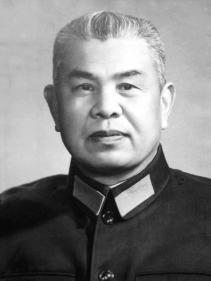
Liu ronghui

Experience the peasant movement in Hunan

My father is from Cha ‘en Temple in Xiangtan County, Hunan Province. He was born in 1908. He grew up in a poor family and only studied for three days.

My father’s experience of participating in the revolution was a microcosm of the vigorous peasant movement in Hunan at that time, which rose and fell with the rise and fall of the peasant movement. What Chairman Mao said in the famous Investigation Report of Hunan Peasant Movement is almost exactly the same as that in his father’s hometown.
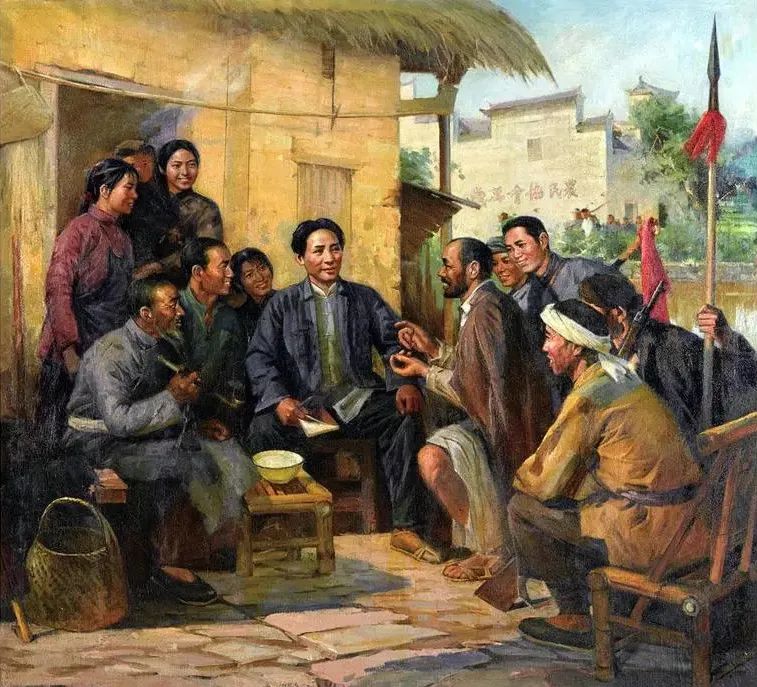
The oil painting "Mao Zedong inspects Hunan peasant movement" is painted by Xu Baozhong. From January to February, 1927, Mao Zedong made an investigation on the peasant movement in Xiangtan, Xiangxiang, Hengshan, Liling and Changsha in Hunan, and on this basis, he wrote the Investigation Report on the Peasant Movement in Hunan.

Father recalled that their hometown "had a self-defense force in 1925 and a Red Guard in 1926. In 1926, the Northern Expeditionary Army came to our place. It was the Eighth Army of Tang Shengzhi, a revolutionary army. At that time, the team was not bad, and the discipline was much better than that of the northern warlords. At that time, I also took part in the peasant movement, holding a red tassel gun, a shotgun and a broadsword, which were weapons … We set up the Red Guards to divide the land and fight local tyrants and evil gentry, which reached a climax in the autumn and winter of 1926. The Red Guards lived in the landlord’s house. Landlords in the south still have plenty of food and houses at home. There is a mountain village behind the landlord’s house, where many long-term workers are hired and pigs are fed. We will open a warehouse to save the poor. "
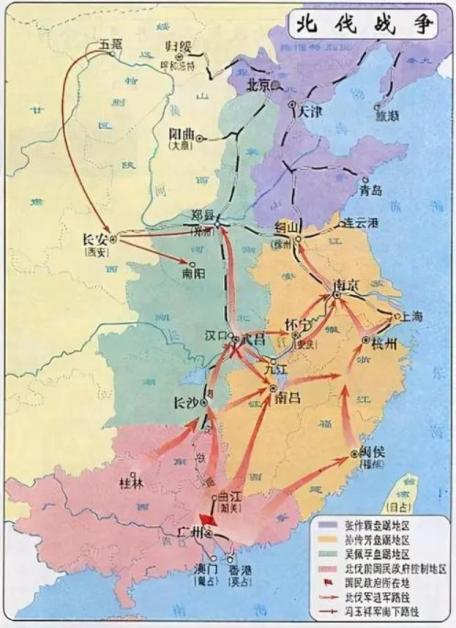
Schematic diagram of the March of the Northern Expedition. In May 1926, the Ye Ting Independent Regiment with Communist party member as the backbone, as the pioneer of the Northern Expedition, went to Hunan, which opened the prelude to the Northern Expedition.

In July, 1926, after the Northern Expeditionary Army entered Hunan, the farmers’ association entered the public period from the secret state, and the farmers’ movement developed rapidly. The first peasant congress of Hunan Province was held in Changsha on December 1, 1926, which marked the heyday of Hunan peasant movement and became the center of the national peasant movement during the Northern Expedition. They set up peasant associations and peasant armed forces. Politically, we will crack down on local tyrants and evil gentry and form a political situation in which all power belongs to the peasant associations. Economically, we should open warehouses and release grain, and carry out the struggle of reducing rent, interest, tax and mortgage. In the transformation of social system, all feudal patriarchal clan systems were attacked, and activities such as banning smoking and gambling, cutting off wages, getting rid of superstitions and eliminating bandits were carried out, which made a new atmosphere appear in rural areas.
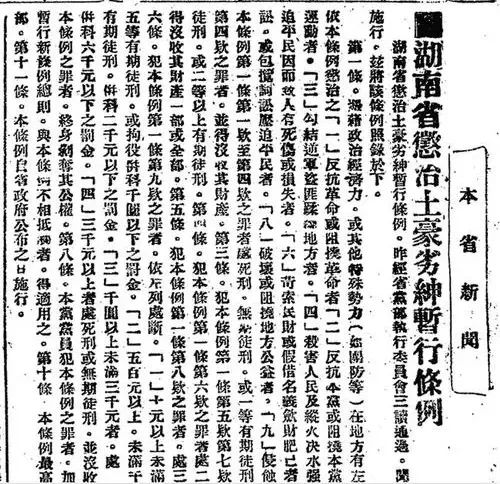
On January 29th, 1927, the Provisional Regulations on Punishing Local tyrants and evil gentry in Hunan Province, drafted by Xie Juezai, was published in Changsha Ta Kung Pao.

Ma Ri incident happened on the night of May 21st, 1927. Xu Kexiang, a reactionary Kuomintang officer, led the rebels to attack revolutionary organs and organizations such as the Hunan Federation of Trade Unions, disarmed the workers’ pickets and peasant self-guards, and released all local tyrants and evil gentry in custody. More than 100 people were killed in Communist party member, the left wing of the Kuomintang and the workers and peasants. After Ma Ri incident, reactionary troops and vigilantes in various parts of Hunan Province responded to the news, massacred the backbone of the agricultural movement everywhere, destroyed the group led by communist party, and killed tens of thousands of people near Changsha within 10 days. The revolutionary situation in Hunan turned into a low tide, and the peasant movements in various parts of Hunan were destroyed and the peasant self-defense forces were suppressed.

My father couldn’t stay in his hometown any longer, so he had to flee to Wuhan to catch up with the Wuchang Guard Corps to recruit soldiers, and became a soldier. Fortunately, the Wuchang Guard Corps is an armed force controlled by the Communist Party of China (CPC), its head is Communist party member, and its battalion cadres and even platoon cadres are all held by Communist party member. From then on, my father embarked on the revolutionary road, from Jinggangshan to Ruijin, and made a 25,000-mile long March to northern Shaanxi. Until the national liberation, he never returned to his hometown for more than 20 years.

Take part in the autumn harvest uprising

My father’s Wuchang Guard Corps is called "Guard Corps of the Second Army General Command of the Fourth Army of the National Revolutionary Army", which was established by Zhang Fakui in June 1927. Because it was stationed in the courtyard of Wuchang National Government (the old governor’s office), it was called Wuchang National Government Guard Corps or Wuchang Guard Corps.

Late at night on July 31, 1927, Wuchang Guards received two telegrams: one was sent by Zhou Yiqun who participated in the Nanchang Uprising, calling for him to go to Nanchang to participate in the Uprising; The other letter was sent by Zhang Fakui, a warlord, ordering him to hurry to Jiujiang and act with the headquarters of the Second Army.
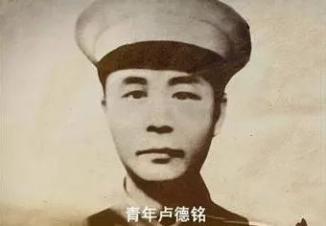
Lu Deming, head of the regiment, immediately studied with Han Jun, chief of staff of the regiment, and Xin Huanwen, instructor of the regiment, how to respond to the orders of the Nanchang Uprising. The problem is that the Wuchang Guard Corps has a great goal and is stationed in Wuchang, which is heavily controlled by the Kuomintang. How easy is it for such a large team to leave Zhang Fakui’s command and openly embark on the revolutionary road? Finally, they agreed to take a boat to Jiujiang under the cover of carrying out Zhang Fakui’s orders, and then quickly leave Zhang Fakui and turn to Nanchang. So Lu Deming replied to Zhang Fakui and asked for a ship.

Father said: "At that time, we only knew that the team was leaving, and we didn’t know what to do. Before starting from Wuhan, the team marched in four columns, carrying guns, and practiced neatly. They also shouted slogans such as’ Down with imperialism’,’ Down with Chiang Kai-shek’,’ Confiscating all the property of imperialism’ and’ Recovering the Concession’. " In the middle of the night of August 1st, more than 2,000 officers and men of Wuchang Guard Corps set out from Wuchang and set sail in the early morning of August 2nd. At the moment, they didn’t know that the uprising in Nanchang had started a day ago, and it was only halfway that they learned that the uprising troops had withdrawn from Nanchang to the south. It was impossible to meet the uprising troops, and Zhang Fakui’s troops were blocking Jiujiang, so they changed their plans and started to dry (land) in Huangweikou, Yangxin County, Hubei Province.
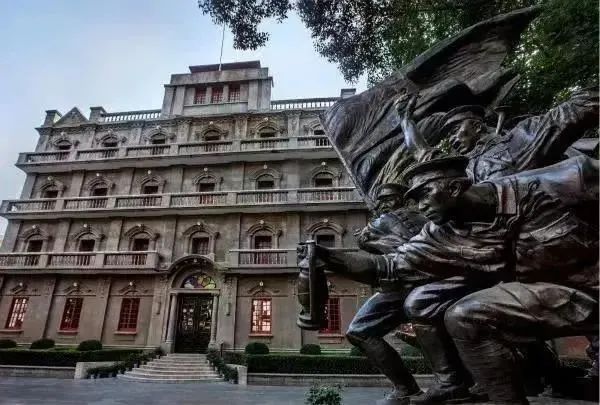
Nanchang uprising headquarters former site

My father told me: "At that time, the troops were flying the blue sky and white flag, and the Yangxin County yamen also lined up to welcome us. Not long after he stayed in Yangxin, he set out from Yangxin to Xiushui in the north of Jiangxi, driving away the local militia and reactionary forces and joining the agricultural troops in Pingjiang, Liuyang and Tonggu. The troops are repairing water to rest. "

According to the instructions of Hunan Provincial Party Committee, Wuchang Guard Corps stayed in Xiushui to prepare for the autumn harvest uprising on the Hunan-Jiangxi border led by Mao Zedong. The Autumn Harvest Uprising no longer followed the designation of the National Revolutionary Army, but unified the uprising troops into the first division of the First Army of the Workers and Peasants Revolutionary Army, which had three regiments under its jurisdiction: the first regiment was organized with the former Wuchang Guard Corps where my father was located as the main force; Anyuan workers and farmers’ self-defense forces in Pingxiang and other places were organized into the second regiment; A battalion of the former Wuchang Guard Corps and the workers and peasants armed forces in Liuyang were organized into the third regiment. There are about 5000 troops participating in the uprising. In addition, before the uprising, a regiment armed by local bandits was incorporated.
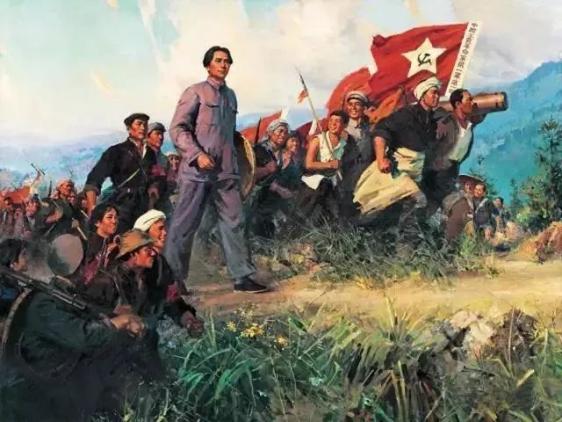
The Autumn Harvest Uprising was painted by He Conde, Gao Quan, Ji Xiaoqiu and Chen Yuxian.

In accordance with the order of Hunan Provincial Party Committee that "the troops stationed in Changsha on the 16th of this month in the Gregorian calendar will seize the provincial capital", the autumn harvest uprising troops specifically deployed the action plans of various regiments with the goal of seizing Changsha.

On September 9, 1927, the Autumn Harvest Uprising broke out as planned. Because the enemy was strong and we were weak, the actions of the three regiments were all frustrated after the uprising, and the incorporated bandit armed forces took the opportunity to defect and ambushed us. There are only more than 1,600 people left in the uprising troops of more than 5,000 people. Mao Zedong decided to stop attacking Changsha and meet Wen Gu City in Liuyang County.
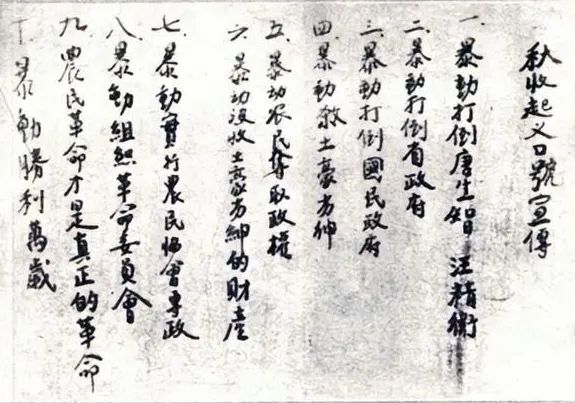
Autumn harvest uprising slogan

Follow Commissioner Mao to Jinggangshan

On September 19th, various uprising troops arrived in Wenjia City, Liuyang County. That evening, in an ordinary classroom of Liren School in Wenjia City, Mao Zedong presided over a former enemy committee. According to the situation that the enemy is strong and we are weak, the meeting changed the plan of attacking Changsha, and decided to preserve our strength and turn to the countryside where the enemy’s ruling power is weak to persist in armed struggle and develop revolutionary forces.

China’s armed struggle, from attacking big cities to marching into the countryside, is a decisive new starting point in the revolutionary history of China.
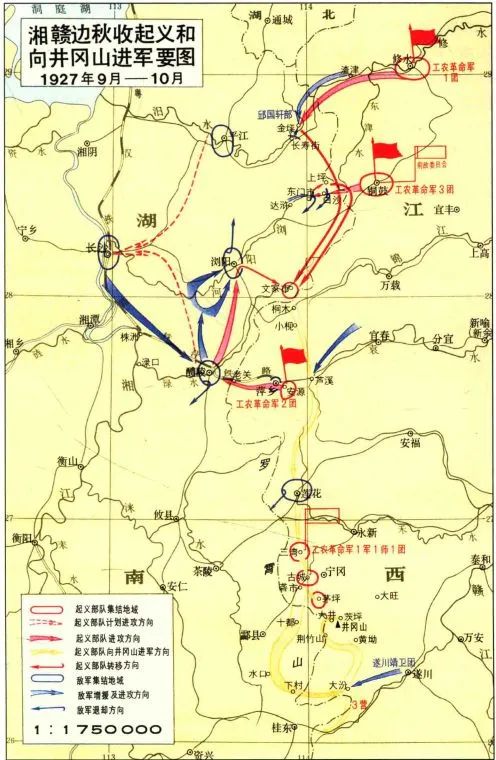
Autumn Harvest Uprising and March on Jinggangshan

Early the next morning, Mao Zedong announced his decision to withdraw troops from Gannan to the commanders of the whole division on the playground of Liren School in Wenjia City. He said confidently: victory or defeat is a common occurrence in military strategists. We are still weak, just like a small stone, and we will break Chiang Kai-shek’s big water tank one day.

My father recalled the scene at that time: "The troops arrived at a temple or ancestral hall in Wenjia City, or maybe the ancestral hall was transformed into a school. Mao Zedong told us a story. This is the first time I have met Commissioner Mao. He wears a robe, an umbrella, long hair and sandals. The guards were educated by the Kuomintang, and the battalion commanders wore big riding boots, which made them look very proud, and the troops were neat. We were surprised to see a common people come here to speak, wearing a robe, a pair of sandals and such long hair. We talked quietly, who is this? Later, I learned it was Commissioner Mao. Chairman Mao is a revolutionary, a famous peasant movement and a leader of the Party. The main content of Chairman Mao’s speech is to talk about the situation, why we can’t attack big cities when the enemy is strong and we are weak, and also emphasize that the revolution is bound to be arduous and will encounter setbacks, but it will certainly win. Chairman Mao’s speech is very interesting, and we are very willing to listen. "
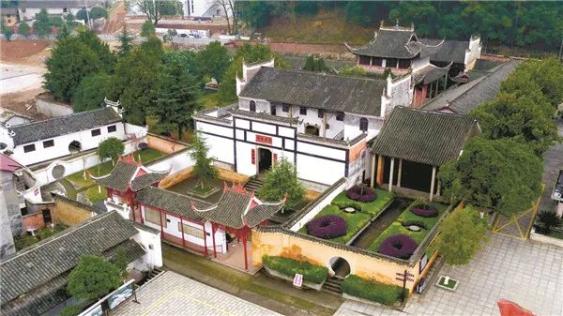
Autumn Harvest Uprising Wenjiashi Joining Forces Former Site

On the morning of September 20th, more than 1,500 uprising troops left Wenjia City and headed south. On September 23, the uprising troops were ambushed by reactionary troops in Luxi town, losing hundreds of people. The commander-in-chief Lu Deming died in this battle.

On September 29th, when the uprising troops arrived in Sanwan Village, Yongxin County, there were only less than 1,000 people left. Their morale was low, soldiers were constantly fleeing, warlords had serious habits, their organizations were not perfect, and their thoughts were quite chaotic. At that time, the army did not establish grass-roots party organizations, and the party could not effectively grasp the army; The influence of hiring troops is still serious; Coupled with the defeat in battle, continuous marching and hard struggle, some people who are not determined began to waver.

On the evening of his arrival in Sanwan, Mao Zedong presided over a meeting of the former enemy committee and decided to reorganize and adapt the uprising troops. The first division of the former First Army of the Revolutionary Army of Workers and Peasants was reduced to the first regiment of the First Division of the Revolutionary Army of Workers and Peasants, and the whole regiment was reduced to seven companies with more than 500 guns. The party command gun was established, and the branch was built in the company; Political principles such as equality between officers and men and the establishment of soldiers’ committees.
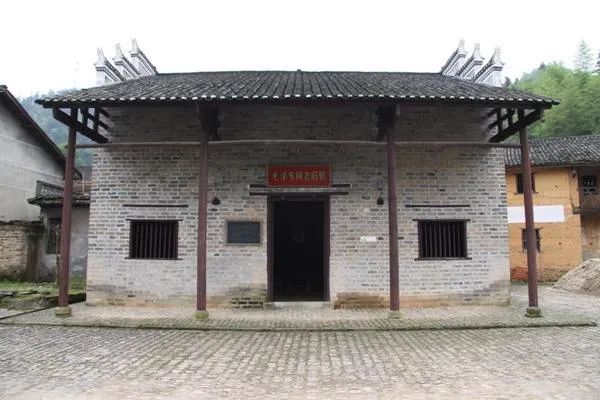
Sanwan Mao Zedong former residence

Father said, "After the trip from Luxi to Sanwan, Commissioner Mao spoke again, talking about the agrarian revolution, saying that we should not be afraid of warlords, local tyrants and evil gentry, and that our troops should make revolution and overthrow them. In Sanwan, it was proposed to fight local tyrants, but it was not explicitly proposed to divide the fields. It was not until 1928 that the fields were divided in Jinggangshan area. The Guards Corps lost many people in Sanwan. Most of the platoon cadres of the Guards Corps were Huangpu students. Some of them did not understand the revolutionary situation and were weak in revolutionary will, so they ran away one after another. Chairman Mao reorganized our army, farmers and Anyuan workers into the first regiment of the first division of the first army of China Revolutionary Army, and the flag of the army was changed from the right flag to the red flag. The Anyuan miners who have been replenished are relatively firm, and the gay revolution of the peasant self-defense forces is also very firm. "

On October 27th, several hundred members of the autumn harvest uprising troops led by Chairman Mao finally took to Ciping from Dajing, thus formally settling down in Jinggangshan. The cradle of China revolution and the first rural revolutionary base in China were born.
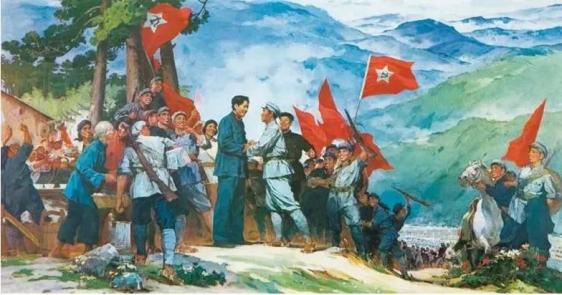
Lin Gang’s Painting of Jinggangshan Meeting. In April 1928, the autumn harvest uprising troops led by Mao Zedong and some Nanchang uprising troops led by Zhu De and Chen Yi joined forces in Jinggangshan, which strengthened the revolutionary force in Jinggangshan.

The struggle in Jinggangshan

During the Jinggangshan period, many battles were fought, and landlords and vigilantes harassed them constantly, hitting almost wherever they went. Chaling, Gaolong, Suichuan, Ninggang, Luoding, Yongxin, Long Yuan and Huang Yangjie won …

After Zhu Mao’s Red Army joined forces in Jinggangshan, great changes have taken place in the armed forces along the Hunan-Jiangxi border, which made the Kuomintang authorities fidgety. In mid-June, 1928, two divisions of the Kuomintang (KMT), whose teachers were surnamed Yang (Yang Chisheng and Yang Ruxuan), entered Long Yuan Kou and Ninggang in the south of Yongxin County.

Jinggangshan today (Xinhua News Agency)

Father recalled: "Our 31st regiment blocked Qixiling. Qixiling is the main road from Ninggang to Long Yuan and Yongxin, and there is only one path to get up and down, which is a favorable terrain for blocking. The enemy is halfway up the mountain and we are on the mountain. It’s sunny and hot in summer. The enemy couldn’t rush out, so we couldn’t get down, and we froze. There are Woods on both sides, and the battle can’t be solved. Later, when the commander of Zhu De came, he also brought a javelin platoon leader, each with a sabre, a 20-round speed machine mauser gun, two grenades and four portable flower organ submachine guns. At that time, flower machine guns were very rare. In the future, there was a joke nickname in the Red Army, calling people with pockmarks’ flower organs’. Zhu De himself carries a mauser pistol and a leather bag, and wears sandals. After carefully examining the position, he organized the short gun platoon and launched a storm. Four bugles sounded the charge at the same time, and we attacked from the mountain, killing all over the mountain. The enemy couldn’t understand the situation. They were afraid when they arrived at the base area, so we shot them down. The 28th and 29th regiments under the command of Chairman Mao inserted into Long Yuan’s mouth from the side, and the front and side stormed together, and the enemy collapsed. "Beating two sheep (Yang) in Jiangxi without the Red Army’s effort" refers to this battle, which was proposed by Mr. Zhu, and we all knew it at that time. A lot of guns and ammunition were seized that time, and a large number of prisoners were also arrested. After the battle in Long Yuan, the troops no longer carried darts, shotgun and broadsword, but all changed into the captured "Hanyang made fast guns". Hanyang made’ has five bullets, and after it is finished, it will be loaded with five bullets. It will be hot to hit three or four barrels, and the heat dissipation technology is far worse than it is now. "

Long Yuan Kou Dajie happened.

With less than three regiments, the Red Army wiped out one enemy regiment, defeated one enemy regiment, and surrendered more than a thousand guns, and achieved a major military victory since Zhu Mao’s Red Army joined forces.

My father was injured five times in the war years, three of which were in Jinggangshan.

The Red Army is really happy to be a soldier.

Most of the troops in Jinggangshan are marching and fighting, and there is very little training time. Take time to train after a few days’ rest. During training, getting up and running in the morning, or doing gymnastics, or practicing shooting, assassination, etc., are somewhat different from those in the guard regiment. In Wuhan, it’s mainly about coaching, while in Jinggangshan, it’s mainly about exercising, practicing urgent marching, running and climbing mountains, engaging in assassination, shooting and aiming, and training from reality.

"Our group is a regular group, added some in Sanwan, and added some after Chaling. Most of these supplements are workers and peasants, who are more determined in the revolution. At that time, it was added in the morning, and there would be a war in the afternoon. The same is true of prisoners, who were captured yesterday and fought today. They also played well, were strong and brave. What is the reason? They know what revolution is, why it is necessary, and who it is for. At that time, the education in this field in the army was more prominent. I was so brave in the war because I set up such an idea in my mind, not for the landlords, not for the warlords and bureaucrats, but for liberation, for fighting for myself, for the poor and for myself. If we don’t hit people or swear, and the officers and soldiers are equal, our troops will be different from the Kuomintang troops, which will raise the awareness of farmers and prisoners. At that time, there was a popular song: the Red Army was really happy as a soldier, and all officers and soldiers were the same, and no one came to oppress people. The platoon leader and the company commander are all the same as soldiers. "
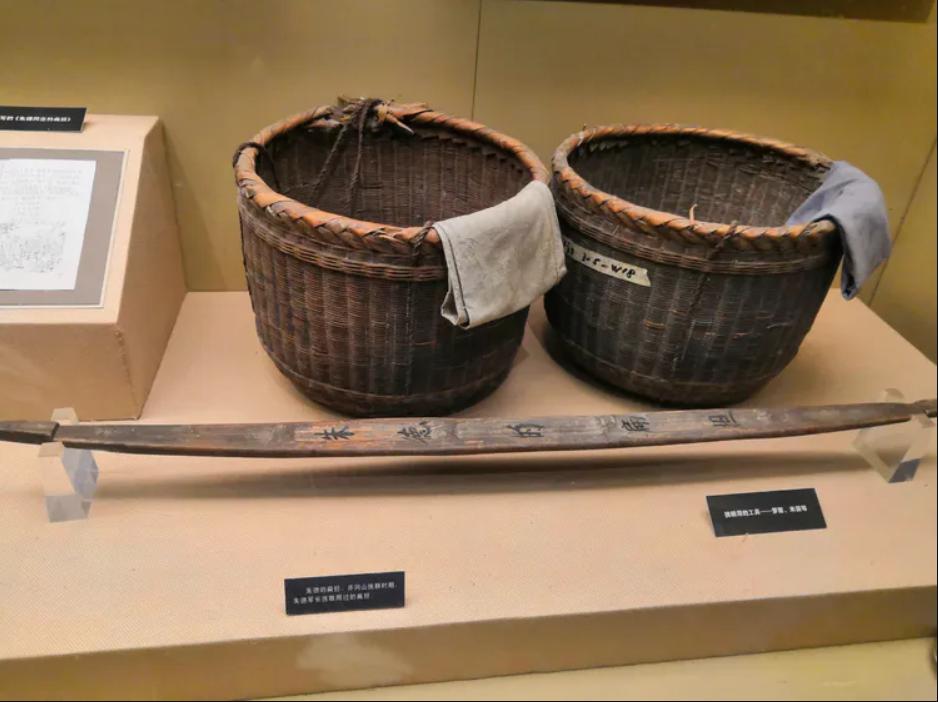
The story of "Zhu De’s pole" happened in Jinggangshan.

My father also recalled: "Our entertainment life is very simple. After eating, we play games, such as touching the blind, singing songs, cleaning up, and the soldiers’ committee announces meals. Although life is hard, it is very happy. As soon as you don’t fight local tyrants, life will be very hard. You will eat Redmi and pumpkin on the mountain. Although life is hard and food is poor, the soldiers are quite satisfied. Don’t feel bitter, because the officers and soldiers are the same, Zhu De and Mao Zedong are wearing sandals and eating in the same pot. Boss Zhu is approachable, and we often see him. When marching, he sometimes walks in front of the team, sometimes in the middle of the team, always carrying his leather bag and mauser pistol on his back. He often asks us, are you tired? Are you hungry? We replied, not hungry. Mao Zedong, Zhu De and Chen Yi are very kind and approachable. When they meet soldiers, they often ask about their families and themselves, when they came out and where they came from. Are they afraid of death in war? The soldiers answered freely, not afraid of death, and they wouldn’t come out if they were afraid of death. If I were at home, I would have died. "
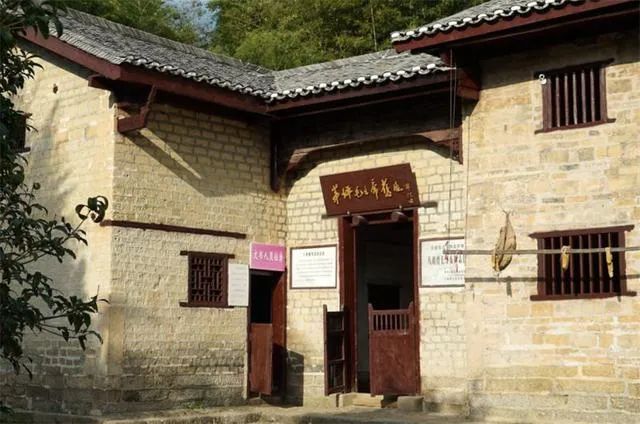
Former residence of Mao Zedong, Bajiaolou, Mao Ping Village, Jinggangshan

Regarding the cruelty of the war, my father said, "When we fight, our troops are very brave and are not afraid of death. When we fight, there are no invincible enemies. Kuomintang troops are afraid of death when fighting. At that time, the firepower was not that strong. The Red Army mainly relies on courage and tactics. At that time, all combat units in the army had flags, which were usually rolled up and unfolded when a war started. The army also issued a red armband and hung a red belt around its neck. As soon as the army set out, it was red when it started fighting. At that time, it was very simple and simple. The enemy killed us poor people too much, and we poor people bled too much. That’s how the red belt came from. The red flag is dyed with the blood of workers and peasants. When you see red ribbons, red armbands and red flags, you must remember to take revenge. "

Recalling the study and life in Jinggangshan period, "We have no books to study, and the lecturers have no formal textbooks, mainly taking political lessons, and sometimes conveying the contents of the superiors. At that time, cadres were a little educated, and even the platoon cadres were Huangpu students. Later, they gradually became less, because fighting would sacrifice them, and the troops also expanded. I was a monitor in Jinggangshan, and I was a platoon leader before I went down the mountain. At that time, the promotion of cadres was very fast. There were no cadres, not to mention no one. "
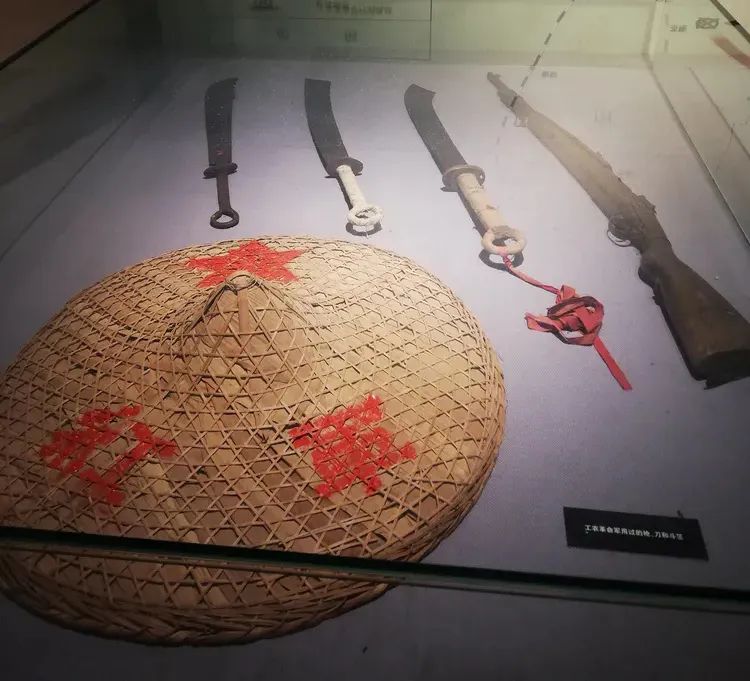
Weapons and hats used by the Red Army in those years.

"Xiaojing Hospital is located in a small rich man’s house in Xiaojing. After the troops from southern Hunan went up the mountain, they brought some medical personnel and some medicines. The head of the hospital is Duan Zhizhong, who is forty or fifty years old and has a full face of beard. He rode a donkey to Jinggangshan with the uprising troops in southern Hunan. Later, Ceng Zhi served as the party representative of Xiaojing Red Army Hospital. This hospital was a good hospital at that time, including internal medicine, surgery and pharmacy. There are Chinese and western medicine officers, and most of the medical staff are captured enemy medical staff. Treating the wounded and sick, adopting the method of combining Chinese and western medicine, can do simple surgery. "

My father still remembers the harsh medical conditions in the hospital: "The conditions in the hospital are very poor. There is no bed. At most, I use a board to build a shop, but I still sleep on the floor. I open the shop and spread some straw on the ground. There are no mats or sheets, and the quilt and straw are covered. When it is cold, we often make a fire to keep warm. The doctor squatted on the ground without a desk or stool to see a doctor and prescribe medicine. Most medical instruments are made of bamboo, such as tweezers for medicine. Splints are also made of bamboo and fir bark. Most of the medicines are herbs and Chinese medicines, such as Houttuynia cordata Thunb. After heatstroke, just eat some Houttuynia cordata Thunb and drink some cold water. The food for the sick and wounded is mainly Redmi, pumpkin and some vegetables. The standard of food is a little higher than that of the army. The army is five cents, and sometimes it is not. The wounded and sick have a dime. Sometimes something paid by local tyrants outside will often be sent to express condolences. Superior leaders often come to have a look. At the meeting, each casualty will be given a healing fee, with one yuan for minor injuries and two yuan or one yuan and fifty cents for serious injuries. Although oil and salt are few, they are guaranteed to be supplied to the wounded and sick. There are San Qian oil and five-money salt. "
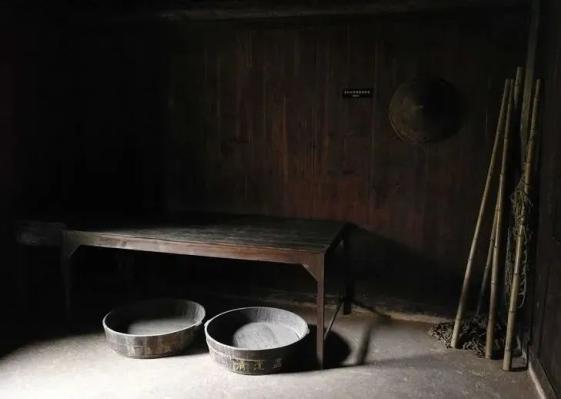
Interior of the former site of Xiaojing Red Army Hospital

Partial teacher relies on Huang Gonglue.

My father also told us about Huang Gonglue’s sacrifice.

Huang Gonglue was an early leader of the Communist Party of China (CPC), who participated in and led the Pingjiang Uprising. As for his sacrifice, the information available now is as follows: "On September 15, 1931, on the way to transfer the command troops, he was attacked by enemy planes, and he was shot several times and died heroically. He was only 33 years old."

My father was there, witnessed the whole process of Huang Gonglue’s sacrifice and participated in the rescue. The details of Huang Gonglue’s sacrifice told by my father have never been seen in all the materials I have consulted.
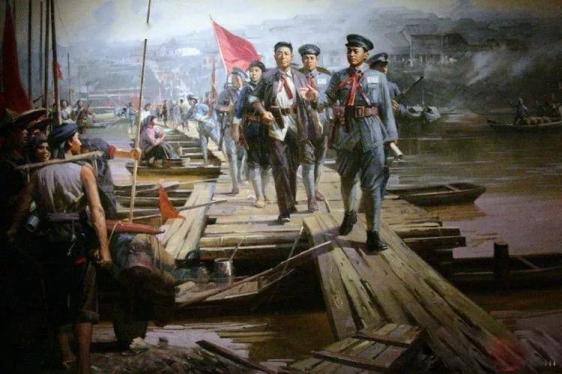
Xu Baozhong painted Pingjiang Uprising. On July 22, 1928, Peng Dehuai, Teng Daiyuan, Huang Gonglue and others led the Pingjiang Uprising and established the Fifth Army of the Chinese Workers and Peasants Red Army.

My father recalled: "Huang Gonglue was the commander of the Red Army and belonged to Peng Dehuai. During the third anti-encirclement campaign in September 1931, I worked as a medical officer and deputy director in the Military Medical Department of the Seventh Division of the Red Army. On September 15, when the troops went to Donggu, Ji ‘an, enemy planes suddenly flew in, like eight or nine planes. At that time, the plane flew very short and deliberately bullied us. Seeing the plane, the troops took cover on the spot. The ravine is not wide, mules and horses, and the burden of medicine is quite messy. There is a village below Donggu, but I can’t remember its name (the author’s note: it should be Liudu ‘ao). Huang Gonglue ran to the village, and it happened that our Seventh Division was also in that village. He leaned out to see if the troops were hidden, and the plane above clicked, and the machine gun hit him in the stomach and penetrated. Jiang Jixian and I gave him medicine together. Jiang Qixian used to be the lieutenant colonel and medical director of the Kuomintang army. During the three counter-campaigns against "encirclement and suppression", we ambushed them in Laoyingpan, just hit their guards, wiped out all their medicine burdens and guard troops, and captured them here. At that time, it was hard to find such a technician. To win him as our soldier, we needed such talents, so he went to the Military Medical Department of the Seventh Division of the Red Army. Huang Gonglue’s intestines are all flowing out. Let’s cover the intestines with an enamel bowl and buckle them on our stomach, wrap them with a whole piece of gauze, and then glue them with tape as wide as our fingers. At this time, Huang Gonglue’s mind was quite clear. At that time, he commanded three divisions of the Seventh Division, the Eighth Division and the Ninth Division of the Red Army. He appointed Xu Yangang, the commander of the Ninth Division, as the acting commander. If Huang Gonglue was operated on at that time, it would probably be better and he would not die. "

On September 19, 1931, at the Huang Gonglue Martyrs’ Memorial Conference, Mao Zedong personally presided over and wrote the elegy: "The riots in Guangzhou did not die, and the riots in Pingjiang did not die. Now they are sacrificed, and it is a pity that the disaster fell from the sky; Revolutionary wars are meritorious, guerrilla wars are meritorious, and you are brave all your life, so that you can teach future generations to follow your example. "
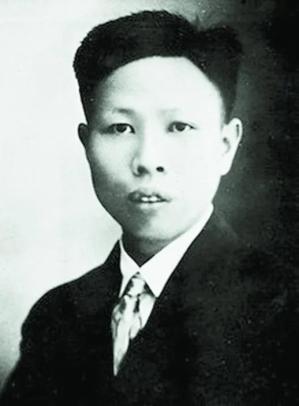
Huang Gonglue

After the war of bullets, my father continued to embark on the revolutionary journey. From red rice and pumpkin soup in the Soviet area to Wanshui Qian Shan on the Long March; From the anti-Japanese bonfire in the land of North China to the bloody struggle for the liberation of China. The people’s army has also grown from small to large and from weak to strong, forging into an invincible force!

Editor of magazine: Xu Xuan

New Media Editor: Lu Wentian, Shi Yu

All the manuscripts of this journal are original, please do not reprint them without authorization.

Original title: "Listening to Chairman Mao’s" Autumn Harvest Uprising "Speech and Witnessing Huang Gonglue’s Sacrifice: An Oral Record of a Red Army Veteran"

Read the original text
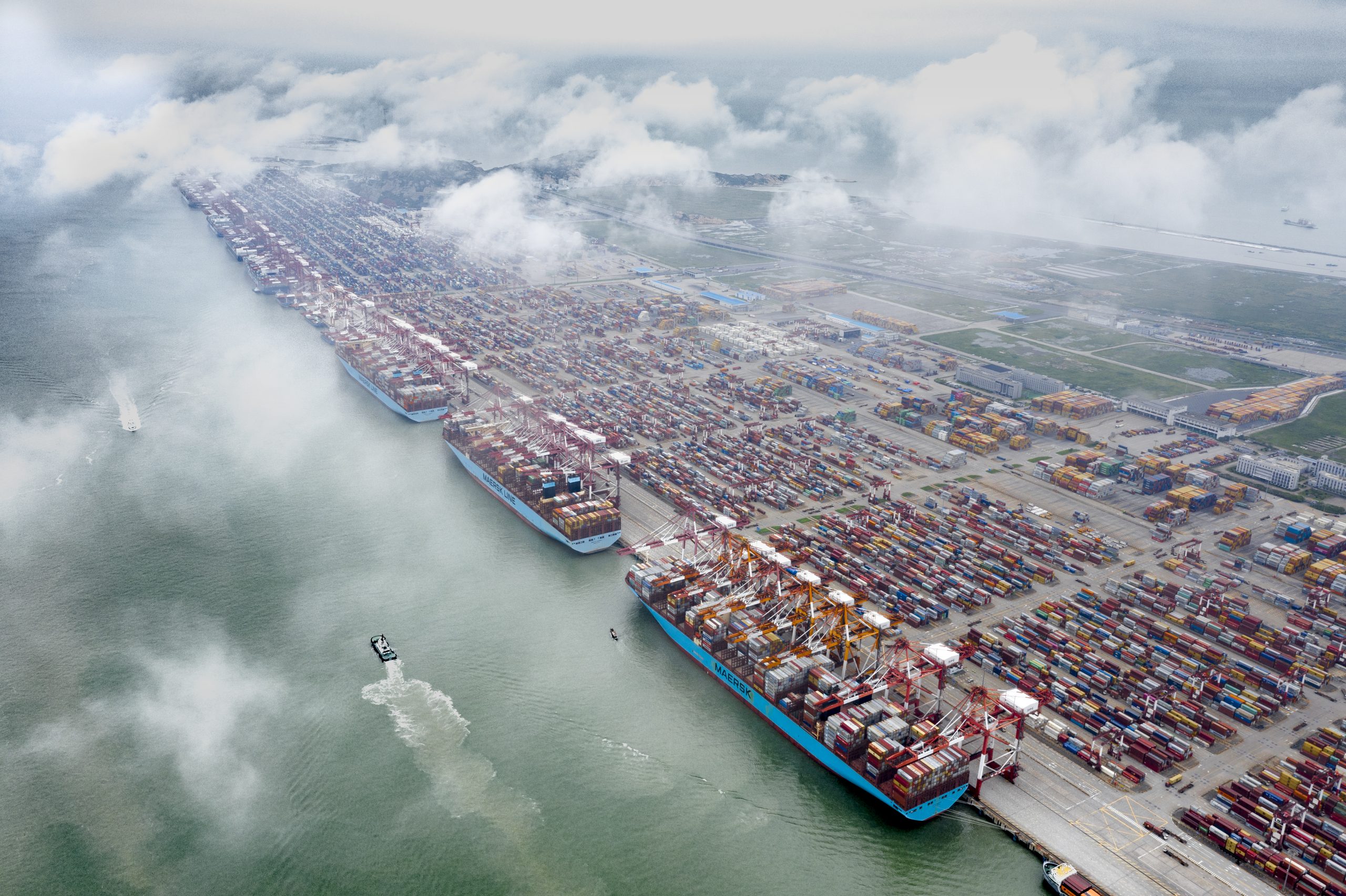
Keep Shanghai Double Chain | Put sufficient capacity in Shanghai Port! Maersk’s land, sea and air freight volume rises together.

On May 17th, employees of Shanghai Yiou International Logistics Co., Ltd., a wholly-owned subsidiary of international shipping giant Maersk, were busy nervously in the non-bonded warehouse of Shanghai Lingang New Area. After a series of epidemic prevention measures, trucks loaded with goods entered the site, and the loading and unloading workers on the platform unloaded the goods according to the list. After the system was registered, the workers drove forklifts to put the goods neatly packed on the pallet on the shelves for storage.

Since mid-April, as a white list enterprise that resumed production, Yiou Logistics’ warehouse in Shanghai Lingang New Area has gradually resumed its warehousing and receiving operations under the closed-loop management mode. At present, there are more than 200 employees with closed-loop management, providing import and export consolidation, customs clearance and distribution services to ensure the smooth supply chain. In the yard business, Yiou provides Maersk with empty container storage and empty container distribution services, and undertakes the task of container transportation between warehouses and docks.

The first recovery of the logistics supply chain supports the resumption of work in various industries. Wu Bingqing, president of Maersk Greater China, said that with more and more "white list" enterprises returning to work, Maersk’s freight volume on the three lines of land, sea and air will gradually recover, which will bring positive significance to domestic and foreign trade.

Orderly recovery of land, sea and air: the shipping space put in Shanghai Port has sufficient capacity.

A.P. Muller-Maersk is a global comprehensive container shipping logistics company, and shipping is an important business of Maersk.

At present, Maersk has 44 routes to Shanghai Port every week, including 29 maersk routes and 15 sea-land maersk routes.

According to Maersk, the operation of Shanghai Port is improving as a whole, and all terminals in Shanghai Port, including Waigaoqiao and Yangshan, are operating normally. Last week, both export containers and heavy containers returned to about 65%, and import containers have reached 80% to 90%.

"During the epidemic, even if the ship has to change its plan due to some special circumstances, such as return delay or handling the crew epidemic, the shipping capacity we put in Shanghai Port can fully meet the market demand." Wu Bingqing told The Paper (www.thepaper.cn) reporter.

According to recent market rumors, Maersk and mediterranean shipping company (MSC)2M Alliance cancelled several voyages on Asia-Europe routes. In this regard, Wu Bingqing said that due to the congestion, delays and supply chain bottlenecks in European destination ports, Maersk did not cancel the voyage on a large scale except for effectively adjusting the schedule of some routes.

Three maersk container ships operate at the same time in Yangshan Port. Photo by Zhang Han

With the introduction of "two certificates and one yard" in Shanghai Port, Maersk’s truck-collecting highway transportation capacity in Shanghai and surrounding areas has been restored to 70%.

"At present, the transportation capacity of Maersk Truck Highway can basically cover the Yangtze River Delta region." Wu Bingqing told The Paper that due to the silent management of some drivers and yards, there are still some inland hinterland areas that can’t meet the capacity matching, and the inter-provincial long-distance transportation operation is still challenging. However, compared with the non-container transportation including van and LTL transportation, container transportation shows a positive recovery trend.

Although the customer’s supply chain is influenced by upstream suppliers and raw materials, the volume of Maersk air cargo is gradually recovering.

The Paper learned from Shanghai Airport Group that from May 1 to 14, Pudong Airport guaranteed 123 daily cargo flights, with an average daily cargo volume of over 5,500 tons, up by 42.41% and 72.88% respectively over the same period in April. As of May 13th, among the 34 Chinese and foreign all-cargo airlines operating in Pudong Airport, nearly half of them have recovered their capacity to over 80%, and one third of them have recovered their capacity to the range of 50% to 80%. More than 8,000 freight operators have implemented closed operations to fully guarantee the connectivity of Pudong Airport with core markets such as Europe, America and Asia-Pacific.

Land-to-water and sea-rail combined freight volume accounted for over 40%

"The biggest pain point for customers is how to complete closed-loop operations and the shortage of truck capacity." Wu Bingqing told the The Paper reporter.

Maersk launched a series of emergency plans when the freight transportation efficiency of local and neighboring provinces in Shanghai was affected. Among them, in order to ensure the operation of freight logistics, Maersk stepped up efforts to implement the services of "land to water" and "sea-rail combined transport" in early April.

"During this epidemic, the multimodal transport mode of land-to-water and rail transit has played a significant role as an alternative for Maersk to solve logistics challenges for customers." Wu Bingqing said that in early March, for example, the cargo volume of barge and sea-rail combined transport accounted for about 18%-20% of the total land-side transport cargo volume. During the one and a half months of epidemic prevention and control in Shanghai, the proportion of land-changed water and sea-rail combined transport increased significantly, reaching about 45%.

For example, Wu Bingqing said: "We provide long-term logistics services for a retail customer, including sea transportation and land transportation from Anji, Zhejiang to Shanghai Port. After the outbreak of the epidemic in Shanghai, prevention and control measures were tightened, trailer transportation was affected, customers had difficulty in shipping, and the supply chain encountered great challenges. The consignee’s inventory in foreign destination ports was in a hurry. "

In view of the actual situation of customers, Maersk Greater China logistics service product team quickly adjusted the multimodal transport solution, and 50 40-foot containers per week undertook ocean liner through barge service to ensure the continuous operation of customers’ supply chain.

Maersk’s "land-to-water" service has a short transportation time, usually 3 to 5 days. Compared with the traditional trailer service, it is less affected by the epidemic and there is no additional cost on the way. In addition, barges are docked with ocean-going ships at Waigaoqiao/Yangshan Wharf at least twice a week, and all docks in Shanghai Port maintained closed-loop operation and efficient operation during the epidemic period, which made the service highly stable. The barge directly connects with the dock, which can also reduce the time and communication cost in the transportation process.

According to reports, at present, Maersk’s "land to water" covers 12 docks along the Yangtze River from Taicang to Jiujiang, including Jiujiang, Nanjing, Wuhu, Yangzhou, Zhangjiagang, Taizhou, Changzhou, Wuxi, Anji, Dafeng, Taicang and Suzhou.

In addition, for long-distance transportation, Maersk makes the transportation capacity of enterprises more reliable and the supply chain more flexible through the sea-rail combined transport service.

Wu Bingqing said: "We have established long-term cooperation with leading global brands in machinery manufacturing, consumer electronics and home improvement industries, and our customers regularly export accessories and products from China to European and American markets. During the epidemic period, due to the impact of road transportation, the customer experience team of integrated logistics in Greater China responded quickly and formulated solutions. Chongqing, Suzhou, Hefei, Wuxi and Changzhou directly transported more than 300 40-foot containers to the dock by railway transportation, which enabled inland goods to be seamlessly connected to ocean liners and transported to Europe and the United States, meeting the supply needs of customers. "

Compared with the traditional trailer business, the sea-rail combined transport has more price advantages for the transportation distance of more than 500 kilometers, and the potential overdue storage fee and overdue container making fee can be avoided by picking up containers in the nearest yard. In addition, the trains are regular, and there are multiple trains connecting with the port schedule every week, which is not hindered by road restrictions, and can save 75% of the transportation time compared with barges. Maersk’s sea-rail combined transport also expanded to many areas during the epidemic, and now it covers almost the whole East China.

"During the epidemic, Maersk Shanghai office was closed, but all employees worked at home to provide uninterrupted services to customers. The company also launched an epidemic’ relief package’ for customers, helping customers to cope with the challenges of logistics supply chain by reducing and exempting a series of fees including demurrage fees, booking and consumption, power release fees, and third-place bill signing fees. We keep close communication with our customers to understand their shipping arrangements, so as to cope with the rebound of goods volume after Shanghai resumes normal production and life, and ensure the smooth supply chain and foreign trade, "added Wu Bingqing.

Is it still necessary to pay wages when the contract is invalid due to false academic qualifications?

This newspaper (reporter Zhang Zhen) should the unit pay wages for employees who have forged their academic qualifications when they join the company? A few days ago, the Qingdao Labor and Personnel Dispute Arbitration Commission ruled that although the employee’s academic fraud was deemed as an invalid contract, the employee provided normal labor and the employer should pay the labor remuneration.

On November 1, 2020, Li applied for a sales position in a food company in Qingdao, falsely claiming that he had a bachelor’s degree and signed a three-year labor contract with the company. In August 2021, Li resigned, and the food company failed to pay his salary in July and August 2021. Li filed an application for labor arbitration, demanding that the food company pay a total of 8,274 yuan for these two months.

During the trial, the food company admitted that it owed Li a salary of 8,274 yuan in July and August, 2021. However, Li’s post education required an undergraduate degree. According to Xuexin.com, Li did not obtain an undergraduate degree. According to the company’s rules and regulations, Li’s academic fraud caused the company to provide a position that did not match his academic qualifications. Therefore, the labor contract signed by both parties was invalid, and Li should return the salary that was obtained because of academic fraud.

Li believes that although he does not have a bachelor’s degree, his working ability can meet the job requirements. He provided normal labor in July and August 2021 and deserves corresponding labor remuneration.

The Arbitration Commission believes that the post requirement set by the food company during recruitment is a bachelor’s degree, and Li lied that he met the requirements before the food company entered into a labor contract with him, and Li was fraudulent. According to Article 26 of the Labor Contract Law, if the other party enters into or changes the labor contract against its true meaning by means of fraud, coercion or taking advantage of the danger of others, the labor contract concluded by both parties is invalid.

However, according to Article 28 of the Labor Contract Law, "If the labor contract is confirmed to be invalid and the laborer has paid the labor, the employer shall pay the labor remuneration to the laborer", Li provided normal labor in July and August 2021, and the food company is still obliged to pay his salary.

In the end, the arbitration commission ruled that the food company paid Li a total of 8274 yuan for two months.

India’s annexation of Sikkim, will Nepal and Bhutan follow suit?

The original global intelligence agent Global intelligence agent is included in the topic # South Asia Insight 1

Indonesia’s relations with three countries

Author | Blue Sky and Clear Away

Editor | |Thomas

As a major country in South Asia, India accounts for 70% of the local area and 75% of the total population in South Asia. With its volume advantage, India has always claimed to be the hegemon of South Asia.

Apart from Pakistan, India exerts varying degrees of influence on other countries in South Asia, especially Nepal and Bhutan in the southern foothills of the Himalayas.

Due to traffic congestion, the import and export channels of Nepal and Burundi are controlled by India, and they rely on India in many fields such as economy and energy, and they can never get rid of India’s control politically.

▲ India is a giant in front of other countries in South Asia.

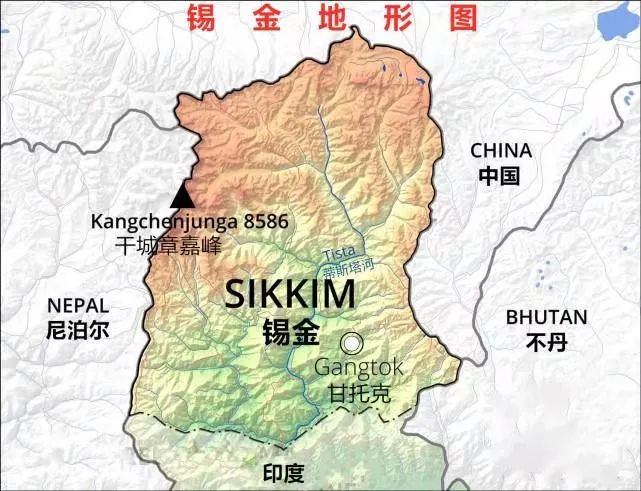
The combined population of the two countries accounts for only 2% of India, and the combined territory accounts for 6% of India. India exerts all-round control over the two countries in economy and diplomacy. There was once a country called Sikkim between Nepal and Bhutan, which was openly annexed by India in the 1970s.

What is the difference between India-controlled Nepal and Bhutan and Sikkim? Can they follow the old path of Sikkim and be annexed by India?

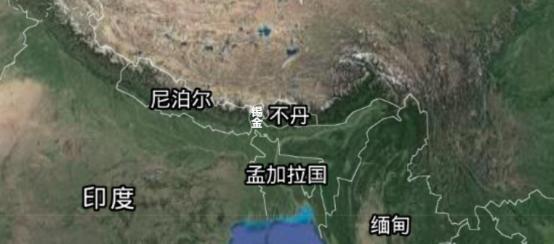
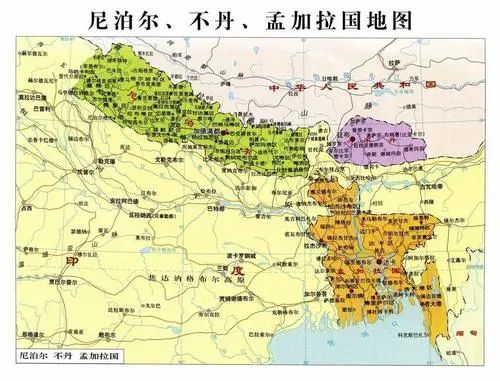
▲ All three countries are close to Xizang.

First, the undercurrent under the Himalayas

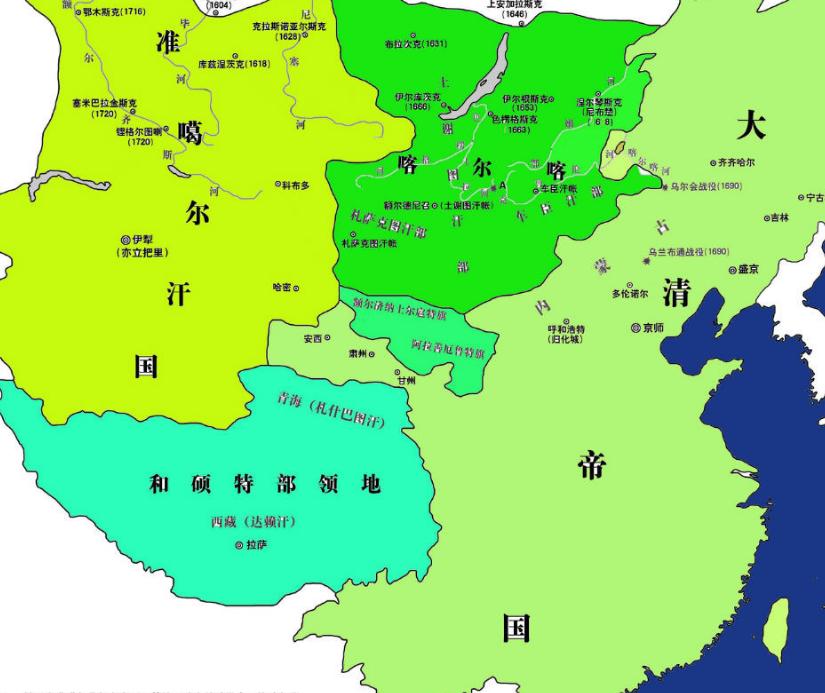
Since ancient times, the towering Himalayas have been the political and geographical dividing line between the traditional East Asian dynasty and the South Asian regime. During the Tang Dynasty, the powerful Tibetan army once crossed the mountains and went south to drink horses in the Ganges Plain. During the Yuan and Ming Dynasties, the Qinghai-Tibet Plateau was incorporated into the political system of the Central Plains Dynasty, but the control over the Qinghai-Tibet Plateau in the Ming Dynasty was far less than that in the Yuan Dynasty.

In the first half of the seventeenth century, the peasant uprising and foreign invasion made the Ming dynasty busy. Mongolians living in Qinghai, Xinjiang and other places entered Xizang, and they cooperated with Tibetan factions to compete for control of Xizang.

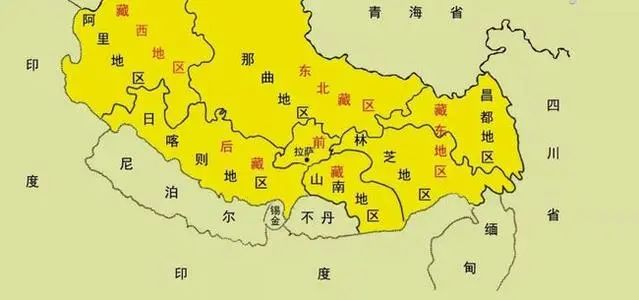
▲ Xizang in the early Qing Dynasty

The turbulent situation caused many monks and nobles to leave Xizang. Awang Langjie, a religious figure of the Kagyu Sect of Tibetan Buddhism (one of the four major sects of Tibetan Buddhism), led his followers to Bhutan, which is located on the border of Xizang, and established his own religious kingdom here in 1616.

In 1642, located in Zhemengxiong area in the west of Bhutan, the local religious forces established the Sikkim Kingdom with the descendants of Xizang nobles living here. Since then, Bhutan and Sikkim have been transformed into independent feudal kingdoms from the border areas of Xizang.

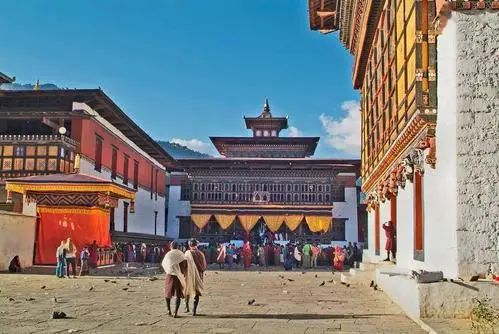
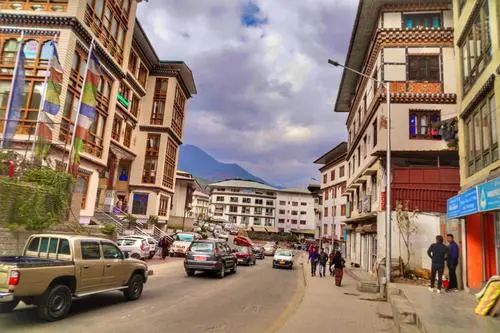
▲ Bhutan’s culture and architecture are similar to those of Xizang.

Bhutan and Sikkim were founded, but the local government in Xizang still maintained great influence on the two countries. After the change of dynasties in Ming and Qing Dynasties, the Qing Dynasty allowed the local government of Xizang to have its own vassal state, and Bhutan and Sikkim were the vassals of Xizang. The local culture is no different from that of Xizang, and Tibetan Buddhism is also an unquestionable national belief.

Bhutan and Sikkim are the marginal areas of Xizang’s cultural influence, and the altitude will decrease rapidly further south. This is the endless Ganges Plain. Although there has been no "unified" dynasty in the Indian Peninsula for centuries, Hindu belief is the undisputed protagonist here.

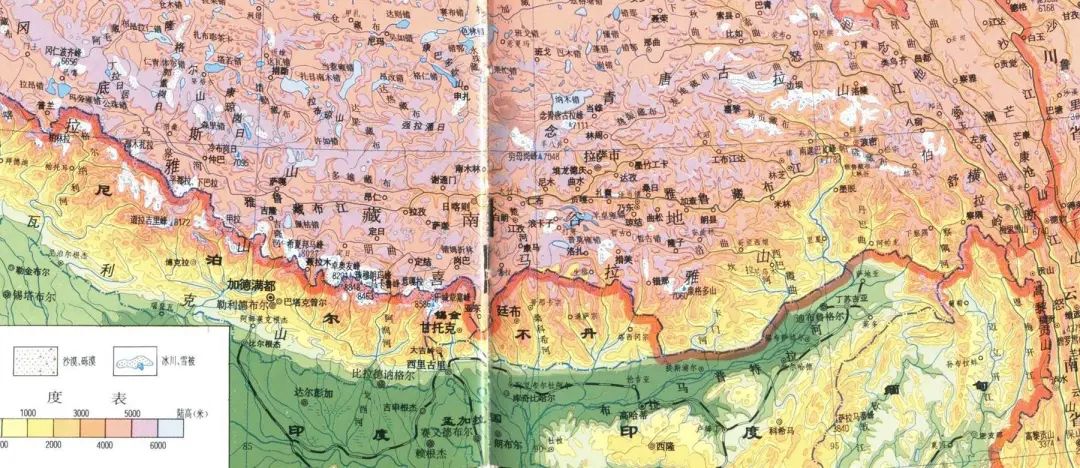
▲ Almost all the three countries are mountainous, and only the south facing India is the plain.

Nepal also rose rapidly in the 18th century. It used to be the birthplace of Buddhism, but after thousands of years of development and evolution, Nepal has different characteristics from Bhutan and Sikkim, two "Xizang-style" countries.

The influence of Buddhism in Nepal has gradually declined, but because it is closer to the core area of Indian culture, a large number of Indians moved to Nepal to escape the war or for pilgrimage. This also makes Nepal’s population composition more complicated. There are both Xizang-faced mountain aborigines and South Asian-faced immigrants among the residents.

The mixed race born after the combination of the two also occupies an important position in Nepalese society, which injects cultural genes different from Bhutan and Sikkim into Nepal, and even India’s caste system is copied in Nepal.

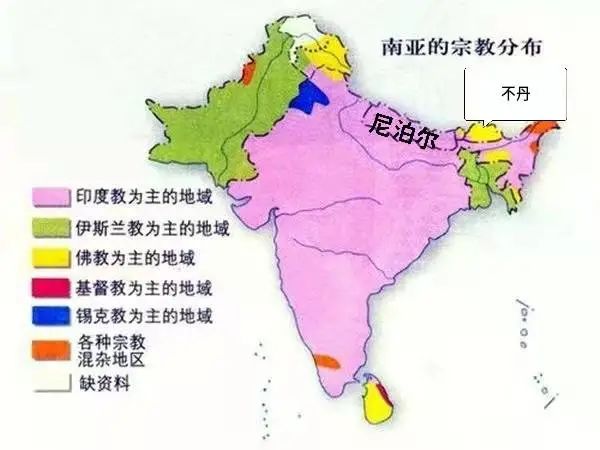
▲ The composition of religions in South Asia is complex.

In the 16th century, Mughals who believed in Islam invaded India to establish political power. Islam immediately spread widely in the northwest of Indian Peninsula and Bangladesh in the lower reaches of Ganges River. Islamic belief has also been introduced into Nepal, but it has not changed the mainstream position of Hindu culture.

In the early 18th century, the Mughal Empire, which ruled most of the Indian Peninsula, began to decline. The country has once again fallen into war, and European colonists led by Britain have also taken advantage of the situation to turn more and more areas on the Indian Peninsula into their own colonies.

In 1772, the British who occupied Bangladesh invaded Bhutan, forcing Bhutan to cede a large territory in the south to Britain. But at this time, the British have limited energy and have not targeted the three Himalayan countries for the time being.

▲ Bhutan is close to Bangladesh

In 1788, Nepalese troops annexed Sikkim, and the Sikkim royal family was forced to flee to Xizang to take refuge. Shah (King) of Nepal has long heard that there are a lot of treasures hidden in the major Buddhist temples in Xizang. Before that, Nepal also had contradictions in the exchange of money and land distribution with the local government of Xizang, and the Nepalese simply turned their troops to invade Xizang.

The Tibetan army was unable to resist, and many towns on the border were captured by the Nigerian army. The Minister in Tibet of the Qing Dynasty and the upper echelons of Xizang made peace with Nepal privately. After receiving the promise of compensation, the Nepalese army withdrew from Xizang.

▲ Pinggurkha

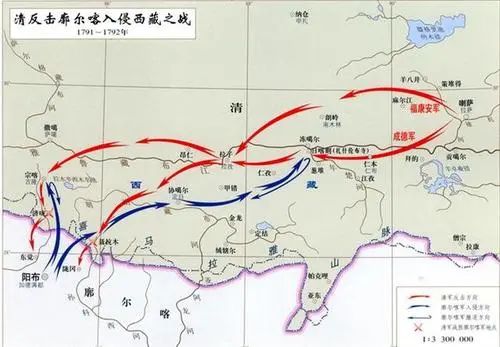
But the Nepalese did not wait for the reparations, and the angry Shah of Nepal led the army into Xizang again. After they occupied it, they hid and looted Tashilhunpo Temple, the Panchen Lama’s residence. The Nepalese behavior annoyed Emperor Qianlong, who ordered Fu Kangan to lead the army into Tibet, and the Qing army went all the way to Kathmandu, the capital of Nepal. Nepal was forced to surrender and recognized the suzerain status of the Qing Dynasty.

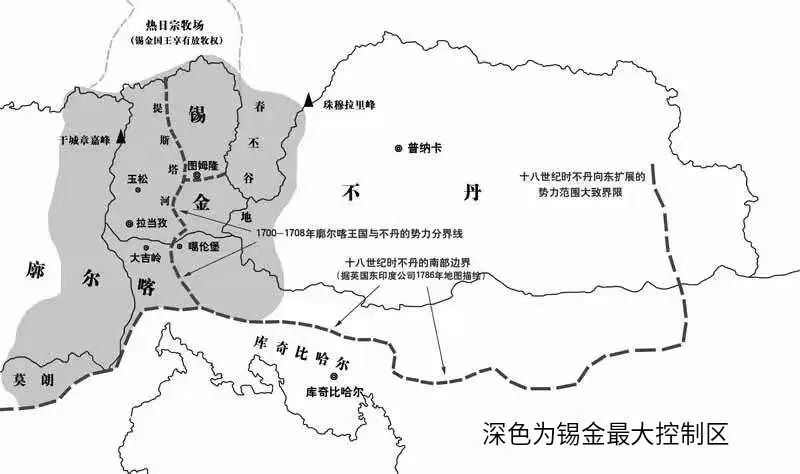
After this battle, Sikkim annexed by Nepal was restored to the motherland, but the western part of Sikkim was still controlled by Nepalese. During the war, Bhutanese also occupied backstab Sikkim, occupying part of the territory in the east of Sikkim. After the restoration of the country, the territory of Sikkim has shrunk a lot, inevitably becoming the weakest of the three mountainous countries.

▲ Smaller and smaller Sikkim

Nepalese who failed to go north began to plan to invade India south, and India’s political division gave Nepal an excellent opportunity to invade. By 1814, Nepal had conquered many areas north of the Ganges. But the Nepalese were not happy for long because they had a head-on collision with the British going north.

Nepali expansion blocked the trade between the British colony and Xizang, and the British did not want a strong local regime to emerge in the South Asian subcontinent. In 1814, the British used the border dispute as an excuse to launch a war against Nepal. The Nigerian army was weaker than the British in terms of strength and equipment, and finally had to surrender.

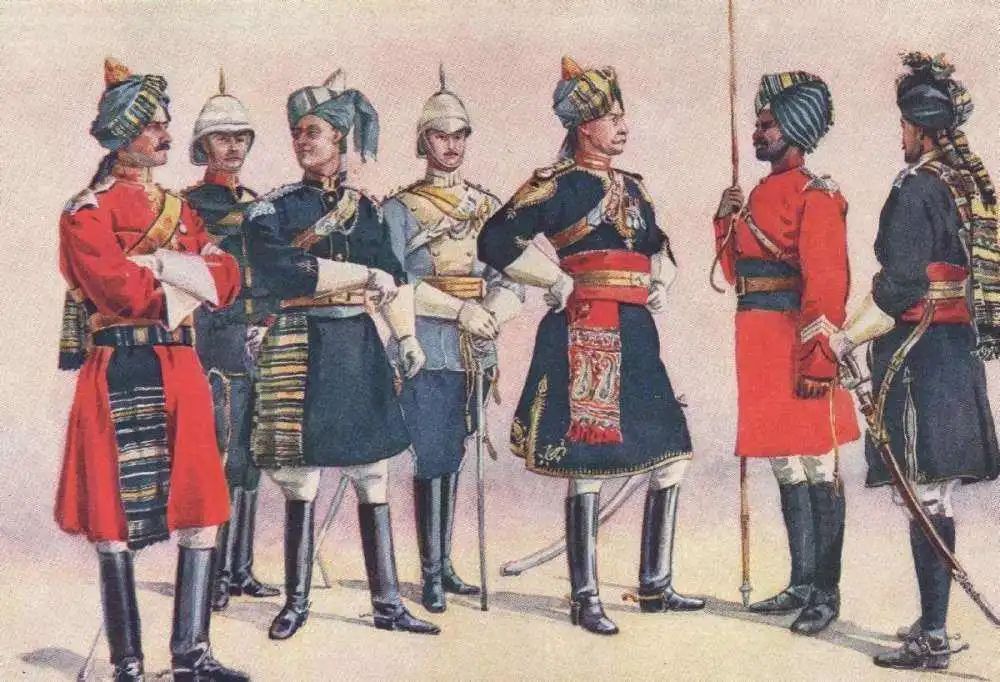
▲ British-Indian colonial army

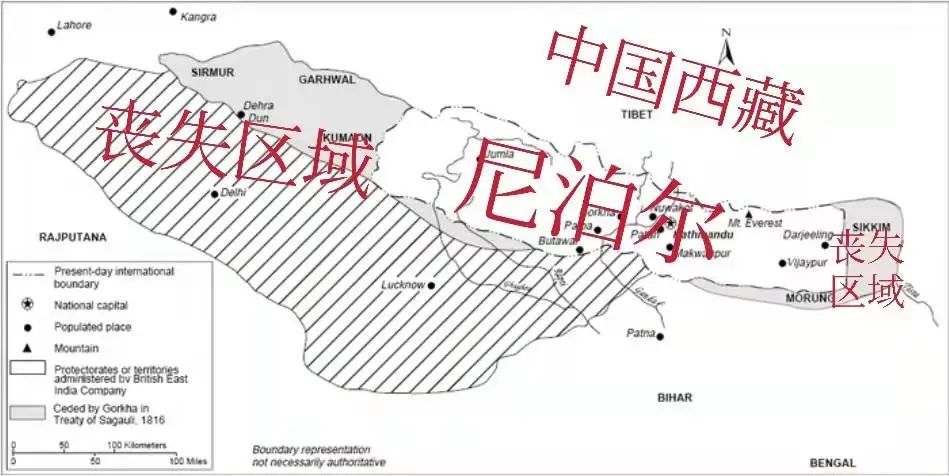
The Sagory Treaty signed by Britain and Nepal made Nepal pay a heavy price. One third of its territory was ceded to the British East India Company, and a large area of land attached to Nepal north of the Ganges River was also taken away by the British. In this way, the British curbed the expansion momentum of the Nepalese and further consolidated their power in the Indian Peninsula. The Gurkhas of Nepal also began to provide high-quality troops for the British army.

The British will not stop there. Nepal, Bhutan and Sikkim will be forcibly dragged into modern society by the British, and the history of national independent development will be interrupted.

▲ Treaty of Sagory

Two, three-pronged approach

While Britain subdued Nepal, the British East India Company reached into Sikkim on the pretext of mediating the territorial dispute between Nepal and Sikkim.

In 1835, the British asked Sikkim to lease Darjeeling and other places in the south, but Sikkim was weak and had to agree to the lease request. The British immediately introduced a large number of Indian and Nepalese laborers to Darjeeling to promote tea cultivation there. Because of its important geographical position, Darjeeling has also become an important bridgehead for Britain to control the three mountainous countries and even to leave Tibet, China.

▲ Darjeeling has become an Indian territory.

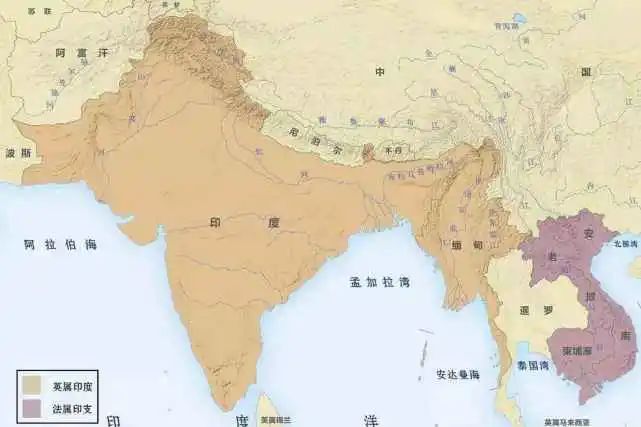
In 1858, the jurisdiction of the British East India Company over Indian colonies was abolished. The British government began to exercise direct rule over India and British India was formally established.

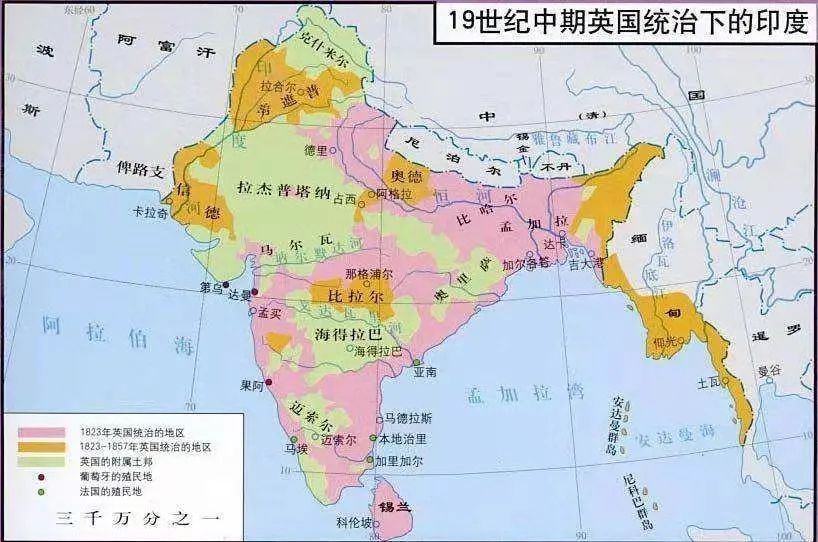
In British India, in addition to the British colony, it also includes a large number of soil states. Tubang retained the original ruling family, but in fact it has become a vassal of the British. After integrating the colonial system on the Indian peninsula, the British set their sights on three small countries under the Himalayas.

▲ British India

The British carried out different expansion and control policies towards the three countries. For Nepal, which has the largest volume, the British support the pro-British faction to master the Nepalese regime and bring Nepal into the sphere of influence. But Britain did not annex Nepal, only regarded it as the northern barrier of British India. Nepal’s upper class also completely fell to the British. He helped the British suppress the British Indian resistance activities, and even repeatedly harassed the Tibet, China border with the encouragement and support of Britain.

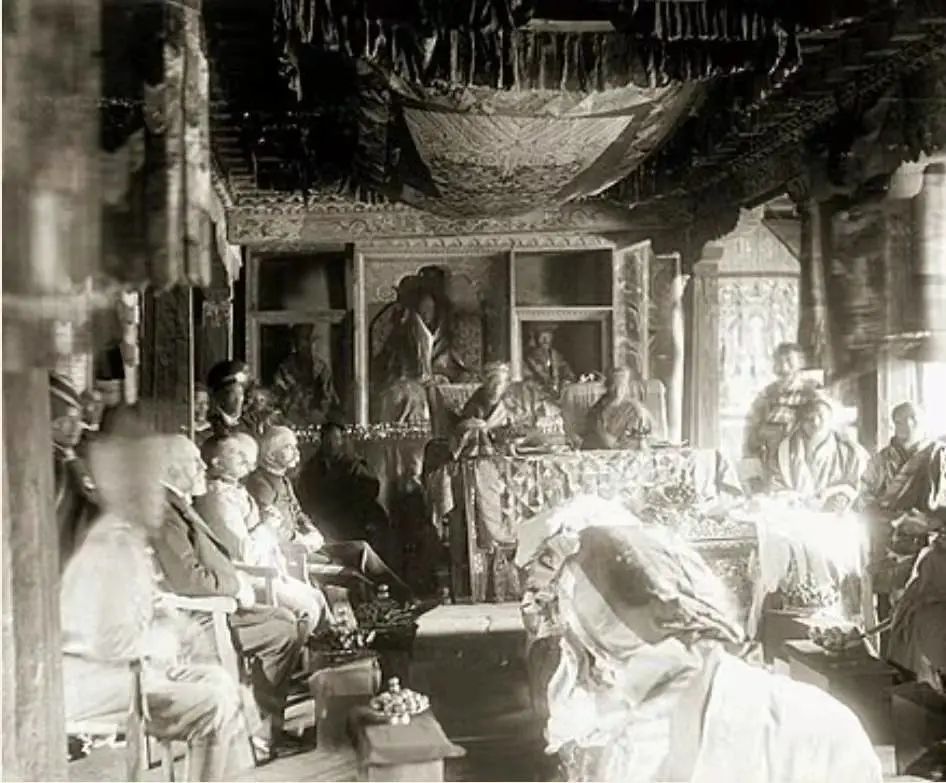
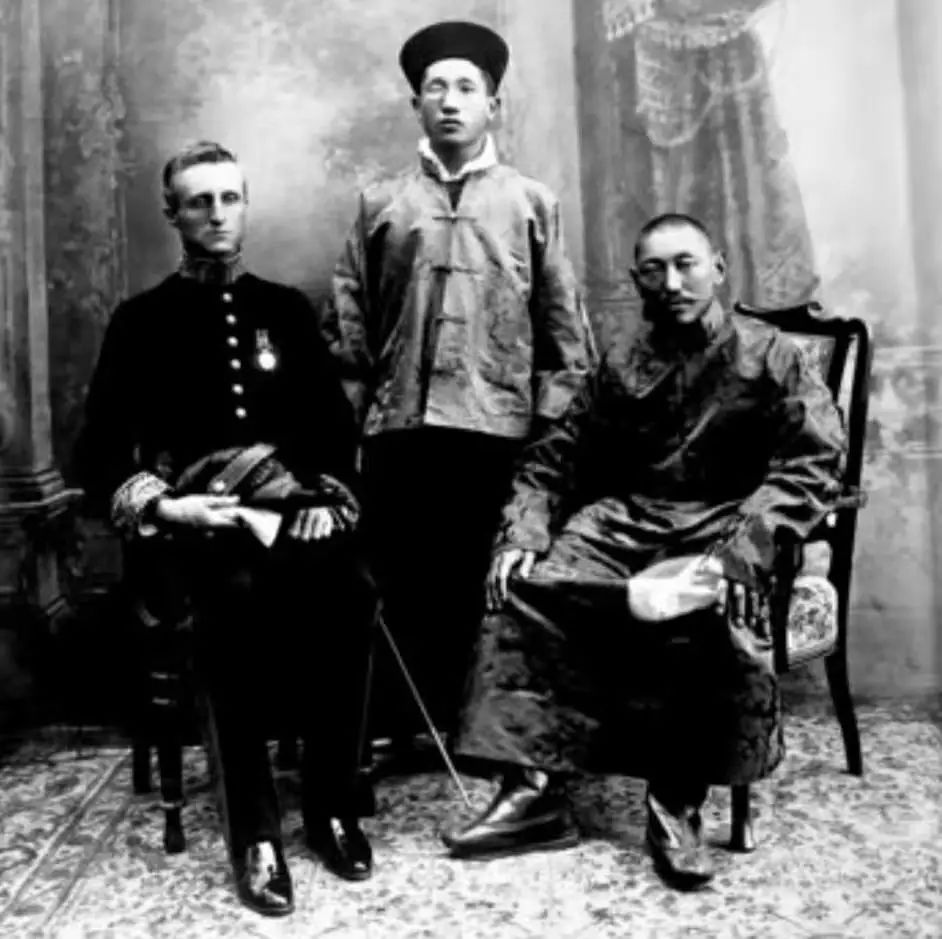
For the weakest Sikkim, in 1861, the British forced Sikkim to hand over diplomatic rights. Since then, in 1889, Britain set up an "Administrative Officer in Sikkim", who was the actual controller of Sikkim, the king of Sikkim was put on hold, and Sikkim became a British protectorate.

▲ The Administrative Officer (left) is sitting, and King Sikkim is standing.

As for Bhutan, because it is located on the trade route from India to Xizang, British India controls a large area of land in southern Bhutan in the form of lease. In addition, the British continued to encroach on the remaining territory of Bhutan, which eventually led to the war in 1864. The Bhutanese army was no match for the British army at all, and the British completely incorporated the previously leased or encroached land into British India.

Since then, Bhutan’s political situation has also been controlled by pro-British factions. In 1910, Britain did not sign the Punaka Treaty, and Bhutan handed over diplomatic rights to Britain and became a British protectorate.

▲ Britain does not negotiate.

Although all three countries are included in the British sphere of influence, they are still nominally independent countries. The Three Kingdoms are not directly under the jurisdiction of the British, nor are they Indian territories, which are essentially different from the colonial nature of British India.

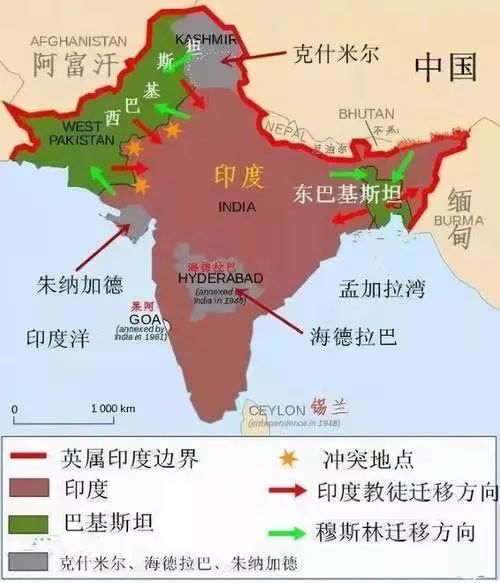
In 1947, the British, whose strength was damaged in World War II, were forced to leave South Asia. Lord mountbatten, Governor-General of British India, put forward the "partition of india" plan. The Hindu-majority areas in its directly administered colonies belong to India, and the Muslim-majority areas belong to Pakistan. The native states of former British India are free to join India and Pakistan.

▲ partition of india

India and Pakistan did not give the maharaja a a choice. For those princes who want to be independent, the Indian and Pakistani troops choose to give them physical elimination. Pakistan, for example, annexed Karat State, which declared independence, by force, while India annexed Hyderabad State, which was similar in size to Britain.

The British plan makes the sensitive religious issues more complicated, and the contradiction between Muslims and Hindus is getting deeper and deeper. Nepal, Bhutan and Sikkim do not belong to British India, but Indians have completely inherited the influence of the British and still control the three mountainous countries.

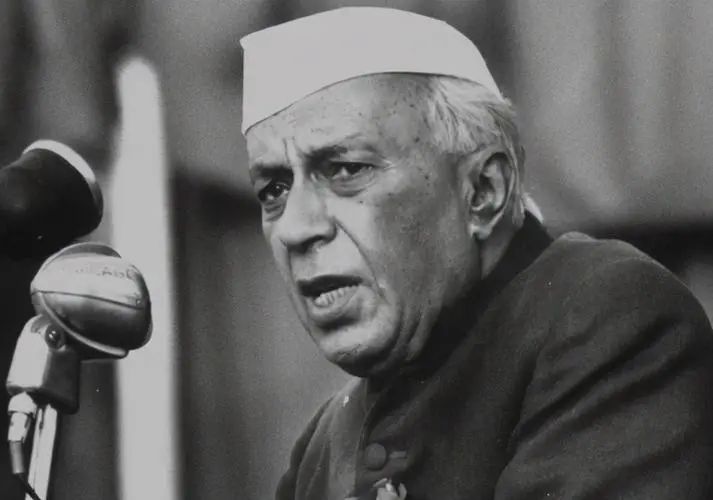
▲ Indian Prime Minister Nehru

In order to establish India’s dominant position in South Asia and strengthen its control over the three mountainous countries. In 1950, India and Nepal signed a friendship treaty, which stipulated the free movement of people and goods between the two countries. The influx of Indians has squeezed the limited local resources, and the trade with India accounts for 95% of Nepal’s total trade. Nepal’s economic dependence on India is getting stronger and stronger.

Bhutan was also forced to sign a similar treaty with India, and its diplomacy was "guided" by India. Bhutan’s government is full of various Indian consultants, and India has taken control of Bhutan’s core sectors such as transportation and finance. India even sent teachers to Bhutan to let this country with rich Tibetan culture receive Indian education.

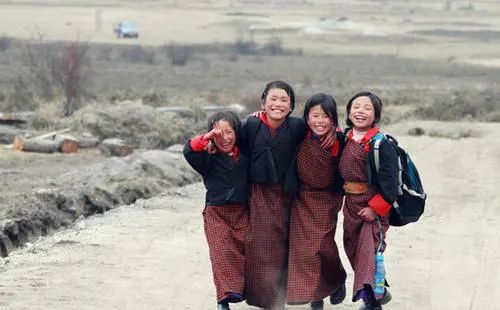
▲ Bhutanese children

Sikkim is the worst of the three countries. Because of its small country and few people, India immigrated to the local area unscrupulously, which changed the local ethnic composition. Indians have inherited the post of "Administrative Officer in Sikkim" established by the British, and the Indian Administrative Officer is like the emperor of Sikkim.

In this way, India took over the mantle of the British, established a "special relationship" with the three countries, and brought the three countries into its sphere of influence.

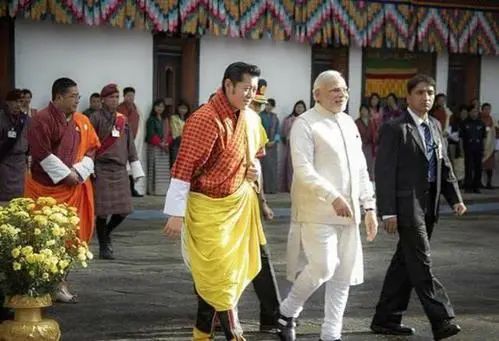
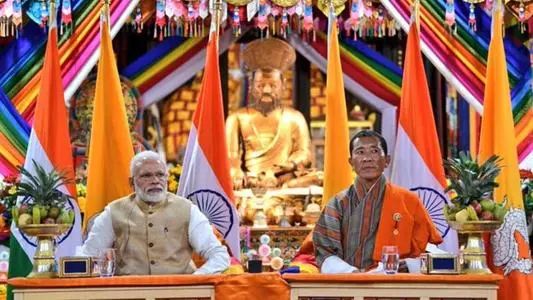
▲ Indian Prime Minister visits Bhutan

Third, the counterattack of fish

India’s control has aroused resentment among the three countries, among which Nepal, with an area of about 150,000 square kilometers and a population of more than 20 million, is undoubtedly the strongest among the three countries. Nepal has also become the hardest of the three countries.

Nepal actively developed its diplomacy with the United States and China, and the King of Nepal asked India to withdraw its military advisory group in Nepal and the personnel of the monitoring station on the border between China and Nepal, and even bought military equipment from China.

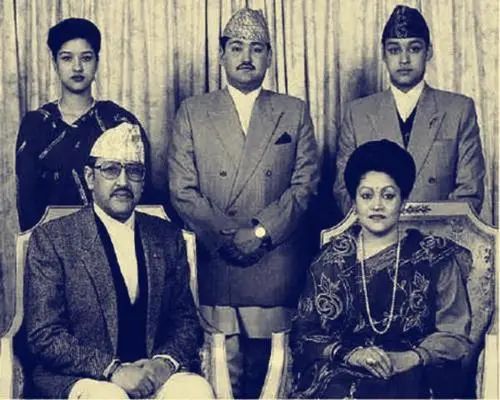
▲ Nepalese royal family

However, more than 40% of the population in Nepal is descended from the combination of India and local aborigines, and 80% of the population in Nepal also believes in Hinduism. In addition, there are a large number of Indian immigrants in Nepal, who do not want Nepal to be excessively separated from India.

The Indian government has also cancelled its financial subsidies to Nepal and imposed a blockade on Nepal’s foreign trade. By the 1960s, the struggle between control and anti-control between Nigeria and India had become superficial.

Bhutan covers an area of less than 40,000 square kilometers, which is similar to that of Taiwan, China. Although there are almost all Buddhists in China, the total population is less than one million. I really don’t have the strength to harden India. On the basis of not denying India’s "guiding right" to its diplomacy, the Bhutanese government stated that "Bhutan has the freedom not to accept India’s opinions in foreign affairs".

▲ The monks in Bhutan seem to be not much different from Xizang.

Bhutan also demanded to reduce the number of Indian consultants, and in 1971, it issued its own currency, Numza, in an attempt to weaken India’s overall control over Bhutan’s finance.

The strength of Sikkim is even weaker, with a total area of only 0.7 million square kilometers, which is not much bigger than that of Shanghai. In the 1970s, the population was less than half a million. Originally, Buddhists were the dominant population, but as a result, the proportion of Buddhist population was continuously reduced with the influx of a large number of Indians.

▲ Sikkim

In 1968, King Sikkim secretly supported people to take to the streets to protest against Indian control. In order to prevent Sikkim from going astray, India "guided" the Sikkim Parliament to pass the Sikkim Constitution drafted by India.

King Sikkim refused to let the country fall into the hands of India, and boycotted the pro-Indian political parties in the next year’s general election. In March 1975, the Indian army surrounded the palace and placed the king under house arrest, and immediately held a referendum to decide whether Sikkim should be incorporated into India. At this time, half of Sikkim’s population were Indian immigrants. Under the "protection" of the Indian army, the referendum decided to merge Sikkim into India with a support rate of 97%.

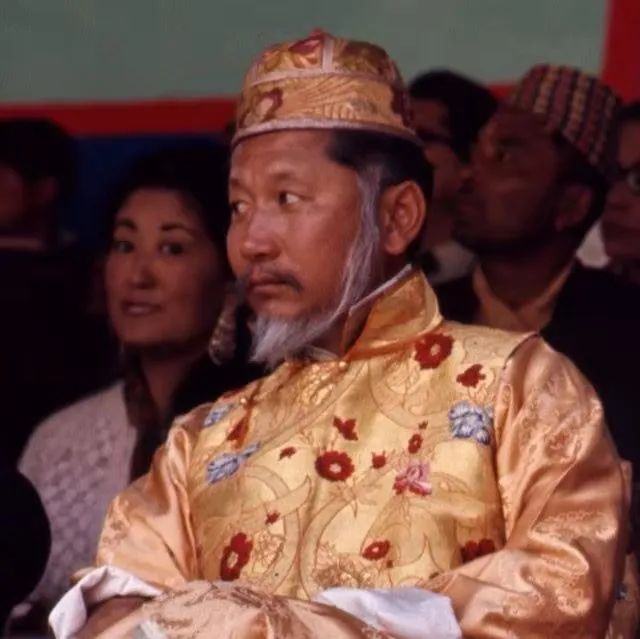
▲ Sikkim’s last Kejia (King)

In the Cold War, the United States and the Soviet Union acquiesced in India’s annexation of Sikkim in order to win over India. However, this has aroused the worries of Nepal and Bhutan. In 1975, the King of Nepal announced that he would make his country a "zone of peace", adhered to the principle of non-alignment, and opposed the establishment of military bases in Nepal by other countries. Bhutan also joined the United Nations in 1978 and actively integrated into the international arena.

The actions of Nepal and Burundi cannot fundamentally lift India’s control over the country. Nepal is restricted by geographical conditions and its trade is concentrated on the southern side of the border with India. Despite the unremitting efforts of the Nepalese government, its foreign trade has shown a diversified momentum, but by 2020, its trade with India still accounts for about 60% of its total trade, and India’s position in Nepal’s economy and society remains unshakable.

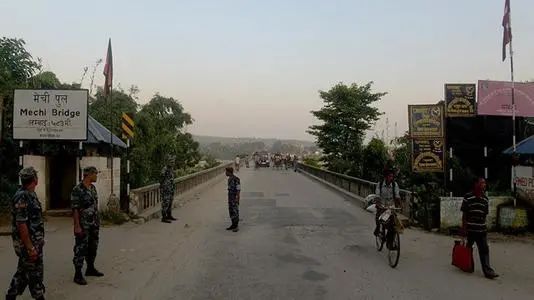
▲ Nepal-India border crossing

The acceptance of Hinduism in Nepal is also getting higher and higher, and the similar cultures of the two countries are an invisible bond. Moreover, Nepal plays an important role in India’s national security strategy, guarding the security of northern India, and India will not let Nepal get rid of the shackles of "special relations."

Bhutan is much smaller than Nepal, and its centrifugal force to India is much smaller. The two countries have frequent high-level visits and close economic and trade relations. In Bhutan’s past ten five-year plans, India has invested more than 50 billion rupees, accounting for more than 60% of the total plan funds.

▲ Bhutan street

Today, 78% of Bhutan’s imported goods come from India, and 94% of its exported goods are also destined for India. More than three-quarters of Bhutan’s annual foreign financial assistance is provided by India. India has supported the development of Bhutan’s power industry, making it a pillar industry, contributing 12% of Bhutan’s GDP, and almost all of this power has been delivered to India.

The weapons, equipment and logistical support of the Bhutanese army are provided by India. There are a large number of Indian army consultants in the Bhutanese army, and Bhutanese officers will also go to India for military training.

▲ India does not have military exchanges.

It should be noted that the tragedy of Sikkim’s annexation will be difficult to perform in Nepal and Bhutan. Compared with Sikkim, Bhutan and Nepal are bigger, and Nepal’s population of 30 million should not be underestimated. India’s internal ethnic contradictions are constant, but the annexation of the two countries will make India’s ethnic problems more complicated. Nepal, with its mountainous areas and fierce folk customs, may become "India’s Afghanistan".

Secondly, it is difficult for India to find the international environment when it annexed Sikkim in 1975. Nepal and Bhutan are members of the United Nations, but once it is annexed, it will inevitably lead to a strong rebound from the international community. Moreover, through existing means, India has maximized its interests in Nepal and Bhutan.

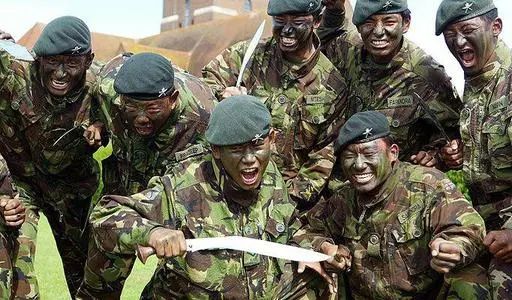
▲ Gurkhas in Nepal provide high-quality mercenaries for Britain, India, Singapore and other countries.

India is not the only neighboring country between Nepal and Bhutan, but their borders with their northern neighbors are all towering snow-capped mountains. Nepal’s 15 major foreign trade ports are all located on the Indian border. India closed 13 of these ports in the diplomatic dispute between Nepal and India in 1989, which caused turmoil in Nepal. In 2019, India cut off Nepal’s oil supply again, and the lives of Nepalese people were seriously affected.

Bhutan’s economy is limited, but India’s penetration control over it has penetrated into all levels of the country, and it is impossible for Bhutan to move the Buddha of India out of its own house on its own. India will remain under the control of the two countries for a long time to come, and this special state-to-state relationship will continue to exist.

▲ Modi visits Bhutan

Long-term author | Blue sky and clear distance

A veteran lover of history

Editor in charge | |Thomas

Graduate of London School of Economics and Political Science | Editor-in-Chief of Global Intelligence

—(End of full text)—

This article is the original content of "Global Intelligence Agent"

Unauthorized reprinting is prohibited.

Welcome and share in the circle of friends and friends.

Original title: "India’s annexation of Sikkim, will Nepal and Bhutan follow suit?" 》

Read the original text
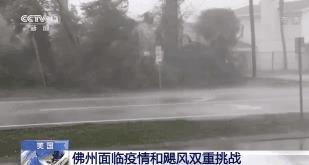
Hurricane Laura has been upgraded to category four! Florida in the United States faces the double challenges of epidemic and hurricane.

  On the 26th local time, Hurricane Laura was upgraded to a category 4 hurricane and gradually approached Texas and Louisiana.

  Earlier on the 26th, affected by Hurricane Laura, waves kept pounding a beach in Galveston, Texas. The National Hurricane Center predicts that when Hurricane Laura makes landfall, the wind speed may reach 233 kilometers per hour, which is expected to cause floods and tornadoes and cause disastrous damage to the local area. The National Hurricane Center also said that at least 20 million people are currently in the trajectory of hurricanes, and 420,000 residents in Texas and 200,000 residents in Louisiana have been forced to evacuate.

  In Florida, the southern United States, although the state is not the state most affected by Hurricane Laura, it is still facing a severe situation of COVID-19 epidemic prevention and control. The arrival of the hurricane will make Florida face the double challenges of epidemic rebound and hurricane damage to its home. Recently, an epidemiologist in Florida has simulated the epidemic trend map after the arrival of the hurricane. The forecast shows that when people need to escape from the hurricane and flee their homes, it is likely that the local virus infection rate will rise again. The local government advised people to go to hotels to avoid hurricanes and avoid gathering in public shelters.

  Christina, a senior American meteorologist:If people need to evacuate, they can’t stay with their family and friends, and social contact is formed again. Being able to go to the hotel prevents people from gathering in public shelters to meet more strangers and not knowing whether these people carry the virus.

How do college students study abroad? What are the requirements for a university to study abroad?

Studying abroad can not only broaden your horizons, learn different languages and cultures, but also exchange studies and explore more professional knowledge in the birthplace or world-class center of a certain major. In today’s fierce competition for postgraduate entrance examination in China, studying abroad has become a high-quality choice for more college students. Many people are concerned about how college students study abroad. What are the requirements for a university to study abroad? Actually, it’s not complicated. You can apply if you meet the following four conditions.

Condition 1 for college students to study abroad: reaching the standard in school

Most of the undergraduate or graduate students in foreign universities are applying. You can apply as long as you meet certain conditions. The first condition to be met is our usual school grades, which is GPA (average credit grade point) professionally. University courses have grades and credits. Calculate your grade point through a fixed algorithm (there are differences between schools). Of course, the better the grades, the better, which requires us to manage ourselves well during school.

Condition 2 for college students to study abroad: language achievement is up to standard.

Language is of course an essential subject for studying abroad. We have all heard of IELTS and TOEFL. Generally speaking, studying in the Commonwealth system requires an IELTS score of at least 6. However, studying in North America, Japan and other countries requires TOEFL scores. The higher the language score, the better. One good thing is that you can score many times, and admission will be calculated with the highest score. Therefore, we need to prepare for studying abroad at least one year in advance. Mr. Liu also suggested that the sooner you plan, the better, and communicate with the study agent as soon as possible.

Three conditions for college students to study abroad: practical ability is up to standard

Many students are studying abroad for the first time. If a person lives and studies alone in a place far away from home, he must face many communication and adaptation problems. We must have the ability to face these problems independently. During our school days, we can participate in more practical activities, and our internship experience in China can also be used as excellent documents, which will leave a deep impression on the tutors of interested schools and help improve the success rate of studying abroad.

Four conditions for college students to study abroad: the economic conditions are up to standard

The cost of studying abroad is an unavoidable and important issue. The cost of taking the language test in the early stage, tuition and living expenses after going abroad are not small expenses. Take Britain as an example, tuition costs 100,000-150,000 yuan a year, and living expenses are almost the same. You can also work legally for a certain period of time every week to earn living expenses.

That’s all the information. I hope I can help you. Next, Xiaobian recommends to you the relevant contents of the list of overseas study expenses of universities in various countries, please check it out!

Guo Chao’s love affair with the Olympics.

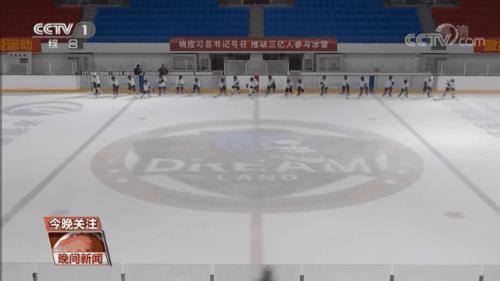
  Cctv newsBid farewell to the Tokyo Olympic Games. In less than half a year, we will usher in the long-awaited Beijing Winter Olympics. Nowadays, ice and snow sports have become the new fashion of many sportsmen. This one on the big screen has a history of ice sports for more than forty years. His love for ice and snow has infected many people. Let’s listen to his story together.

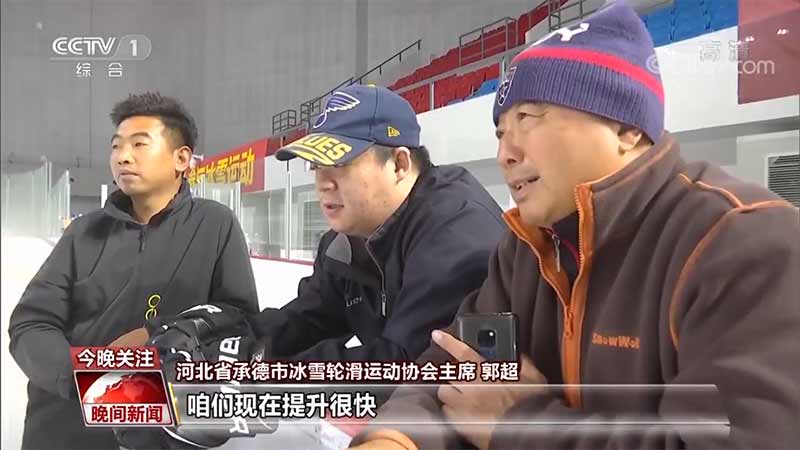
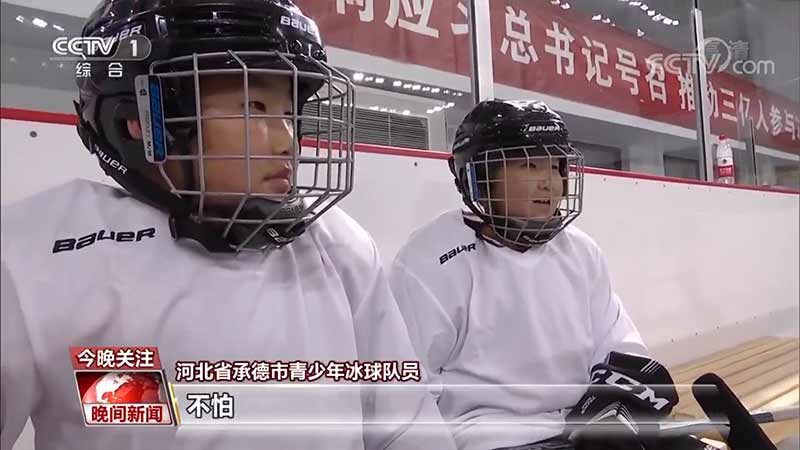
  In Chengde Ice Sports Center, every weekend, the city youth ice hockey team will come to train. The U10 ice hockey team being trained is newly formed this year, and most of the players are children aged 7 or 8 with zero foundation. The team hired a coach specially from Beijing.

  Guo Chao, Chairman of Chengde Ice and Snow Roller Skating Association, Hebei ProvinceI’m improving very fast now. Should I continue to practice like this, or should I take it out to take part in the competition?

  Yang Huai, head coach of Chengde Youth Ice Hockey Team, Hebei ProvinceLet’s focus on training now, and then add some small games as a supplement.

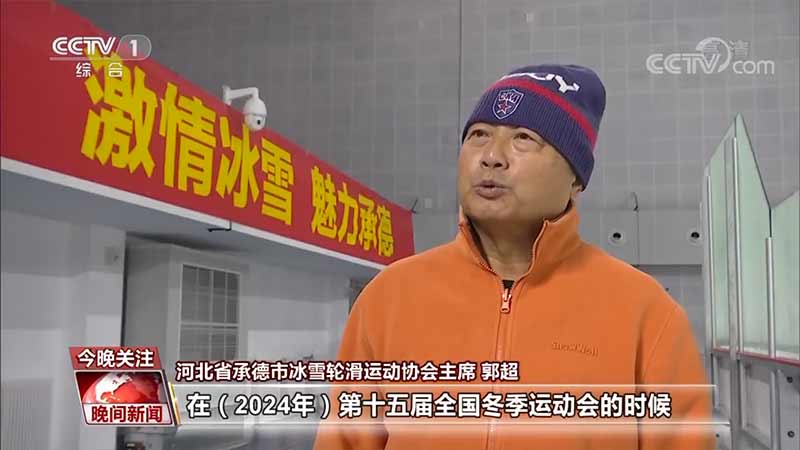
  Guo Chao is the head of this team and a die-hard fan of ice sports. In the early 1980s, the summer resort held an evening class to teach skating, and Guo Chao officially started ice time.

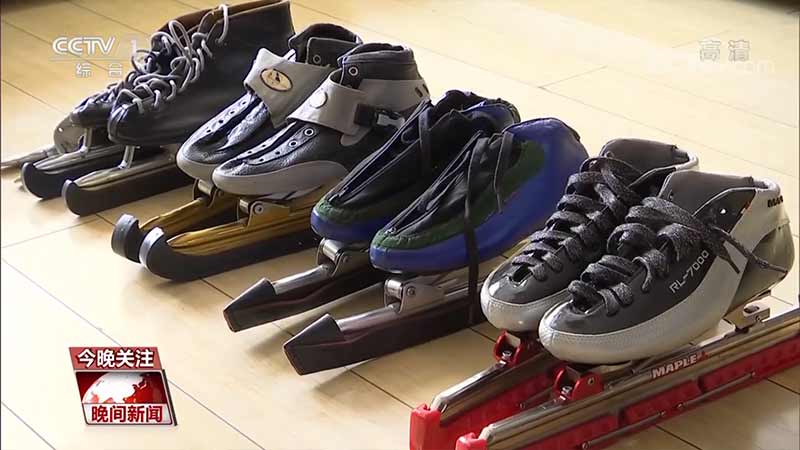
  Guo Chao, Chairman of Chengde Ice and Snow Roller Skating Association, Hebei ProvinceI bought this first pair of shoes in 1985. It was 62 yuan at that time. Before I bought this pair of skates, I liked ice. Get up at 6: 20 (every day) and go to the summer resort by bike for half an hour. At about 6: 50, you can see the ice clearly, and you are afraid to get the skates stuck in the ice cracks and skate for 40 to 50 minutes. After that, you can go to work by bike quickly.

  After more than ten years, the first pair of skates retired gloriously, and the second pair of skates took up their posts.

  Guo Chao, Chairman of Chengde Ice and Snow Roller Skating Association, Hebei Province: More than 1,000 yuan. At that time, the salary also increased somewhat. Although it was more expensive, it was ok.

  Then Guo Chao started with two pairs of skates. Guo Chao said that although he was not good at skating, he was the first in enthusiasm.

  Guo Chao, Chairman of Chengde Ice and Snow Roller Skating Association, Hebei ProvinceMy friends said, big brother, if you judge diligence on the ice, you must be excellent, but you are stupid and lack this talent.

  After retirement, Guo Chao became the chairman of Chengde Ice and Snow Roller Skating Association because of his warm-hearted love. In 2015, the year Zhangjiakou won the Olympic bid, Guo Chao started with the fourth pair of skates.

  Guo Chao, Chairman of Chengde Ice and Snow Roller Skating Association, Hebei ProvinceI really feel very good. For example, my heart rate is about 50 times. Sometimes I go to the hospital for a physical examination. Some doctors say that my heart is slow. I said that the benefits brought by exercise are reflected here.

  [Chengde, Hebei Province] Ice and snow sports heat up and lead a team to Russia to bid for the event.

  After the successful bid for the Winter Olympics, there were more events hosted by Chengde. In every competition, Guo Chao will lead the volunteers of the Association to sweep and water the ice on the lake ice rink in the summer resort. In 2018, he also led a team to Russia to bid for the Women’s Bandi Ball World Championship. As a folk association in a small city, Guo Chao is still very proud that it can win the right to host the world A-level events on behalf of Chengde.

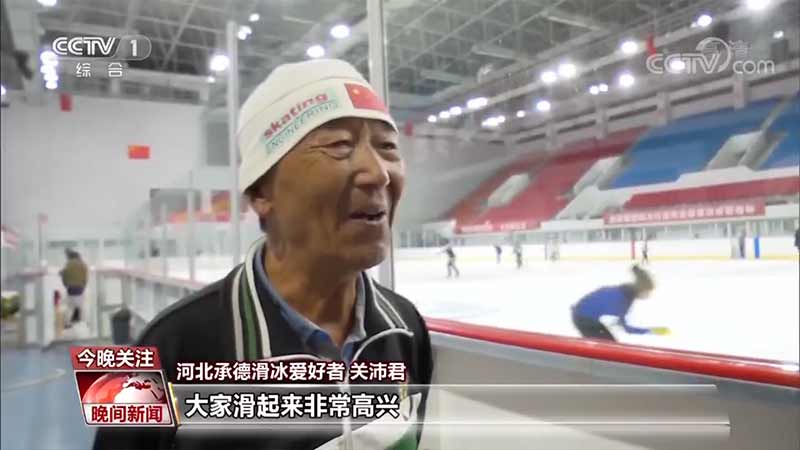
  Thanks to the efforts of many parties, Chengde Ice Sports Center was completed in 2019, and ice friends can have a good time all year round, so they don’t have to run outside any more.

  Guan Peijun, a skating enthusiast in Chengde City, Hebei ProvinceThe ice in this skating hall is like a mirror, and everyone is very happy to slide.

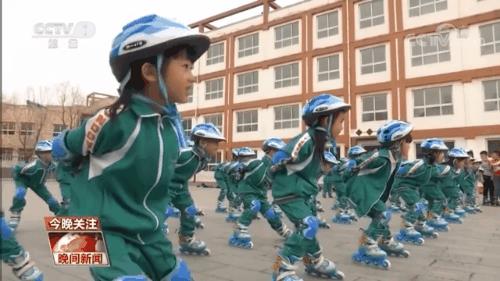
  At present, half of the primary and secondary schools and kindergartens in Chengde offer roller skating or skating classes. After the start of the new semester, Guo Chao plans to select some first-year young talents to build the U6, U8 and U10 ice hockey echelons.

  Guo Chao, Chairman of Chengde Ice and Snow Roller Skating Association, Hebei ProvinceI hope that our ice hockey team can have good athletes transported to the provincial professional team at the 15th National Winter Games (in 2024) and can represent our Hebei Province in the All-Winter Games.

  journalistHow do you feel? Is it fun?

  Youth ice hockey players in Chengde City, Hebei Province: fun.

  journalistAre you afraid of falling?

  Youth ice hockey players in Chengde City, Hebei Province: Not afraid.

  Guo Chao, Chairman of Chengde Ice and Snow Roller Skating Association, Hebei ProvinceIt is expected that through the Winter Olympics, ice and snow roller skating will have greater development and make people healthier and enjoy a better life.

Gather strength to promote the high-quality development of military vocational education

editorial comment/note


President Xi profoundly pointed out that it is necessary to strengthen the support of talents, implement the policy of military education in the new era, give full play to the comprehensive educational functions of college education, military training practice and military vocational education, and train a large number of experts in training and preparing for war.


In recent years, under the guidance of the Supreme Leader’s Socialism with Chinese characteristics Thought in the New Era, the whole army has thoroughly implemented the Supreme Leader’s thought of strengthening the army, adhered to the principle of cultivating people and educating people for war, accelerated the construction of learning-oriented barracks, and established a clear orientation of competitiveness, development and combat effectiveness, and emerged a number of advanced models focusing on the main responsibility and innovation to carry out military vocational education.


A few days ago, the Political Work Department and the Training Management Department of the Central Military Commission informed and commended the advanced units and individuals of military vocational education in the whole army. Commended units focus on training and preparing for war, focusing on the urgent needs of troops, focusing on post performance, focusing on frontier development, and focusing on the "trinity" joint efforts to educate people, which is a typical representative of firmly and pragmatically promoting military vocational education.


In order to give full play to the exemplary role of advanced models and promote the military vocational education of the whole army to a new level, the experiences and practices of some commended units in promoting military vocational education are summarized.


People’s Armed Forces Department of yuhu district, Xiangtan City, Hunan Province-


Give full play to the advantages of cooperation and release the high efficiency of military vocational education


Since the People’s Armed Forces Department of yuhu district, Xiangtan City, Hunan Province took the pilot task of military vocational education reform, it has made full use of existing resources and paid attention to the advantages of military-civilian cooperation, forming a good pattern of learning from time to time, learning from everywhere and learning for everyone.


Relying on the existing conditions to grasp overall planning and optimization. Take various measures of "building, adjusting, merging and reforming" to build the military comprehensive network learning room, internet learning room and library. The library has both the functions of course production and leisure and entertainment, the military comprehensive network study room has both the functions of network training, and the Internet study room continues to use the original facilities of "Green Internet Cafe in Barracks" to maximize the cost-effectiveness ratio.


Grasp management norms in synchronization with standardization construction. The construction of general education should be synchronized with the regularization construction of the People’s Armed Forces Department and the standard construction of grass-roots stars, so as to improve the efficiency of the study room.


Leverage integration of defense and civilian technologies to expand and extend. Give full play to the functional characteristics of the People’s Armed Forces Department, continuously expand the outer edge of the military vocational education, give full play to the advantages of talents and library resources in colleges and universities under its jurisdiction, and fully integrate the cadres specializing in armed forces and militia company commanders into the military vocational education system.


31110 troops-


Focus on preparing for war, and promote military vocational education.


The 31110 troops used the supreme leader’s thought of strengthening the army to strengthen the foundation, aimed at the urgent need of the battlefield and the reality of training, and solidly promoted military vocational education to achieve results.


Focus on tempering the hard skills of fighting and building a unified management system. Strengthen organizational leadership, and build a pattern of grasping education with party Committee leaders, chief officials in charge, branch implementation, and special supervision. Stand up with a clear orientation that teaching is more important than teaching, with leaders taking the lead and all staff being taught. Focusing on the needs of different positions, the study plan was carefully formulated, and more than a thousand courses were selected in the past three years.


Actively broaden the main learning channels and build a multi-dimensional learning network. Grasp the foundation of online education and focus on expanding and enriching the channels of learning resources. With the high-quality resources of the military, we will establish a cooperative and co-construction mechanism with the National University of Defense Technology and Nanjing Library.


Focus on stimulating the internal motivation of learning and helping to prepare for war and improve the quality and efficiency. Close to actual combat training, the performance of general education is linked to personal annual evaluation, which stimulates the driving force of learning, significantly improves the level of training and preparation, and successfully completes various major support tasks.


Unit 75832-


Combine online and offline to help generate new combat effectiveness.


Unit 75832 is a new combat force formed after the reform. Armed with the idea of strengthening the army by the supreme leader, the unit has made good use of the active military vocational education platform in accordance with the idea of "leading learning through war, integrating training and education, building while learning, and full participation", making the generation of combat effectiveness on the "fast track".


Patch with good fragmentation time. Make full use of the military comprehensive network platform and the "military online APP" to break the time and space restrictions, guide officers and men to learn flexibly and independently, and realize the urgent need for urgent learning and specialized learning.


Find the ability gap and charge quickly. Using the formula of "task post demand-ability and quality status = course learning content", and adhering to the combination of "online teacher worship and offline practice", the ability and quality of officers and men can be "quickly filled".


Promote the positive cycle of teaching and learning. Relying on the "double-gang" team in the theater, the results of war training and research will be condensed to form "unique skills and unique skills", and a number of characteristic micro-courses will be developed to help the training practice "feed back" vocational education.


Learning plus practice equals combat effectiveness. Since the pilot of military vocational education, the growth cycle of new recruits in the team has been greatly shortened, which has spawned a number of operational research results.


78100 troops-


Integrating "Four Orders" to Improve the Management Effectiveness of Military Vocational Education


The 78100 troops carried out military vocational education in a solid manner, continuously promoted the transformation of learning achievements, and helped to prepare for war with remarkable results.


Scientific planning and orientation. Adhere to the party Committee’s special discussion and training, often talk and discuss, coordinate learning tasks, unify learning plans, unify quality standards, and set career development plans for each officer and soldier; According to the principles of similar majors, convergence of ranks and complementary expertise, a mutual help group was formed, and 11.5 courses were selected per officer.


Competing to catch up and create an atmosphere. Actively carry out tournament competitions, "micro-lessons and small lecture halls" and other supporting activities, and compare all staff and time to stimulate the enthusiasm for learning and training; We will build a centralized learning room for the military integrated network and the Internet, apply for and purchase professional books, organize the backbone of teaching expertise to record quality courses, improve learning conditions, and meet learning needs.


Solve problems and improve steadily. Independent research and development of learning assistance programs, actively organize research and demonstration of new modes of military vocational education, purchase and deploy intelligent teaching equipment such as cloud platforms and handheld terminals, and improve the quality and efficiency of education.


Unit 31436-


Gather internal motivation and stimulate the vigorous strength to become successful in the war.


The 31436 troops gathered to learn from the war and become the internal driving force for the war, and promoted military vocational education and talent development to promote mutual benefit.


The party Committee takes the lead and builds consensus through demonstration. Learn from an example, and the team party Committee should be the "first class" and strive for the "first place"; Learning is passionate, and officers and men participate in the discussion of "military vocational education in my eyes".


Scientific guarantee, gathering energy in solving difficult problems. Introduce high-end equipment and transform the study room; The learning terminal is introduced into the class to solve the problems of lack of space and difficulty in concentration during the epidemic period.


Precise policy, gathering momentum in the promotion of innovation. Establish a mechanism of full post coverage, full participation in training and full evaluation of learning, regularly study and coordinate contradictions, organize evaluation in a timely manner, and use the mechanism to supervise learning; Encourage everyone to gallants and promote learning with atmosphere; If you are included in the "double competition" evaluation, if you learn a lot and do well in the exam, you will get extra points in the quarterly evaluation and give priority to the overall evaluation.


Unit 31511-


Create a learning atmosphere and promote combat effectiveness with learning power.


The 31511 troops won competitiveness, development and combat effectiveness with learning ability, and improved the contribution rate of preparing for war with high-quality military vocational education.


Focus on fighting and grasping education. A group of Party Committee members have implemented the military education policy in the new era, and guided officers and men to stick to their mission, study hard, and focus on post quality. According to the post responsibilities, focus on the core competence, make the annual plan, improve the evaluation and incentive mechanism, and create a learning atmosphere.


Build a platform close to the demand. Incorporate the construction of learning environment into the infrastructure system, purchase learning equipment, improve the man-machine ratio, and optimize the learning experience of officers and men. Sort out and form a list of personnel post courses and a guide to learning standards, and form four categories of 24 course resources to meet the learning needs of officers and men.


Integration into practice contributes to talent. The establishment of military scientific research workstations, the training of experts and the team of combat training and scientific research have achieved remarkable results in the growth of officers and men.


Unit 32371-


Be good at planning and implementing, and promote the entry into force of military vocational education


As a support and guarantee institution for military vocational education in military organs, Unit 32371 closely follows the needs of the development of the situation, the needs of its functions and missions, the needs of officers and men to become talents, careful planning and implementation, and orderly promotes the comprehensive pilot, summary and popularization.


Carry out in-depth education mobilization and solve ideological and cognitive problems. Hold a mobilization deployment meeting, issue a deployment work plan, organize backbone training, and organize special publicity activities at different levels.


Steadily promote the establishment of rules and regulations to solve the problem of standardized operation. Establish a system of relevant laws and regulations, issue a study guide for officers and men every year, and bring officers and men into the management of study groups at all levels.


Closely follow the urgent need of officers and men to perform their duties and solve the problem of learning resources. Implement the whole process management of project establishment, construction, operation, service and evaluation, guide colleges and universities to build a series of online courses to meet the urgent needs of posts, and improve a number of intelligent and practical teaching and learning conditions.


Pragmatically promote policy support and solve the problem of motivation and incentive. Incorporate the learning situation into the personnel appraisal system, into the military training appraisal content, and record it in the personal training file, which is linked to the evaluation of the first, the year-end assessment, and the promotion and use, so as to promote the effective transformation of learning ability into combat effectiveness.


Unit 92485-


Take measures to build a learning military camp in an all-round way.


92485 troops have embarked on a distinctive path of military vocational education.


Highlight "unification" as the key and grasp the layout. Party committees insist on analyzing the situation on a monthly basis, giving special feedback on the progress every week, finding contradictions in time and formulating countermeasures; Carry out in-depth military special education and actively recommend high-quality bibliographies, with clear working ideas and strong implementation.


Focusing on "war" and grasping quality and efficiency. Pay close attention to the urgent need for preparing for war, grasp the essential requirement of "post-oriented", establish the quality standard of personnel’s ability, decompose the list of post training, and solidify the ladder diagram of personnel’s growth into talents. It provides a basis for officers and men to study, enrich their knowledge and improve their professional quality.


Emphasize "reality" as the foundation and grasp development. Formulate interim measures for the implementation, study and evaluation of military vocational education, and improve relevant systems; Collect learning resources and establish offline learning resources database. Make good use of the brigade library, establish a normal communication mechanism with the resident library, and create a learning military camp in the new era.


Unit 95183-


Grasp training by fighting, and improve the contribution rate of winning.


The 95183 Army has always insisted on focusing military vocational education on preparing for war, integrating learning, research and warfare into actual combat training and joint training, and effectively promoting the improvement of core military capabilities.


Insist on educating people for war, being precise and capable. Closely follow the combat training task and carry out mass research activities. In view of major tasks, officers and men were organized to study immediately before, so as to "learn what is needed in the war."


Insist on mode innovation and systematic study. Take the methods of "flight gap discussion, post practice observation and learning" to extend the learning activities to under the wing, on the ground and next to weapons. Relying on the systematic counseling and training of scientific research institutes and industrial departments, exchange research and training with brother units to enhance the combat and joint combat capabilities of commanders and fighters.
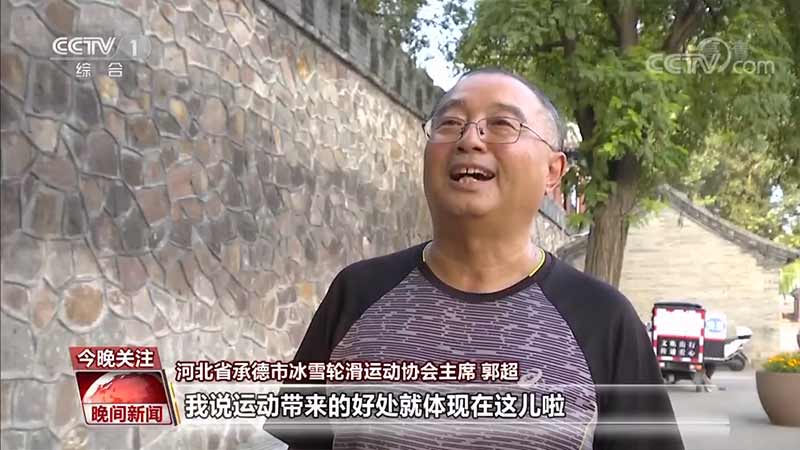
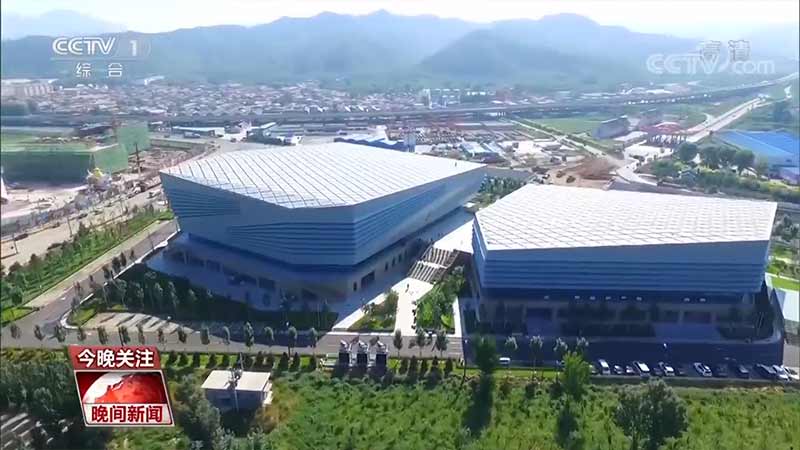

Adhere to the integration of war research and learning research. A research group was set up to study, verify and improve many sets of tactics and action plans, and some combat training results became typical examples of exchange and learning in the same type of troops.


96795 troops-


Establish a clear orientation and build a new phalanx of military talents


96795 troops, as a special training organization and evaluation institution of the military, are responsible for the group training of actual combat tactics all the year round. In recent years, the army has thoroughly implemented the policy of military education in the new era, established a distinct educational orientation of "learning to promote war and learning for war", organically integrated military vocational education with core functions and missions, and strived to create a new phalanx of military talents.


The party Committee has a strong overall organization. The Party Committee set up a special leading group to thoroughly unify thoughts, strengthen scientific overall planning, systematically plan the overall plan, and promote the in-depth development of military vocational education with high standards and a high starting point.


Make solid progress to ensure effective results. Differentiate levels and posts to build a standard model of competence and quality, carry out normal educational activities such as course study and special research around military theory and equipment knowledge, and simultaneously launch fine micro-courses with military characteristics to form an excellent learning atmosphere.


Apply what you have learned and promote construction by learning. In the process of mission practice, we should pay close attention to mission needs and ability requirements, and use the whole course of learning for exercise organization design, assessment and data analysis, so as to promote the level of performance of duties and effectively help the rapid development of military training in actual combat.


A battalion of unit 63816-


Make good use of platform channels and continuously improve post quality and skills.


A battalion of the 63816 Army firmly grasps the effective growth point of military vocational education and promotes the expansion of functions, the innovation of missions and the pioneering of capabilities.


Use military education to build souls and enhance political ability. Focus on the distinctive characteristics of "technology+politics", conform to the development trend of "network+education", adopt offline special study, online expert counseling, in-class discussion and analysis, etc., and enrich the theoretical literacy of officers and men.


Develop new ideas with military education and temper winning skills. After the transfer of troops, in view of the incompatibility between demand and quality, we should pay close attention to the characteristics of the military platform, such as "many channels, wide sources, new content and fast update", and organize officers and men to make study plans according to post requirements and hobbies to continuously improve their post skills.


Top-notch military education to stimulate the vitality of talents. Through online learning, strong theory, strong skills in post practice and top-notch competitions, a group of top soldiers in the industry have been trained.


Unit 32504-


Adhering to the concept of educating people and promoting a new pattern of learning and training


32504 troops adhere to the concept of learning from war and educating people for war, and strive to cultivate the learning culture of military vocational education, which effectively promotes a new pattern of learning and training.


Adhere to the overall planning of the party Committee and optimize the supporting conditions. Focus on perfecting the system of construction, learning, management and use of military vocational education, and implement the mechanism of full-time management of learning by branches, dynamic supervision by special personnel, regular summary and evaluation of learning, and linkage mechanism to promote learning; In view of the highly dispersed characteristics of units and personnel, enrich offline learning resources and realize decentralized learning, centralized examination and full coverage.


Focus on the main business and integrate into the training practice. Formulate the personnel training plan for key positions, sort out the learning resources, and temper the combat support ability of the troops in the integration of technology and warfare.


Innovate the mode of educating people to help them grow into talents. Take charge of the whole process of sending students to school, training and examination, draw a ladder diagram of growth and talent, expand the path of integrating online education and practical education, carry out learning selection activities such as "reading and educating people", innovate multiple evaluation models, and effectively stimulate learning motivation.


A research institute of the Academy of Military Sciences-


Focus on the front line, and the course will help the battlefield.


A research institute of a research institute of the Academy of Military Sciences has thoroughly implemented the policy of military education in the new era, and launched a series of courses such as nutrition security, special operational environment protection, and efficiency improvement.


Adhere to the Party Committee’s unified planning and scientific planning. The Party Committee aims at winning and focusing on making efforts, including military vocational education in the annual "discussion, research, discussion and training" work, and strengthening the idea of "research is war" and "teaching is war".


Keep a close eye on the targeted customization of military needs. Always regard preparing for war as the first principle of curriculum construction, take the opportunity of going to the front-line troops to investigate and tackle key problems, systematically sort out the post quality and learning needs of grassroots officers and soldiers, and strive to promote the accurate integration of characteristic courses into the army, and build a curriculum system with strong "military flavor" and outstanding "war flavor".


Highlight problem orientation and improve quality and efficiency. Focusing on scientific research and combat readiness, based on ability expansion, we should integrate professional strength and training backbone, track and ask questions about online courses, do a good job in online interaction and answering questions, and further shorten the distance between "learning" and "using".


A center of Joint Service College of National Defense University-


Give full play to the advantages of colleges and universities and innovate the way of online course construction


A center of the Joint Service College of National Defense University was built first, which played a good demonstration and leading role in the whole army.


Explore the all-round construction of military vocational education in colleges and universities. Carefully set up a course construction team to explore the construction of various courses; Design and build the first large-scale all-media intelligent teaching center of the whole army to provide the whole process service of curriculum production; Cooperate with the formulation of the first set of supporting mechanisms for military vocational education in colleges and universities to promote the sustainable development of military vocational education in colleges and universities.


Build a number of high-quality online courses with distinctive characteristics. Focusing on teaching, research and the urgent need of officers and men, the center has built a number of featured online courses.


Carry out theoretical and technical guidance on military vocational education. The center explores the basic theory and technology of military vocational education and trains a group of well-known experts in the field of military vocational education in the whole army. He has sent staff to relevant units to carry out special lectures and seminars on online course construction.


Military Vocational Education Technology Service Center of National University of Defense Technology-


Closely follow the functional mission and gather strength to serve the officers and men of the whole army.


The Technical Service Center of Military Vocational Education of National University of Defense Technology closely follows its own function and mission, and makes great efforts to build an online learning platform to serve the officers and men of the whole army.


Create a full-time and global learning base for all employees. Initially formed a full-time global ubiquitous learning environment.


Construct a pluralistic, integrated and open resource system. The platform supports online courses of all units of the whole army and connects local high-quality resources such as courses, audio and video, e-books, etc.


Provide service support centered on officers and men. Deploy nodes for the whole army, support the establishment of cloud classrooms and study groups, and provide near-learning resource services for officers and men.


Guilin detachment of Guangxi Armed Police Corps-


Integrating superior resources to boost the learning quality of officers and men


The Guilin detachment of the Guangxi Armed Police Corps has been keeping all the staff participating in the course for three years, and the cumulative number of course selection and graduation is remarkable.


Raise the ideological position and grasp the work of "unification" Insist on bringing military vocational education into the agenda of Party committees (branches), and regularly analyze the situation and review individual study plans. Sort out the relevant courses according to the post, and formulate the learning catalogue of common courses and special post courses.


Based on their own reality, solve the problem of "construction". Invited experts to guide and evaluate the construction scheme of conditions, built an Internet learning room in the detachment teaching team first, improved the internal and external network study examination monitoring room and micro-lesson production recording and broadcasting room, made micro-lessons online on the platform, and jointly built a book circulation point with the resident library to complete the "smart military camp" pilot.


Insist on taking multiple measures to improve the quality of "learning". Incorporate military vocational education into the team building plan according to the outline and enter the weekly work plan. Organize cadres to concentrate on learning, and give special lectures in combination with the timing of helping construction, inspection and guidance.

Forensic Qin Ming is in crisis! "Qin Ming Life and Death Speaker" released a poster.

1905 movie network news Directed jointly by Hai-shu Li and Yanwei Huang, starring Kevin Yan, Daisy , Geng Le and Hao Shaowen, Du Fu’s first forensic Qin Ming movie "Qin Ming Life and Death Whisperer" will be released nationwide on June 14th. Today, the film released the "Life and Death Edition" notice and poster, and strange murders flashed one after another. The pursuit of the murderer was thrilling. Forensic Qin Ming was caught in a sea of fire and his life and death were uncertain. Can you find out the truth "The right of the living speaks for the dead"?


In the "Life and Death Edition" notice released this time, the mystery of the disappearance of the Snow Mountain was gradually unveiled 16 years ago, and after 16 years, the murderer reappeared, creating a serial mystery of six lives and five bodies, and the cloud of terror was once again shrouded. In the face of the knotty case closely linked, forensic doctor Qin Ming, while pursuing the victory, made the case dawn, while completely denying himself and constantly questioning. When the investigation was caught in a bottleneck, "Old Qin" became more frustrated and bravely pursued, vowing to dig out the murderer behind the scenes and bring the case back to life, only to be thrown off the roof in the last scene of the trailer, and his life and death were uncertain.


The simultaneous exposure of the "Life and Death Edition" poster is also full of suspense. Qin Ming, a forensic doctor, is holding a scalpel and his eyes are firm, as if to "dissect" the truth of the murder case. Fan Jiajia, Qin Ming’s forensic assistant, slowly fell into the cold abyss in a red dress. She looked at the person she loved deeply and held out her arm, in exchange for helpless despair. In the poster, the untouchable distance from Fan Jiajia made Qin Ming feel guilty, but it also strengthened his determination to find out the truth and his belief in sticking to justice. Finally, can forensic doctor Qin Ming "explain the corpse and learn from the real murderer"? Still to be revealed in the cinema.


In the movie, because of an abnormal death case of a "silent gymnast", forensic doctor Qin Ming suffered the biggest crisis since he started his career. He has always emphasized rationality and truth, regardless of the dissuasion of people around him, and approached the murderer behind the scenes step by step, but unexpectedly the crisis followed; In the process of detecting the case, Qin Ming suffered emotional trauma and was even threatened with death by the suspect. Qin Ming, which is on the verge of despair and collapse, can save her life in the midst of danger and the difficulty in distinguishing between the real murderer and the real murderer? Who is the man who pushed him downstairs from the roof of the tall building? Can Qin Ming finally cut open the truth of the mystery and clear the name of the forensic doctor? Makes people curious.


Extra-large series of rice smuggling cases solved

Recently, Chengdu Customs cracked a serious series of rice smuggling cases, destroyed 5 gangs involved and arrested 19 suspects. After preliminary investigation, it was found that the five gangs involved colluded with Yunnan rice smuggling gangs and sold 7,784 tons of smuggled rice from Vietnam, Myanmar and other countries, valued at 38.4 million yuan, and were suspected of evading state taxes of 17.35 million yuan.