Xiaoman solar terms are approaching summer harvest, and summer sowing is busy with farming.
CCTV News:Tomorrow (May 21st) will usher in the Xiaoman solar term. Wheat is maturing and harvesting for the second time from south to north in China, and rape is also entering the harvest period. Summer is the season of harvest and sowing. At present, some major rice producing areas have entered the transplanting season.
Henan: Wheat harvest is in sight, pest control is the key.
In hua county, Henan Province, the local wheat is in the middle and late stage of grain filling, and it is also the key stage of wheat maturity and yield formation. Wheat in the field is full of grains and grows well. Looking from a distance, the wheat fields thousands of miles away in Woye are yellow and green, and the ears of wheat are gradually yellow, and the sickle will be harvested in ten days. It is understood that the local government has actively invested funds and equipment to guide farmers to carry out the work of "one spraying and three prevention" of wheat to prevent pests and diseases, and a bumper harvest of summer grain is in sight.
Anhui Tongcheng ushered in the rice transplanting season to improve the efficiency of mechanized operation
At present, 635,000 mu of mid-season rice in Tongcheng City, Anhui Province has ushered in the transplanting season. Local farmers seized the favorable opportunity and mechanized transplanting began in an orderly manner.
In Jiangshan Village, Tongcheng City, a high-speed transplanter full of seedlings is carrying out transplanting operations, and green seedlings are inserted into the fields in an orderly manner. Mechanized operation can reduce labor input and greatly improve transplanting efficiency.
In recent years, mechanized rice transplanting has been popularized locally, which has solved the problems of high labor intensity and shortage of manpower in traditional rice transplanting. It is understood that the planned planting area of medium rice in Tongcheng this year is 635,000 mu, and 30% of the planned planting area has been completed as of May 18.
Wanzhou, Chongqing: characteristic agriculture promotes the development of alpine terraced fields.
In Taian Town, Wanzhou District, Chongqing, there is a scene of busy farming in the mountain terraces. The villagers are busy fertilizing and transplanting rice. It is understood that the contiguous area of terraces in Taian Town is 15,000 mu.
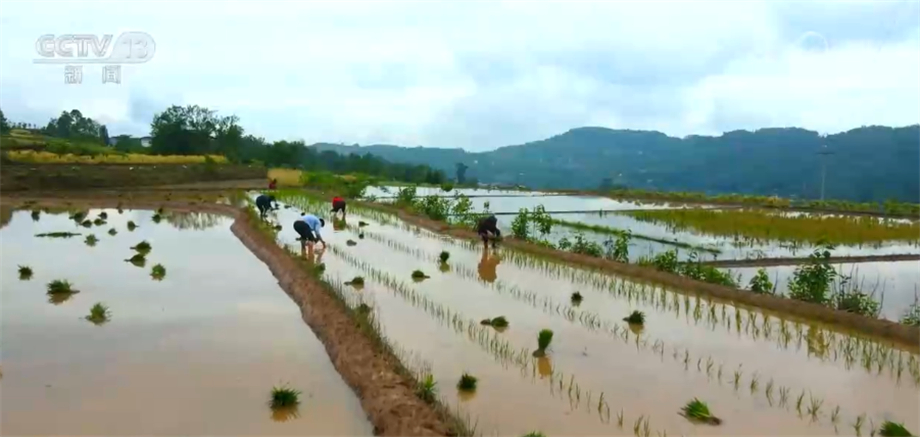
In recent years, Wanzhou, Chongqing has cultivated and expanded characteristic agricultural industries such as "high-quality rice, paddy fish, ecological vegetables and Chinese herbal medicines", and built a 10,000-mu high-quality rice oil base with high mountain terraces as the core to promote local agricultural development and drive local people to increase their income and get rich.
Shaanxi: Terraces are picturesque. Rice farmers are busy transplanting rice seedlings.
In Gujia Village, Guanyuan Town, Langao County, Shaanxi Province, local farmers took advantage of the favorable situation of water and seedlings to start transplanting rice in the fields. In recent years, the local government has increased rice production by means of "company+base+farmers", which has driven farmers to increase their income steadily. It is understood that this year, Langao County plans to plant 15,000 mu of rice, 2,000 mu more than last year, and the estimated output can reach more than 7,200 tons.
Hepu, Guangxi: Cowpea’s high yield and income boost rural revitalization
Hepu County, Beihai City, Guangxi, is very suitable for cowpea planting because of its flat terrain, warm winter and cool summer.
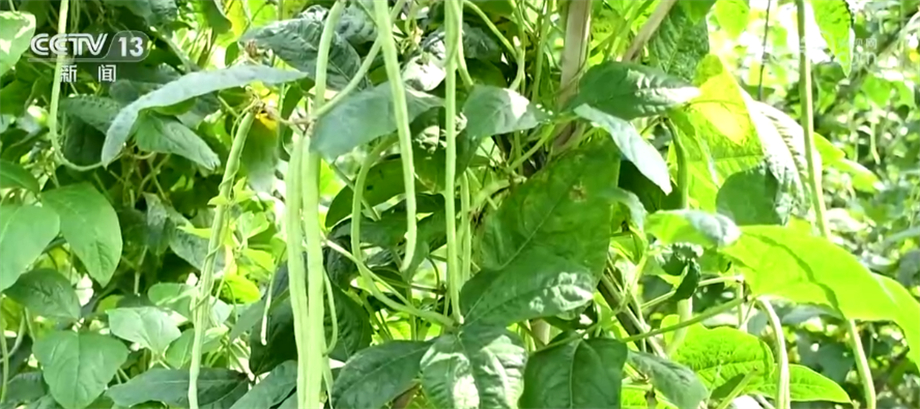
In a local cowpea planting base, cowpeas on vines are slender and full of beans. The cowpeas picked by villagers from the fields are picked and bundled, and then transported to all parts of the country. Cowpea has the characteristics of short growth cycle and high yield. Cowpea cultivation in Hepu County is mainly family management, and the effect of joint agriculture with agriculture is obvious. The development of cowpea industry has also promoted the development of local workers, logistics and other industries, realized farmers’ employment at home and boosted rural revitalization. In the first half of this year, the registered cowpea planting area in Hepu County was about 24,000 mu, and the average yield per mu of cowpea was about 2,000 kg.