Background System: Inventory Management System (2)

In the last article, the design points and modules of the warehouse management system were introduced as a whole, but now this article will detail the design process from the actual design.
As mentioned before, warehousing mainly includes: purchase, transfer and return warehousing, while delivery includes sales and transfer delivery. Taking warehousing as an example, the status of each process in the design and the required information are introduced in detail below.
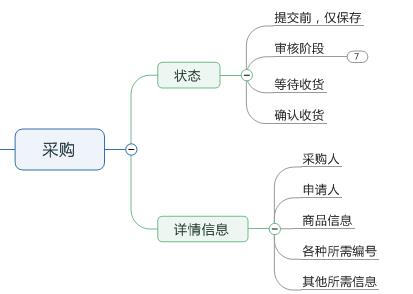
Procurement is mainly divided into three stages: before submission, after submission and receipt. At each stage, it is necessary to show their corresponding status, so that relevant personnel can monitor and track it in time.
Before submission:Filling in a purchase application usually contains a lot of goods. If you fill it out and don’t want to submit it for the time being, you need to provide a save-only function. The warehouse keeper can edit it next time and then submit it.
Application submission/review stage:Basically, there will be many warehouses in an enterprise, and the procurement is usually centralized and unified by a special department or personnel. Therefore, after the person in charge of each warehouse submits the purchase demand, there may be a review process. After the review is passed, the buyer will initiate the purchase from the supplier. Points to note are as follows:
- Need to consider the permissions between different roles, such as the permissions between the applicant and the reviewer and the page difference. Whether the warehouse and procurement are in the same system, if not, what data interaction and transmission are needed between the systems;
- After the buyer submits the application, whether it is necessary to make a message notice to remind the auditor to review it in time, or whether it is necessary to directly display the contact information of the auditor on the page, and whether it is possible to contact the auditor directly if the purchase order is in a hurry;
- Whether it is necessary to provide an entrance for re-application when the application is rejected;
- In the process of approval, what values need to be filled in by the auditor, what values can be modified, and what values need to be returned to the applicant after modification;
Waiting for receipt: In this state, whether to return goods and whether to need logistics information depends on the demand;
Confirm receipt:After the arrival of the goods, it is necessary to confirm the receipt of the goods, which means that the purchase is completed.
- Receiving goods in batches:When filling in the purchase order, many goods may be filled in, and the quantity will be relatively large. However, in actual delivery, the goods may be delivered separately, which requires support for receiving goods in batches.
- Not arrived/out of stock:At the time of receiving goods, there may be some goods missing, which needs to be marked at the time of receiving goods in order to continue tracking. At this point, you need to consider the possible operations in actual business operations, such as the next replenishment or direct refund, or other circumstances. No matter what kind of operation, you need to have an operation record or explanation to facilitate financial reconciliation;
- Attachment information:When receiving the goods, consider whether it is necessary to upload some document pictures as the receipt voucher. (depending on the needs of relevant departments)
Refers to the information that needs to be displayed on the purchase order, mainly including commodity information, relevant personnel and required number. (depending on the business)
What specific states will exist depends on which warehouse is the initiator.
- The initiator is the receiving warehouse: similar to the above procurement process, it still needs approval and receiving status;
- The initiator is the delivery warehouse: the warehousing warehouse only needs to wait for receipt directly, and it is not necessary to display the status before receipt;
In addition to the information mentioned in the purchase, it is also necessary to indicate the delivery warehouse.
Under normal circumstances, this kind of situation is a return application initiated by the buyer, but in the warehouse management system, we only need to be able to monitor whether the goods have been delivered and wait for receipt.
It mainly includes sales order information, related time information and return refund information.
In the actual warehouse management system, different enterprises will have different business processes, and the system will change accordingly.
- Purchase method 1:Set up a large warehouse as a stocking warehouse (whether it is a physical warehouse or a virtual warehouse. Of course, considering the logistics cost, the general goods will not be transported to the physical warehouse first, but only a virtual warehouse will be set up to manage the inventory of the stocking warehouse. When the local warehouse needs goods, it will be delivered directly from the supplier. When the small warehouses around the country need goods, they will get the goods directly from the stocking warehouse (the goods mentioned here are limited to the increase or decrease of the inventory). In this case, the administrator of the large warehouse is responsible for what kind of goods to purchase from suppliers and how much to purchase, and the person in charge of the local warehouse only needs to submit the demand;
- Purchase method 2:There is no stock warehouse. When the local warehouse submits the demand, the purchaser will place an order with the supplier to purchase.
The difference between the two methods lies in whether it is necessary to place an order with the supplier in advance to purchase the goods. Of course, for the person in charge of the local warehouse, there is not much difference between the two methods in operation.
In addition, many enterprises not only have warehouses for retail, but also warehouses dedicated to mass sales. Some may be combined and managed together, while others will be specially distinguished. There is also how to deal with special goods such as gifts and gifts, which also need to be considered.
In a word, the function and process of the system need to be decided according to the business process.
Welcome to add!
Backstage system: inventory management system
This article was originally published by @ 京京京京京京. Everyone is a product manager. Reprinting is prohibited without permission.
The title map comes from Unsplash and is based on CC0 protocol.