Us media: the United States provides ground-penetrating bombs to Israel

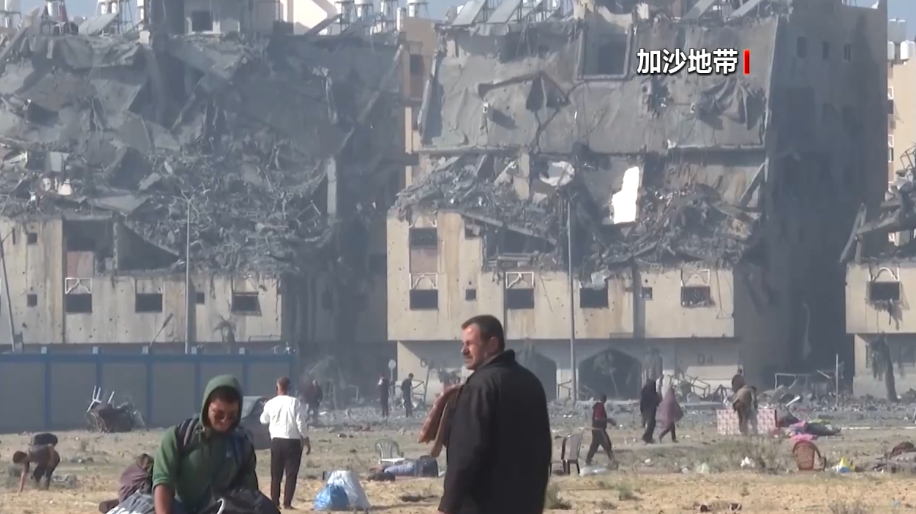
  According to a recent report in The Wall Street Journal, an anonymous American official said that since the new round of Palestinian-Israeli conflict broke out on October 7, the US arms supply to Israel has surged, including about 57,000 artillery shells and about 15,000 bombs, including 100 BLU-109 ground-penetrating bombs, to help the Israeli army fight Hamas. According to reports, the BLU-109 ground-penetrating bomb can penetrate concrete bunkers, which was used by the US military in the war in Afghanistan. Analysts pointed out that Hamas uses a huge network of tunnels in the Gaza, and the Israelis may attack these tunnels with earth-boring bombs.

  The report also quoted relevant experts as saying that the United States recently called on Israel to avoid civilian casualties while cracking down on Hamas, but it still provided Israel with all kinds of weapons and ammunition. This is contradictory, and the United States rarely publicly disclosed the quantity and types of weapons delivered to Israel in the current conflict.

"Silent Witness" Yang Zi was choked by Ren Xianqi! Experience 40s suffocation

1905 movie network news A crime action blockbuster directed by Renee Haring and starring Zhang Jiahui, Yang Zi and Ren XianqiOn the first day of the public screening, in the face of the fierce competition of five new films released on the same day, including classic manga animation, domestic high-scoring masterpieces, and Hollywood hit IP, he won the box office championship of the new film and achieved outstanding results.The movie revealed exciting feature clips today.In less than a minute, it is enough to show the level of tension and excitement of the whole film.


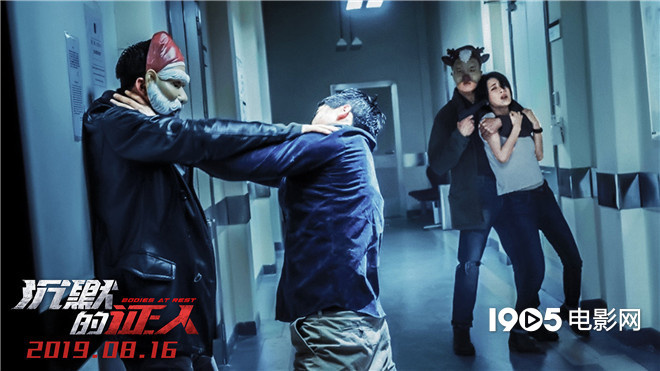
In the clip, Yang Zi was strangled by the gangster Ren Xianqi, and her acting skills exploded on the verge of death. Her breathing conveyed a strong sense of suffocation, and her tears were particularly distressing; Zhang Jiahui was caught in a dilemma, how to save Yang Zi while preserving the key evidence, and the difficult situation aroused expectations; Ren Xianqi showed abnormal characteristics, asking the other party to hand over the key evidence in just 40 seconds, which caused netizens to shout "too much pressure".


From the main film clips, the audience can get a glimpse of the good acting skills of Zhang Jiahui, Yang Zi and Ren Xianqi’s "wall-breaking combination". The three of them subverted the previous image of high-powered drama in the film, and also received a lot of praise from the audience – "Zhang Jiahui shows a calm and calm overall view in the face of danger, which is very manly." "Yang Zi’s interpretation of the brave and independent new female image is very appropriate, and it is too popular." "Ren Xianqi can even control this kind of perverted gangster, which is impressive."

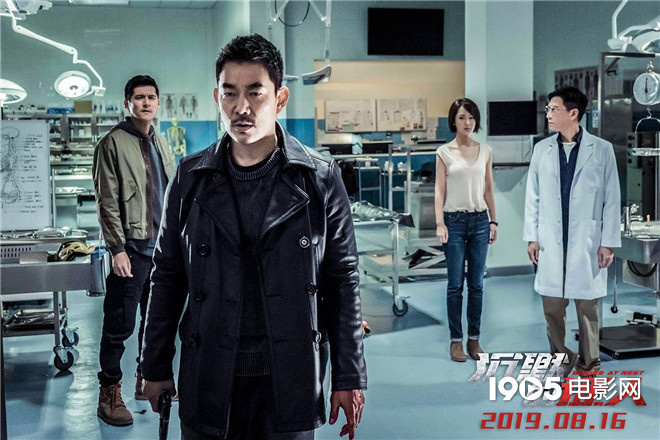
The movie "Silent Witness" tells the story of two forensic doctors, Chen Jiahao (Zhang Jiahui) and Qiao Lin (Yang Zi), in order to protect the evidence and uncover the truth, and the bandit leader SANTA (Ren Xianqi) and his gang, in the forensic center. The movie is currently being screened nationwide.


The ultimate preview of "Cosmic Exploration Editorial Department" feels absurd and reality intertwined.


1905 movie network news "It’s cool to find aliens all over the world!" Whether it’s the TV set that is overloaded because of the merging of galaxies, the well-preserved "alien" in the freezer, or the "astronaut" who was demolished for first aid, all kinds of absurdities in this wonderful journey have been subtly reversed after Sun Yitong’s sentence "Close your eyes". Sleeping in the jungle, the back of the cave and the swarming sparrows, and the surprise smile of editor Tang … … Is there really an "alien"? The film released the ultimate trailer and poster, and the protagonist group showed their magical powers and absurdity on the way to find aliens. Suitcases, beer bottles, magazines, donkeys and sparrows have all become their "mounts", leading a group of people to launch a fantastic exploration journey in the boundless universe.


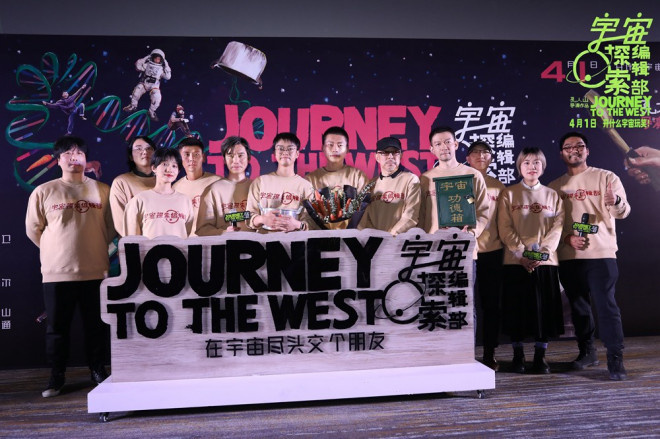
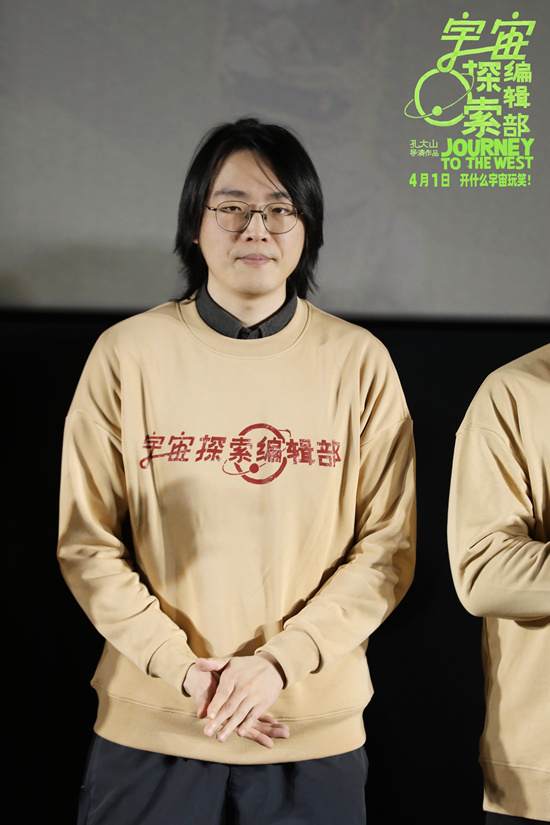
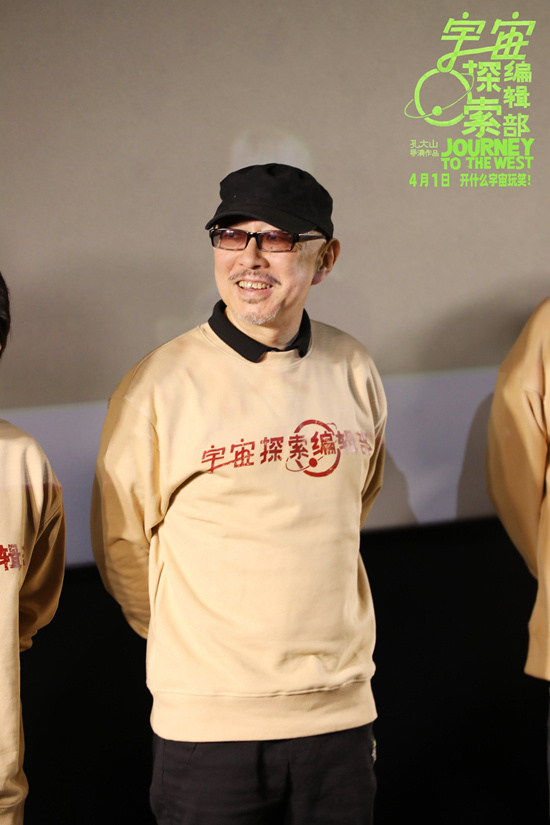
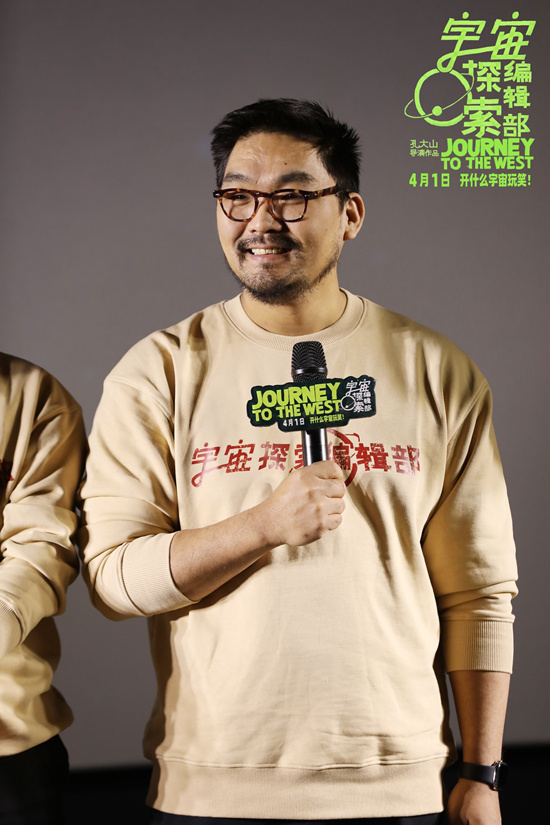
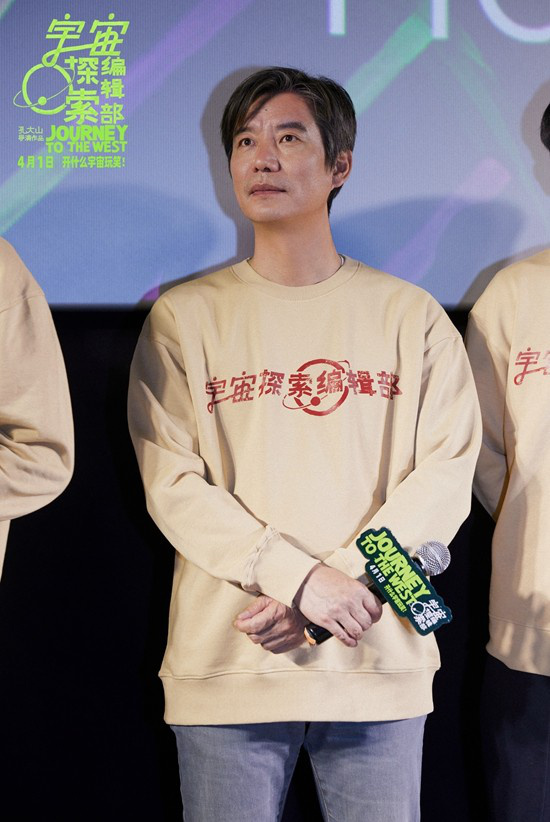
On March 27th, the film "Space Exploration Editorial Department" held the national premiere of "Making Friends at the End of the Universe" in Beijing. The producer, director and screenwriter, producer, leading actor, screenwriter and starring actor, leading actor, deputy director and literary planner Lu Qiyang, production designer Guo Xinbo, voice director Zhang Guodong and editing director Hu Shuzhen were all present to share the stories behind the scenes with the audience. At the event site, the audience enthusiastically shared their feelings about watching movies. "hilarious, funny, absurd and eccentric", "a rare good movie", "very in line with the mental state of contemporary young people", "I started to laugh my head off, and I couldn’t hold back my tears when I saw the ending. I recalled the absurdity of the whole film but I felt unspeakable sadness and tenderness".

"the absurdity that is about to rush out of the screen" 

The film "Cosmic Exploration Editorial Department" released the ultimate preview and poster.


The film "Cosmic Exploration Editorial Department" recently held a national premiere, and at the same time released the ultimate preview and poster. "Are there really aliens in the world?" Tang Zhijun, editor-in-chief of the magazine played by Yang Haoyu, firmly believes in the existence of extraterrestrial life and is eager to explore the universe one day. Because of this persistence, the "overloaded" TV set, the "aliens" in the freezer, and even the "top pot boy" who came from unknown sources all made him convinced and fascinated. To outsiders, all this is absurd, but is it really so? "All the planets in the universe are much more than all the sand on our earth put together." Is it true that there will be no extraterrestrial life coming to the earth? All kinds of absurdities in this wonderful journey have been subtly reversed after Sun Yitong’s sentence "Close your eyes". Who is the figure in the cave? Why are there sparrows swarming in? What’s the function of the moss-covered return capsule in the jungle? After the chaos, the pot left on the ground can’t help but arouse people’s infinite reverie and suspense.


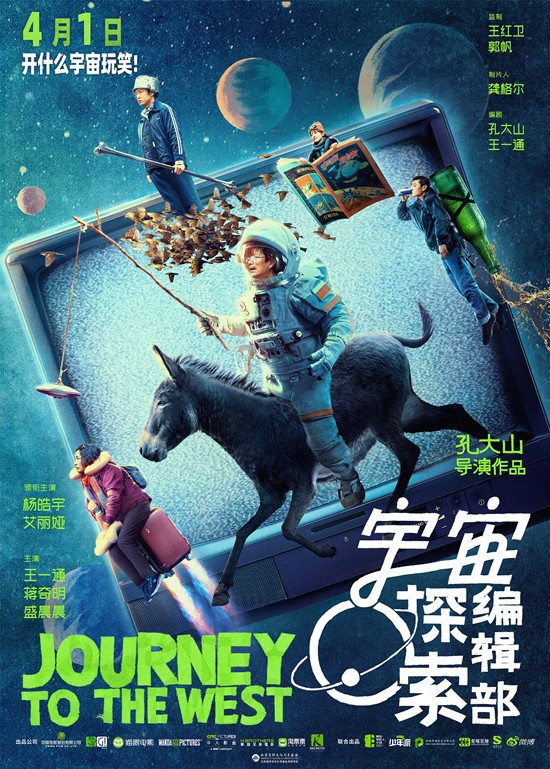
The film also released the ultimate poster, Tang Zhijun (Yang Haoyu) who tried to drive the donkey to walk in space with UFO, Qin Cairong (ornaments) who used the suitcase as a rocket, Sun Yitong (Wang Yitong) who took off in a sparrow, Su Ri (Jiang Qiming) who took up a beer bottle to boost it, and Xiao Xiao (Sheng Chenchen) &hellip who climbed and held Space Exploration magazine soaring; … The leading group showed their magical powers in front of the huge snow screen of the TV set, and traveled in the universe with their own interests, showing the absurd nature of the film. Where will this fantastic journey lead? Can they find the "aliens" they dream of? What other unknown secrets are there in the universe? Please walk into the cinema together on April 1 to find the answer.


"Go forward bravely towards the’ carrot’ in your heart" 

National premiere "Make a friend at the end of the universe"


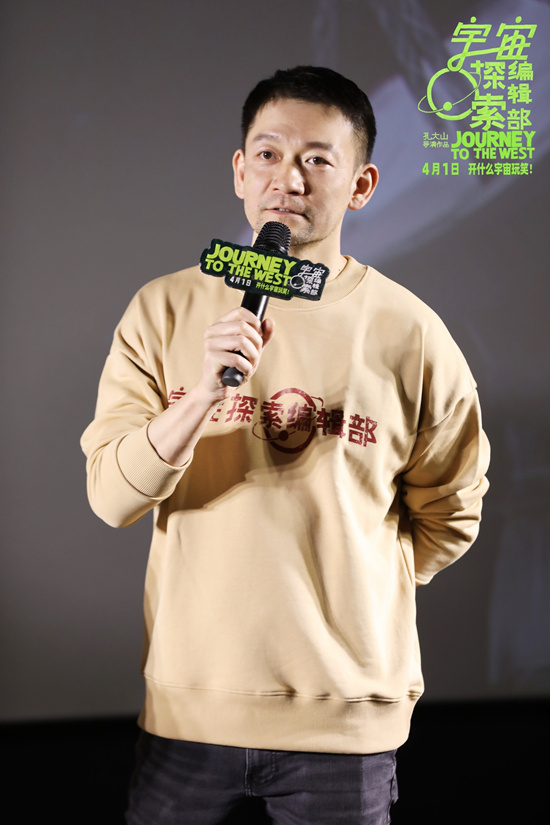
On March 27th, the film "The Editorial Department of Space Exploration" held the national premiere of "Making Friends at the End of the Universe" in Beijing, and all the main creators in front of the stage and behind the scenes were present to interact enthusiastically with the audience. Director Kong Dashan frankly shared his intention to create a film: "Movies are like signals. I hope everyone can share joys and sorrows in the movies." This is what he thinks is the meaning of making movies and watching movies. Yang Haoyu, the leading actor, even thought it was an emotional blockbuster: "The characters in the film are all linked together like a family by a common goal of’ looking for aliens’. Other masters are also like their own families, and we hope to dedicate this heavy emotion to everyone through movies together. "


Director Frant Gwo, the producer of the film, said, "It took a long time to create the film and the process was very difficult, but we are very pleased with the result.". Because "the creator’s real happiness is that the work is seen by the audience and he makes his own interpretation", he believes that "the film is complete at this time". At the event, Director Frant Gwo also prepared a special gift for Director Kong Dashan — — A bunch of carrots. "The carrot in the film represents a goal that people are pursuing in the world," Frant Gwo explained, pointing to one carrot after another. "This is your second, third and fourth film. I hope Director Dashan can go forward with the carrot in his heart like the character he created in the film, and I hope the audience can find their own carrot."


"Shocked, moved and proud!"

Harvest the support and praise of a large number of practitioners.


At the premiere ceremony, dozens of friends from the industry, such as,,,,,,,,, and so on, came to the scene to support. Director Li Shaohong said that the first time I saw "Cosmic Exploration Editorial Department" in Pingyao, it "gave me a huge surprise". The film was not only "brain-filled", but also left the audience with infinite reverie. Actor Chen Kun also confessed that he liked The Future Time of Rule of Law directed by Kong Dashan before, but today he was "deeply shocked and moved to tears" when watching the movie. Director Chen Sicheng also lamented that "this is a very different film, which has broken through all my previous feelings of watching movies". Director Rao Xiaozhi described the film "Cosmic Exploration Editorial Department" as a work that still feels great after two brushes. Director Dapeng also said with emotion, "I am happy for all the creators and proud to be a film practitioner".


Li Xueqin, a talk show actor, recalled his first meeting with director Kong Dashan. His sincere eyes at that time were like Tang Zhijun in the film, which made him very moved. "Maybe people can’t pursue their dreams in this life, but they can find companions." Zhang Ji, the director and screenwriter, said excitedly after the screening that he was glad to see that Director Kong Dashan, with the support of directors Wang Hongwei and Frant Gwo, "broke through the old film creation" and "let us see a real China soft science fiction film". The main creators are telling everyone with practical actions that "the film must be innovative"! "I was so shocked that I cried countless times and couldn’t help laughing," said Director Li Yu excitedly. "After reading the preview, I had high expectations, but the result really didn’t live up to expectations." "You may have to mobilize all your life experiences and emotions to see such a movie." Faced with the support and recognition of many film practitioners, Wang Hongwei, the producer of the film, responded affectionately, "Making a film is actually like Tang Zhijun looking for an alien", and every step forward will keep hitting a wall, "If you can’t try once, try twice". As long as you don’t give up, your dream will always come true!


"Write your own poem"

Kong Dashan "broke the news" producer Frant Gwo "brought capital into the group"


At the event site, the audience was excited by the collective presence of the masters, and they couldn’t wait to share their feelings of watching movies. An audience wearing a "soul extractor" solemnly said, "Everyone should stick to his own paranoia", because the most important thing in life is to "write your own poem". Yang Haoyu, the leading actor, agrees. "In fact, everyone is an alien of his own." He said, "The most touching thing about the role of Tang Zhijun is that he knows that his persistent hope may fail, but he still embarks on the journey again and again without hesitation." He also revealed that "Director Frant Gwo gave himself a lot of performance space" when filming, but "how to act is wrong" when filming "Cosmic Exploration Editorial Department", "Director Kong Dashan only wants the purest things in life", and he "denied many performance skills". He joked that he was finally "crazy" to play the role. When director Kong Dashan was asked how he found actors for these strange and loving roles, he admitted that most of them were "friends, so they were free" and that "Director Frant Gwo was not only free,Also’ bringing money into the group’ ",which attracted laughter from the stage and the audience.


"It’s shocking. I’ve seen the best movie in the past ten years," an audience said excitedly at the event. "We don’t know what’s outside the universe, but if we know it, we still have to face the trivial things in life." In the end, the film "falls to birth, illness, death and affection, which is the most romantic interpretation of the universe." Some viewers said, "This movie is a love letter for those who seek knowledge and ask for it", others said, "This is a poem of the universe, and we are all words in the poem", and some viewers even said, "The movie is a light feather, which blows laughter and skips sadness, but it has ripples in everyone’s heart". "All the explorations made by Tang Zhijun are actually exploring his own nature", "The universe may be a puzzle that we human beings can never solve, but we always need people like Tang Zhijun", that is, we are curious about the world and don’t forget to try our best to find ourselves.


The film "Cosmic Exploration Editorial Department" was produced by Wang Hongwei and Frant Gwo, directed by Kong Dashan, starring Yang Haoyu and Ai Liya, and starring Wang Yitong, Jiang Qiming and Sheng Chenchen. At present, the pre-sale of the film has been officially opened and will be released nationwide on April 1. I look forward to meeting you in the cinema.


[Diary of the Yangtze River] The Win-Win Road of "Environment Friendly" in the Three Gorges Reservoir Area

  Editor’s Note: Since July 20th, china national radio has sent a number of journalists to set off from Yunnan along the Yangtze River, which lasted for nearly a month, presenting the changing new Yangtze River in all media and from various angles, and interviewing the large-scale theme "Great Rivers Running — — The report from the Yangtze River Economic Belt was launched simultaneously. Voice of China reporters dynamically recorded the people and things they experienced during the interview, and recorded the new changes along the Yangtze River in the form of "Diary of the Yangtze River". Today, the tenth article of the Diary of the Yangtze River is published: The "Environment-friendly" Win-Win Road in the Three Gorges Reservoir Area.

  Chongqing, July 30 (Reporter Chen Peng Guan Xin) According to the Voice of China, "News Horizon" reported that the passenger ship boarded at Chongqing Port Terminal 8 and woke up, and the passenger ship docked at Wanzhou Port Passenger Terminal. Wanzhou District, located in the northeast of Chongqing, is located in the heart of the Three Gorges reservoir area and is the regional central city of Chengdu-Chongqing urban agglomeration along the Yangtze River. During the flood season of the Yangtze River, the number of floating objects on the Wanzhou River increased, and mechanized professional drifting boats were drifting on the river.

  After driving along the winding mountain road for more than an hour, the reporter and his party came to Wanzhou National Agricultural Park.

  In the National Agricultural Park, cicadas are singing one after another. This is the first national agricultural park created in Chongqing, with a construction scope of 228 kilometers, covering 7 towns and 46 administrative villages in Wanzhou District. Chongqing should build a rural tourism complex and promote the transformation and development of agriculture and rural areas.

  Lu Changkun, chairman of Wanzhou Tongxin Modern Agriculture Development Co., Ltd., is watering strawberry seedlings in a smart greenhouse. He said: "This is just like raising a child. In fact, it will repay you as you give."

  Tongxin Vegetable Grand View Garden, carefully managed by Lu Changkun, covers an area of more than 1,000 mu. Here, vegetables that are common in the market at ordinary times "live" in the "high-rise" of pipelines with step-by-step and pot-frame cultivation, and like house numbers, they are cultivated by aerosol or water mist. According to him, aerosol cultivation is a cultivation mode. After water is atomized by high pressure, plants absorb nutrients in the air, and more than 80% of the fertilizer they fertilize will be absorbed. This cultivation mode reduces the amount of fertilizer and non-point source pollution at the same time.

  In Wanzhou National Agricultural Park, modern agriculture like this is being explored and experimented boldly. Not far from Lu Changkun’s vegetable garden, a large-scale cash crop attracted reporters. It was called Rose Orange. This is a new variety introduced from Italy, and it is planted on a large scale as a leading industry in the local area.

  Wang Xiaowei, deputy stationmaster of the Fruit Tree Station in Wanzhou District, said that in the future, they will develop the rose orange to 200,000 mu with an output of 300,000 tons. "This is also called a geographical indication product, which is too closely related to our climate."

  The local people not only see the economic value, but also the ecological value from this cash crop. Wang Xiaowei told reporters that in citrus cultivation, they used organic fertilizer instead of chemical fertilizer, which reduced non-point source pollution. Compared with field crops, the amount of pesticides and chemical fertilizers used also decreased, which was a contribution to ecology. From 2010 to now, 80,000 mu of rose orange has been developed along the Yangtze River, which has improved the forest coverage.

  Ecological and industrial win-win, this "environment-friendly" planting method is changing the agricultural face of the Three Gorges reservoir area. In Panlong Community of Yunyang County, the local area has also found a green development path through citrus planting. On the south bank of the Yangtze River in Yunyang County, more than 2,000 acres of citrus orchards have built a green barrier.

      The clean office space of Huolong Community Residents’ Committee in Panlong Street, Yunyang County, because of the rain, local villagers introduced their new green development path to reporters here. (photo by Guan Xin)

  Xiang Guiping, director of Yunyang Forestry Bureau, said that economic forests can also play the role of ecological protection, plant fruit trees, improve forest coverage and improve the ecological environment, and at the same time increase their income.

  At the end of the interview in Yunyang County, it suddenly rained cats and dogs. After the rain, a rainbow floated in the air, which surprised the reporter and his party. At dusk, the reporters returned to the passenger ship to prepare for the next stop — — Wushan county.

Today’s popular Manchu-Han banquet has long deviated from its original intention.

编者按:《传膳啦!(清朝篇)》依据翔实的史料,用古雅幽默的笔触介绍了清朝的饮食文化,皇帝、皇太后日常的饮食搭配,以及美食背后的趣闻逸事,更收录了很多隐藏在故纸堆里的宫廷美食和养生药食的秘方。

今日一说起宴席的豪华,读者们脑海中浮现的必然是摆满了各式山珍海味的满汉全席。甚至会想当然的以为,皇帝老儿,每顿饭都是百余种山珍海味组成的大餐。今日更有诸多商家,推出了所谓的满汉全席,山珍海错,琳琅满目。可在清代的宫廷之中,并无满汉全席的说法。

清代在内廷设御茶膳房,负责皇室的日常膳食,在外朝则设有光禄寺,负责承办筵席。 据《光禄寺则例》载,光禄寺的宴制分为:“满席自一等至六等,汉席自一等至三等,又有上席、中席”。满席一等至三等,是祭祀历代帝后妃嫔。四等满席用于元旦、万寿节、皇帝大婚或大军凯旋,五等赐予达赖喇嘛、班禅额尔德尼的贡使和下嫁外藩的公主及蒙古王公等。六等赐予经筵讲书、衍圣公来朝及各国贡使。满席根据级别不同,所供应菜肴的数量也各有不同,如一等席用面一百二十斤,饼饵二十四盘,六等用面则为二十斤,饼饵十二盘。满席以饽饽为主,以干鲜果为辅,同时使用羊肉等。

Chinese banquet is mainly used to entertain examiners, examiners, censors, and transfer officials. Compared with a full banquet, the dishes in a Chinese banquet are more abundant. The first-class Chinese banquet includes 23 bowls of meat such as goose, fish, chicken, duck and pig, three bowls of steamed meat and four bowls of vegetables. The second-class Han nationality does not need geese, the third-class Han nationality does not need geese and ducks, and the others are roughly the same as the first-class Han nationality. Comparatively speaking, Chinese banquet pays attention to dishes, while full banquet pays attention to food.

In addition, there are "upper seats" and "middle seats", which are used to entertain new scholars and examiners. This is the so-called "honor banquet". The upper seat hosts the examiner and the top ranked Jinshi, while the middle seat hosts the lower ranked Jinshi. The upper and middle seats combine the characteristics of full seats and Chinese style, including the cakes in full seats, the dishes in Chinese seats, and the tables used are short tables full seats. The reason for this is that among the new Jinshi, there are both Manchu and Han Chinese, so the two are compatible, and a nondescript name (said to be taken by Ao Bai) is adopted. Enrong banquet will be full of seats and compatible with Chinese seats, laying the foundation for the full and Chinese seats in the next day.

When Qianlong went down to the south of the Yangtze River, there was a record of "Manchu seats". In the forty-first year of Qianlong (1776), when Qianlong visited Jiangnan, he cruised to Yangzhou. The governors of Liangjiang and Jiangsu hosted a banquet in Yangzhou to entertain the governors of Jiangnan provinces gathered in Yangzhou. There is a detailed record of this feast in Yangzhou Painting Boat. "Before and after Shangshang Street, the temples are all big kitchens, so as to prepare for the six departments and officials to eat." The menu of this banquet is as follows:

In the first place, there are ten bowls with the top five baskets, bird’s nest and shredded chicken soup, stewed pork tendon with sea cucumber, shredded radish soup with fresh clams, stewed pearl vegetables with kelp and shredded pork belly, stewed shrimp soup with mussels, shark’s fin and crab soup, stewed chicken with mushrooms, and stewed ham with fish belly.

Second, there are ten bowls with five baskets on the 2nd, stewed bear’s paw with crucian carp’s tongue, rice-chafed scarlet lips, pig’s brain fake leopard fetus, steamed hump, pear slices with civet cats, steamed deer tail, sliced pheasant soup, wind pig slices, wind sheep slices, rabbit breast and milk room to sign the first-grade soup rice bowl.

Third, there are ten white soup bowls, pork belly fake Jiang Yao duck tongue soup, chicken bamboo porridge, pig brain soup, hibiscus eggs, goose gizzard soup, steamed shad, fake fish liver, Xishi milk, Vince bean curd soup, nail fish film soup and cocoon son soup.

Fourth, twenty pieces of hairy blood dishes, fried Harba, piglet, fried pork and mutton, fried chicken, goose and duck, pigeon, pig offal, mutton offal, burnt pork and mutton, boiled pork and mutton, steamed piglet, lamb, chicken, duck and goose, white flour cake paper, ten-brocade fire and plum blossom steamed buns.

Fifth, 20 foreign dishes, 20 hot dishes to persuade wine, 20 small dishes, 10 tables of dried fruits and 10 tables of fresh fruits.

At the end of the menu, the author wrote, "This is a Manchu-Chinese banquet". The Manchu banquet here is a banquet for Manchu and Han officials, not the so-called "Manchu banquet" later.

There are several characteristics in the menu contained in Yangzhou Boat Record. First of all, there are a large number of rare ingredients, such as bear’s paw, scarlet lips, hump, deer’s tail, etc., among which there are shad, puffer fish (western milk), crabs and other Yangtze River fresh water. Secondly, the five points listed in the menu are not attended according to the five levels. The dishes listed in the menu should be combined dishes. According to the rules of entertaining in the officialdom of Qing dynasty, there should be cakes, dried fruits and so on in the formal full table. There are no cakes and fresh fruits in the menu from one to three, but only in the fourth and fifth middle schools, so they are combined.

During the Qianlong period, ingredients such as bear’s paw and scarlet lips were hardly used in the imperial kitchens, and even shark’s fin and sea cucumber rarely appeared. Emperor Qianlong doesn’t like fish, and there are few fish on the menu. This menu is obviously specially prepared by Jiangsu officialdom to show off and to make friends with governors of other provinces. The emperor himself did not think that his courtiers ate a hundred times more luxuriously than himself. When accompanying the emperor on a patrol, it is not unusual for officials to eat delicacies in private. According to "The Continuation of Xiao Ting", the Hao family in Huairou is one of the richest people, with thousands of hectares of fertile land at home. When Emperor Qianlong was stationed in his home, there were more than 100 kinds of mistakes made by Lu Zhen in Sheung Shui. Princes, guards, and even slaves of sedan chair also provide luxurious meals, which cost more than 100,000 yuan a day. There are more than a hundred kinds of land and water treasures, which have entered the belly of princes and ministers.

In the Qing dynasty, influenced by the separation of "full seats and Chinese seats" in the imperial court, the practice of Han people asking Manchu to eat full dishes and Manchu asking Han people to use Chinese dishes began to appear above the officialdom. This practice has caused a storm of public opinion and is considered to be "extraordinarily pleasing." So smart merchants will choose the essence of full dishes and Chinese dishes and gather them on one seat to attract dignitaries. Yuan Mei recorded: "The dish of officialdom today. It is also known as the Manchu banquet. Used for new relatives to come to the door and the boss to enter the country. "

Please note that Yuan Mei was talking about a Manchu banquet, not a Manchu banquet.

The specialty of Manchu-Han banquet is double roasting, that is, hanging pig and duck. Hanging pigs and ducks really come from the imperial cuisine of the Qing palace. There is a Baoha Bureau in the imperial kitchen, which specializes in making roasted dishes for the palace. In the daily diet of the Empress Dowager, "double roasting" is often seen. During the reign of Emperor Qianlong, duck and meat hanging from the stove appeared from time to time in the morning and evening meals. During the Guangxu dynasty, Emperor Guangxu often had two kinds of breakfast, namely "hanging pigs and ducks".

In the Qing Dynasty, there was a brick oven in the palace. There was an arch in front of the oven, and there were three shelves in the oven. Pigs or ducks to be roasted were hung on the shelves in the oven. The oven uses jujube, pear and peach as fuel, and there is no smoke after the fire. During the barbecue, the chef should constantly change the position of the duck or pig to roast the whole body. When barbecuing, ducks or pigs can’t directly touch the fire, which will burn. Grasping the heat well, roasted ducks and pigs have crispy skin, tender meat, fat but not greasy, and fruit and wood flavor.

In the folk Manchu banquet, besides double roasting, rare ingredients such as bird’s nest and shark’s fin are also used as side dishes to improve the grade of Manchu banquet. In a formal Manchu banquet, the favorite food of Manchu people is also indispensable. In the end, the stir-fry and soup in the Chinese banquet, together with the barbecue and cake in the full banquet, formed a rich Manchu banquet.

By the time of Tongzhi in Qing Dynasty and Guangxu Dynasty, there was a record of "Man-Han banquet". It is recorded in "Qing’s Banknotes" that there is a barbecue at the banquet in the capital, "commonly known as the Manchu-Han banquet, which is the highest grade in the banquet." In addition to bird’s nest and shark’s fin, roast pigs and ducks must be used in Manchu-Han banquet. After three rounds of wine, the pigs were roasted, and the dressed servants broke them down with knives and dressed them up for the guests. "The pot should be filled with Shaoxing wine, and ducks and pigs should be hung on the stove." On top of the banquet, roast duck and pigs should be served with more than good Shaoxing wine, which is an ordinary scene of banquet in the officialdom of Jingshi.

During the reign of Tongzhi and Guangxu, the atmosphere of entertainment in officialdom became increasingly complicated, mainly because Cixi pursued luxury enjoyment after taking power. With the demonstration of Cixi, the whole officialdom began to pursue enjoyment, so various banquets such as barbecue seats, swallow dishes, shark’s fin seats, fish lips seats, sea cucumber seats, dried pork seats and three-silk seats emerged one after another. Among many big banquets, the Manchu-Han banquet is the most important.

Han Bangqing wrote in the 18th chapter of Flowers on the Sea in Qing Dynasty that the patrons of Shanghai’s high-class brothels celebrated an official’s birthday: "Chinese food for lunch, a banquet for dinner, and three classes of children’s play." Li Baojia in the Qing Dynasty wrote in Volume 6 of "The Officialdom in the Present": "Two meals a day, without Manchu or Yan cuisine, invited him to eat big dishes. He has been tired of eating Yancai barbecue all the way. Wait for him to be light for two days. " Volume 18 also describes: "On the third morning, after receiving the umbrella of the people and the political card of virtue, we sailed back to the province after dinner. It is time that flies, and the next day has arrived in a twinkling. On this day, Hecheng Wenwu prepared a Manchu-Chinese banquet at the yamen of our government, and the public money led and invited Master Zhou. "

During the reign of Emperor Tongzhi and Emperor Guangxu, the big restaurants opened in Shanghai all took the Manchu banquet as a signboard. Among them, the famous ones, such as Hongyun Building, Jufeng Garden, LaoYiqing, Wanfang Garden, Zuichun Garden, Taisheng Building, etc., all advertised in Shenbao that they hired famous chefs from the palace to produce Manchu banquet, hanging pigs and ducks, and Beijing-Soviet cuisine.

On that day, there was the title of Manchu-Chinese banquet, and there were also people who called Manchu-Chinese banquet, and the title of Manchu-Chinese banquet was occasionally used. No matter what the title is, there are two must-have dishes, namely "hanging pigs and ducks". Manchu-Chinese banquets and the like are popular in officialdom and even used in diplomatic occasions.

Jiangnan imperial examination affairs have always been presided over by Jiangsu Francisco. During the examination, a bureau is set up in the neighborhood of Hiram’s Hospital as a supply office, and the elite personnel in the yamen are selected to handle the meals, ranging from three or five people. In the view of the officials taking the home examination, "the kitchen is the first important thing in the field", rather than recruiting talents. The person in charge of catering, "First, we must mix the delicacies of the Manchu banquet with salt sauce one by one, and ask members to taste it", and then judge whether it can be used. The cost of one seat can reach the production of ten Chinese people. This job is a good job, and only an old hand in officialdom can handle it.

In the 15th year of Guangxu (1889), Zhang Zhidong, the new governor of Hunan and Hubei Provinces, set sail from Shanghai by China Merchants Jiangkuan steamboat. When Zhang Zhidong’s ship arrived in Zhenjiang, it docked and visited places of interest. The local officials hosted a Manchu banquet. "Military lunch. Visit all the scenic spots. I still went back to Jiangkuan, so I sailed on the drum in the afternoon. "

In diplomatic activities, Manchu-Chinese seats have also been used. For example, in the 17th year of Guangxu (1891), Russian Chu Jun traveled to China, accompanied by the Prime Minister’s Foreign Affairs Office. When Chu Jun, Russia arrived in Wuhan, local officials in Wuhan hosted a Manchu-Chinese banquet. The dining table imitates a western-style long table, with various kinds of small bottles, flowers and fruits, and glass wine bottles and knives and forks are prepared for each table. "The dishes are a feast for the Han people. Every time you eat them, you will be happy to make them. There are 20 dishes, four snacks, and milk tea clouds for westerners."

When the China Navy visited Japan in the late Qing Dynasty, it also specially prepared a Manchu banquet to entertain the Japanese side, which made the Japanese slightly stimulated. When Li Hanzhang was in charge of Guangdong, he once hosted a banquet for foreigners, using western food. Unexpectedly, the foreigner was not satisfied and protested: "I really hope to taste your barbecue and shark’s fin when I come to this treasure land." Barbecue and shark’s fin are delicious, that is, Manchu banquet.

In the 26th year of Guangxu (1900), when Cixi and Guangxu fled to Xi ‘an, Liu Kunyi, Minister of Nanyang and Governor of the Two Rivers, held a birthday banquet in Nanjing, which was a day when "Duyuan was richly decorated inside and outside, with no special embroidery". In order to do a good job in the banquet, hundreds of chefs were invited to prepare 50 Manchu banquets and 50 vegetables and sea cucumbers for the birthday party. Interestingly, on the way to escape, the Qing court also ordered Wu Yong, the magistrate of Huairou County, to prepare a banquet for the Empress Dowager and the Emperor.

In the late Qing dynasty, the first half of the Manchu-Han banquet was Chinese food, and the second half was barbecue. Before the barbecue goes on stage, the people present at the table are filled with shochu, two plates of sweet sauce with green onions are placed at the four corners of the table, and two plates of pancakes are placed in the center, and then four plates of roast pig are served, two fat and two essence; Four plates of roast duck, thinly sliced. At the same time, a cup filled with tea is made of tin and inlaid with mahogany. The cup is full of lotus seeds, longan, pine nuts, melon seeds, jujube seeds and so on, and covered with red orange peel silk, which has a beautiful appearance. After the barbecue, I changed to boiled tea. This tea is slightly salty, made of green beans and slightly added with milk. It is called "milk tea" in the north.

After the Revolution of 1911, there were several kinds of national sentiments, and some Manchu-Chinese banquets were renamed as "Big Man Banquet", but Manchu-Chinese banquets still existed, with different sizes. Big and small Manchu banquets were popular in Beijing and Tianjin in the early years of the Republic of China, with the big Manchu banquet ordering 108 items and the little Manchu banquet ordering 64 items. At the end of the Qing Dynasty and the beginning of the Republic of China, the signs of "Manchu Banquet" were hung at the gates of high-end wine restaurants all over the country. The so-called Manchu banquet in ordinary wine restaurants is nothing more than a few dishes full of Chinese food, which is nominal. By the time of the Republic of China, Manchu-Han banquet had lost its dominant position in high-end catering, and "Cantonese was the first choice for delicious food".

In the old days, there was a beautiful garden in Guangzhou. People called it "Panjia Flower Group". Later, Pan Shi declined, and it was changed to Hume Pavilion Restaurant, then to Jiya Garden, and finally to Yinlong Restaurant. In those days, Mo Shang Restaurant was a representative of luxury in the catering industry. A table of dishes in Mo Shang Museum, with snacks, fruits and vegetables, is only more than 50 items, which costs 400 yuan, while a table of "Man Han Banquet" was only 100 yuan. At that time, people lamented, "Compared with its richness, Beijing and North Korea sent non-Guangdong enemies."

The top-grade Manchu-Han banquet will look shabby and unusual compared with the Han banquet in Guangzhou Mo Shang Museum. The menu of Mo Shang Museum mainly includes various delicacies, such as stewed bear’s paw, stewed white crane silk, stewed leopard and so on. Influenced by it, high-end restaurants in Beijing, even Tan Jiacai and Guanjia cuisine, all imitate the luxurious style of Mo Shang Pavilion. In 1927, when the Kuomintang moved to Nanjing, Tan Zuan spent 120 yuan to buy a high-grade Cantonese dish, and went to Niushou Mountain to pay homage to the painter Qing Daoren (Li Ruiqing) and invited friends to eat together. At that time, people marveled at the vastness of this banquet, and major newspapers reported it one after another, but they didn’t know that there was already a top banquet with a table of 400 oceans at this time. At this time, in Beijing, there are excellent swallow-wing seats, and a table is only sixteen oceans.

It can be said that the Manchu-Han banquet introduced by major restaurants in the same light-year period was influenced by the palace to some extent, with double roasting as the main task, supplemented by bird’s nest and the like. As for the Manchu-Han banquet developed by later generations, it embarked on a luxurious road. Today’s Manchu-Han banquet is full of delicacies, such as bird’s nest, shark’s fin, sea cucumber, fish belly, abalone, shad, hump, deer tendon, bear’s paw, civet cats, etc., but it follows the routine of the Mo-Shang Museum.

The prosperity of Manchu-Han banquet in the late Qing Dynasty paid attention to the compatibility of Manchu and Han, including full cakes, double roasting and various dishes of Han banquet, but it did not emphasize quantity and rare ingredients. Today’s Manchu-Han banquet, with more than 100 kinds of dishes, uses all kinds of delicacies, but it deviates from the true meaning of Manchu-Han banquet.

The derivative product of Manchu-Han banquet is Beijing roast duck. In the late Qing Dynasty, there were two famous shops, Cheap Square and Quanjude, both of which were famous for their ducks. Cheap Square’s main dish is braised roast duck, and Quanjude is hanging roast duck. The roast duck in Mishi Hutong Cheap Square is a must-have when you arrive in the capital on the same day, and it is even known as the first in the capital.

Roast duck with hanging stove is originally a palace dish, and it has gradually entered the folk. During the Tongzhi period, Yang Quanren, a native of Hebei Province, bought a dried and fresh fruit shop, hired a chef who cooked roasted ducks in the palace and started the roast duck business. The shop was originally a dried and fresh fruit shop. Yang Quanren had a brainwave and used fruit branches as fuel to cook ducks. The roasted duck has a fruity smell and is very popular. This is the famous Quanjude in later generations. In the end, Quanjude, the roast duck in the old cheap square, the roast beef in Aner Hutong, the sauce beef in Jushengzhai, the sauce mutton in Yueshengzhai, the white meat in Shaguoju and the fried beef in Mujiazhai all became the symbol of old Beijing.

This article is taken from "Passing the Meal", written by Yuan Canxing, CITIC Publishing Group, June 2019.


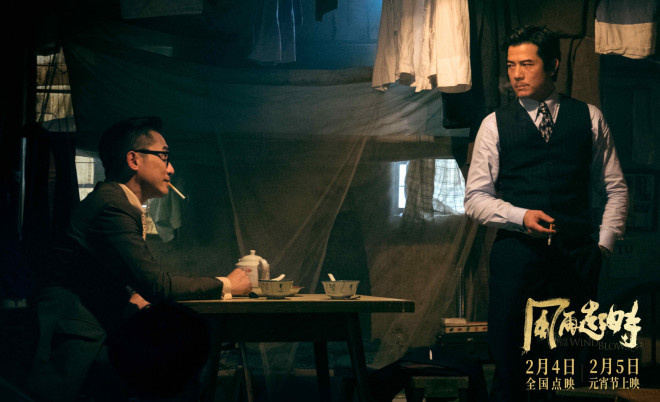
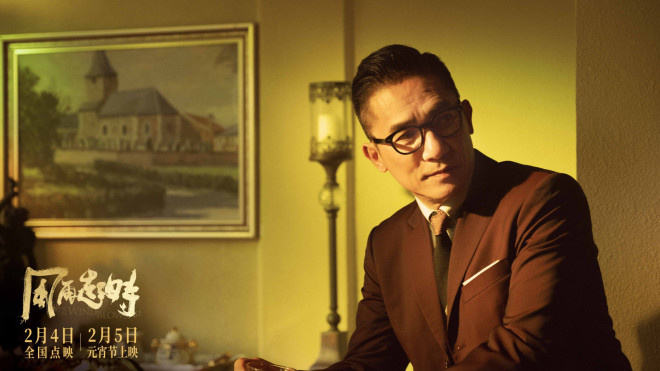
"When the Wind Rises Again" is on pre-sale, Guo Fucheng and Tony Leung are tense

1905 movie network news The film directed and written by the director has been scheduled to be released at the Lantern Festival on February 5, and will be screened nationwide on February 4. A few days ago, the film released a trailer for the "Meeting on a Narrow Road" version, and started pre-sale at the same time. The film is starring, starring, and performing in a special performance.,,,,, and other powerful actors join in to help out. The trailer announces that Zhong Lei Le (played by Guo Fucheng) and Nan Jiang (played by Liang Chaowei) make a dashing appearance. "The brave and the wise" meet on a narrow road, and the legendary story between the two detectives from teaming up to a showdown begins.


Guo Fucheng threw the gun and Liang Chaowei dodged the bullet, and the two detectives "exchanged ruthless words"


In the exposed preview, the sparks from the cigarette butts in the rain at the beginning hinted that the fierce confrontation like water and fire was about to break out. Accompanied by the sentence "This war is an unforgettable disaster in my fate", Lei Le, played by Guo Fucheng, and Nan Jiang, played by Liang Chaowei, staggered. The rhythm of the music also suddenly accelerated, and a legend full of ups and downs kicked off.


This trailer allows the audience to peek into the turbulent era through the perspectives of Lei Le and Nanjiang, the two "legendary detectives". Lei Le, as the leading figure of the four major detectives, has a more complacent attitude in his gestures and expressions; Nanjiang shows his hidden characteristics of sharpness, and his joy and anger are not visible; the trailer also shows the action scenes of hand-to-hand fighting and fierce gunfights in the film. Guo Fucheng and Liang Chaowei also dedicated "famous scenes" of "unrestrained throwing guns" and "dodging bullets" respectively. In the trailer, Lei Le’s sentence "whoever has the ability is big" is domineering! Looking at each other across the table, Nanjiang also choked "The brave one wins when they meet on a narrow road? Wrong, the wise one wins". The lines are intertwined with a sense of tension, and the peak showdown of who can become the winner has become the biggest suspense of the film, waiting for the audience to enter the theater to reveal the answer when it is released nationwide on February 4 and Lantern Festival on February 5.


The whole lineup appeared full of aura, and the top lineup staged a legendary epic together


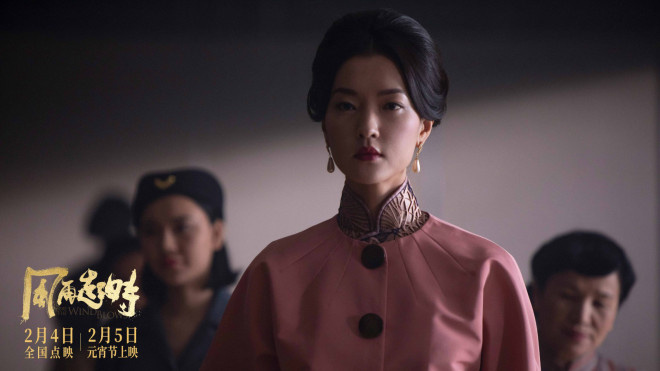
In addition to starring Guo Fucheng and Leung Chaowei, Du Juan, Xu Guanwen, Tan Yaowen, Zhou Wenjian, Jin Yanling and other powerful actors also appeared in the trailer. The lead actor Du Juan plays Cai Zhen, the wife of Lei Le, in the film, and the one side of the trailer is Sa Mei dazzling; Xu Guanwen, who just won the Hong Kong Film Awards Lifetime Achievement Award in 2022, specially starred in Li Zichao, the director of the investigation of the Independent Commission Against Corruption, and it seems that there is no shortage of antagonism between him and the "Four Detectives"; starring Jin Yanling and Weng Ziguang, director and Guo Fucheng, cooperate again, which makes people expect wonderful chemical reactions between them; starring Tan Yaowen and Zhou Wenjian play Yan Hong and Han Sen in the "Four Detectives" respectively, and jointly interpret this legendary story of ups and downs. Many powerful actors joined in, and how their characters would play a role in this epic adaptation of the true history of the two heroes was another highlight of the film.


The movie "When the Wind Rises Again" will be released nationwide at the Lantern Festival on February 5, and will be screened nationwide on February 4. Pre-sale is now fully open!


The General Administration of Market Supervision issued the national supervision and spot check plan for product quality in 2019.

  BEIJING, March 22 (Xinhua) According to the website of the General Administration of Market Supervision, the General Administration of Market Supervision released the national supervision and spot check plan for product quality in 2019, including 43 kinds of daily-use and textiles, 37 kinds of building and decoration materials, 24 kinds of food-related products and other products. A total of 267 kinds.

  The General Administration of Market Supervision will perform its duties according to law, carefully organize and carry out national supervision and spot checks on product quality according to the spot check plan, publicly release the results of national supervision and spot checks on product quality to the public, and deal with violations of product quality according to law. While carrying out national supervision and spot checks as planned, the General Administration of Market Supervision may, according to the actual situation of the work, adjust the contents of the plan as appropriate and organize special supervision and spot checks on unplanned products.

  National supervision and spot check plan for product quality in 2019

  (267 species)

  I. Daily use and textiles (43 kinds)

  1. Children’s articles (5 kinds): restraint system for motor vehicle child occupants, children’s shoes, children’s and infant’s clothes, baby carriages and toys.

  2. Textiles (20 kinds): cashmere sweaters, suits, coats, knitted underwear, casual clothes, bedding, shirts, swimsuits, towels, socks, down clothes, leather clothes, silk quilts, duvets, umbrellas, scarves, sweaters, pajamas, T-shirts, silk clothes and jackets.

  3. Luggage footwear (6 types): backpacks, travel shoes, leather shoes, rain boots, snow boots, travel luggage.

  4. Cultural and sports supplies (12 kinds): sports helmets, roller skates, outdoor fitness equipment, indoor fitness equipment, badminton, table tennis, badminton rackets, table tennis rackets, volleyball, basketball, football and student stationery.

  Second, electronic appliances (51 kinds)

  1. Household appliances (33 kinds): refrigerators, electric ovens and baking utensils, range hoods, household electric washing machines, electromagnetic cookers, electric pressure cookers, indoor heaters, electric kettles, room air conditioners, water storage electric water heaters, tableware disinfection cabinets, electric fans, quick-heating electric water heaters, heat pump water heaters (appliances), automatic rice cookers, electric blankets, massage appliances, fabric steam engines, etc.

  2. Electronic products (13 kinds): power adapters, IC card readers, routers, active speakers, color televisions, printers, uninterruptible power supplies for information technology equipment, microcomputers, projectors, mobile power supplies, driving recorders, audio power amplifiers, and liquid crystal displays.

  3. Lighting sources and lamps (5 types): movable general lamps, LED control devices, fixed general lamps, embedded LED lamps and self-ballasted LED lamps.

  Iii. Light industrial products (28 kinds)

  1. Household paper products (3 kinds): diapers (sheets and pads), tissue paper and toilet paper.

  2. Household gas appliances (4 kinds): household gas quick water heaters, household gas stoves, gas heating water heaters, stainless steel corrugated hoses for gas.

  3. Household products (3 kinds): liquid detergent for clothes, hand sanitizer and household cleaner.

  4. Furniture (8 kinds): children’s furniture, sofas, office chairs, brown fiber elastic mattresses, wooden furniture, spring soft mattresses, household bunk beds and metal furniture.

  5. Glasses products (5 kinds): spectacle lenses, spectacle frames, sunglasses, presbyopia glasses and swimming glasses.

  6. Other light industrial products (5 kinds): electric bicycles, fireworks and firecrackers, bicycles, manual wheelchairs, and simulated ornaments.

  Four, building and decoration materials (37 kinds)

  1. Building materials (15 kinds): hot-rolled ribbed steel bars, cold-rolled ribbed steel bars, hot-rolled round steel bars, building waterproofing materials, building sealants, building exterior wall coatings, extruded polystyrene foam plastics (XPS) for thermal insulation, cement, steel strands for prestressed concrete, geosynthetics, new wall materials (bricks and blocks), rock wool boards, aluminum alloy building profiles, and rigid polyvinyl chloride (PVC-PVC).

  2. Decoration materials (22 kinds): polyethylene (PE) pipes, synthetic resin emulsion interior wall coatings, insulating electrical sleeves for buildings, medium density fiberboard, particleboard, wallpaper, ceramic toilet, ceramic tiles, sanitary ceramics (washbasin), shower heads for bathing, impregnated paper laminated wooden floors, sanitary ware hoses, ceramic sealing taps, aluminum-plastic composite panels, sanitary furniture and non-contact water taps.

  V. Agricultural means of production (9 kinds)

  1. Fertilizer (5 kinds): compound fertilizer, phosphate fertilizer, nitrogen fertilizer, potassium fertilizer and organic fertilizer.

  2. Agricultural machinery (3 kinds): motorized thresher, submersible pump and water pump (ground pump).

  3. Other agricultural means of production (1 species): drip irrigation belt.

  Six, machinery and security products (43 kinds)

  1. Vehicle-related products (15 kinds): engine lubricating oil, automobile tires, motorcycle tires, motorcycle occupant helmets, automobile seat belts, automobile external lighting and light signal devices, automobile interior materials, brake hoses, motor vehicle engine coolant, motor vehicle brake fluid, automobile windshield cleaning fluid, motorcycle brake shoe components and brake lining components, automobile rearview mirrors, automobile splash prevention devices, automobile seats and headrests.

  2. Pumping and drilling equipment (4 kinds): pumping unit, oil pump, sucker rod and its coupling, drilling suspension tools.

  3. Explosion-proof and fire-fighting equipment (6 kinds): explosion-proof electrical appliances, explosion-proof motors, explosion-proof lamps, fire-fighting emergency lamps, fire hoses and combustible gas detectors.

  4. Measuring instruments (6 kinds): electric energy meter, water meter, electronic pricing scale, membrane gas meter, general pressure gauge and measuring transformer.

  5. Labor protection articles (7 kinds): safety helmet, safety net, safety belt, self-priming filter type anti-particle respirator, anti-static clothing, electrically insulating shoes, and shoes for toe safety (protection).

  6. Other mechanical and security products (5 kinds): locks, anti-theft safes (boxes), RMB discriminator, positive displacement air compressor, and dangerous chemicals packaging.

  Seven, electrician and material products (32 kinds)

  1. Low-voltage electrical appliances and electrical accessories (9 types): residual current operated circuit breakers for household and similar purposes, overcurrent protection circuit breakers for household and similar places, plastic case circuit breakers, disconnectors, plugs and sockets for household and similar purposes, switches (wall switches) for household and similar fixed electrical devices, wire assemblies, appliance switches and extension cord sockets (with power adapters).

  2. Power transmission and transformation equipment and products (3 kinds): photovoltaic grid-connected inverters, power transformers and gapless metal oxide lightning arresters with composite jackets.

  3. Motors (4 types): three-phase asynchronous motors, permanent magnet DC motors, permanent magnet synchronous motors and low-power motors.

  4. Batteries (2 types): storage batteries and primary batteries.

  5. Other electrical products (3 kinds): electric tools, arc welding machines, wires and cables.

  6. Metal materials and metal products (4 kinds): copper and copper alloy pipes, titanium and titanium alloy processed products, high-strength fasteners and power fittings.

  7. Rubber products (4 kinds): automobile transmission belts, flame-retardant conveyor belts, rubber sealing products, rubber hoses and hose assemblies.

  8. Other materials (3 kinds): grinding wheels, valves, magnesia-carbon bricks.

  Eight, food related products (24 kinds)

  Composite film bags, non-composite film bags, polyethylene terephthalate (PET) bottles, plastic baby bottles, polycarbonate (PC) drinking water tanks, plastic cups, plastic bottle caps, melamine plastic tableware, plastic disposable tableware, plastic chopping boards, paper and cardboard materials for food packaging, paper cups, paper containers for food contact, glass wine bottles, glass food bottles and cans, glassware in contact with food, stainless steel vacuum.

What is a futures palm?

Brief introduction of futures palm oil

Futures palm oil, as an important variety in agricultural products (000061) futures market, refers to futures contracts with palm oil as the subject matter. Palm oil, derived from the fruit of oil palm tree, is one of the largest vegetable oils in the world, which is widely used in food processing, cooking and biodiesel production. Futures palm oil trading not only provides a risk management tool for related industries, but also is one of the focuses of global investors.

Production and consumption of palm oil

The main producers of palm oil include Malaysia and Indonesia, which together account for more than 85% of the global total output. Palm oil occupies a dominant position in the global vegetable oil market because of its high yield and cost-effectiveness. On the consumption side, China, India and the European Union are the main import areas of palm oil, and the food processing and energy demand in these areas promote the international trade of palm oil.

Trading characteristics of futures palm oil

Futures palm oil is usually traded on major international futures exchanges, such as Chicago Mercantile Exchange (CME) and Malaysian Derivatives Exchange (BMD). Traders can hedge the risk of price fluctuation through futures contracts, or speculate to make profits. The price of futures palm oil is influenced by many factors, including supply and demand, climate change, policy adjustment and global economic situation.

Factors affecting the price of futures palm oil

1. relation between supply and demandThe global production and consumption of palm oil directly affect its futures price. For example, weather conditions in producing countries, changes in planting area and import policies in consuming countries will all have an impact on prices.

2. climate changeOil palm trees are very sensitive to climatic conditions, and extreme weather events such as drought or flood may lead to a decline in production, thus pushing up futures prices.

3. Policy adjustmentChanges in government policies on agricultural subsidies, export taxes and biodiesel will also affect the balance between supply and demand and the price of palm oil.

4. Global economic situationThe growth or recession of the global economy will affect the demand for food and energy, and then affect the price of palm oil.

Investment strategy of futures palm oil

Investors should consider the following strategies when participating in futures palm oil trading:

1. Fundamental AnalysisPay attention to the production and consumption data of palm oil, as well as relevant policies and climate change information to judge the market trend.

2. Technical analysisUse charts and technical indicators to analyze price trends and look for trading signals.

3. risk managementSet the stop loss point and position size reasonably to control the potential loss.

As an important agricultural futures, the price fluctuation of palm oil provides investors with rich trading opportunities. However, because its price is affected by many complicated factors, investors should be cautious when participating in the transaction, fully understand the market dynamics and take appropriate risk management measures.

influencing factor Specific impact relation between supply and demand Directly affects the price, and the price fluctuates greatly when the supply and demand are unbalanced. climate change Extreme weather affects output and pushes up prices. Policy adjustment Changes in government policies affect supply and demand and prices. Global economic situation Economic growth or recession affects demand, which in turn affects prices.
(Editor: Zhang Xiaobo)

The animated character "anti-epidemic" black cat sheriff, gourd doll incarnation retrograde.


1905 movie network news A few days ago, Shanghai Animation Film Studio’s official Weibo released a cartoon, in which the familiar animated images such as Black Cat Sheriff, Shukebeta, and Huluwa all became representatives of various industries to "fight the epidemic", encouraging everyone to unite as one and defeat novel coronavirus at an early date in plain language.


The "big baby" in the gourd baby is infinitely powerful, and its body can become bigger and smaller at any time. In the cartoon, "Dawa" wears a mask, holds up two sealed cartons with one hand, and greets others: "I have great strength, so give me two more boxes!"


The black cat sheriff also wore a mask to communicate with his colleagues, and the pistol in his hand was replaced with a temperature gun to measure his body temperature.


And "one ear", who used to be the villain in the animation, also turned over a new leaf, shouldered the task of transporting materials and contributed to the fight against the epidemic.


Shunk, who flies a plane in Shunk and Beta, is driving a helicopter with a serious expression and is reporting to the ground tower, "carrying medical teams from military hospitals around the country, requesting landing!"


Taiping Heavenly Kingdom-Christian or Heresy: Europeans’ Understanding of God’s Religion

[Editor’s note]2021 is the 170th anniversary of the Taiping Heavenly Kingdom jintian uprising. The Paper Liu Chen, assistant professor of the Department of Private History and Peking University History, invited scholars at home and abroad to write a series of manuscripts to introduce readers to the new direction and achievements of the research on Taishi, hoping to help related research.

Through the efforts of predecessors, a large number of relevant materials have been excavated and published after the Taiping Heavenly Kingdom established Nanjing as its capital. Most of these historical materials are written by Jiangnan literati, and all of them describe Taiping Army as a "thief". Some of them are western-language materials recorded by missionaries after their visit to the Taiping Heavenly Kingdom, which mainly describes the activities of the Taiping Heavenly Kingdom after its March to Shanghai in the 1960s. This period has been the decline of the Taiping Heavenly Kingdom, and the discipline of the soldiers was lax. Most of the data described the Taiping Heavenly Kingdom, which was very different from that before the Tianjing Incident.

The materials introduced in this paper have never been noticeable in the past. In the 1950s, Europeans introduced and commented on the materials of the Taiping Heavenly Kingdom, which are currently collected by George Fornest Morrison; in oriental library, Japan. 1862-1920) library. These new historical materials mainly show the religious orientation of the Taiping Heavenly Kingdom, but also some scenes describing people’s life under the rule of the Taiping Heavenly Kingdom, especially some portraits worthy of attention.

Revolution in China: Causes of Revolution.

The first book to be introduced is The Chinese Revolution: The Causes Which Led to It. There is a portrait on the cover of the book, with the cross as a weapon (Figure 1), which reflects the expectations of Europeans for the Taiping Heavenly Kingdom at that time, hoping that it would be a Christian movement to civilize China. The book is strongly impressed by two illustrations, Rejoicing at Nanking after the Siege (Figures 2 and 3).
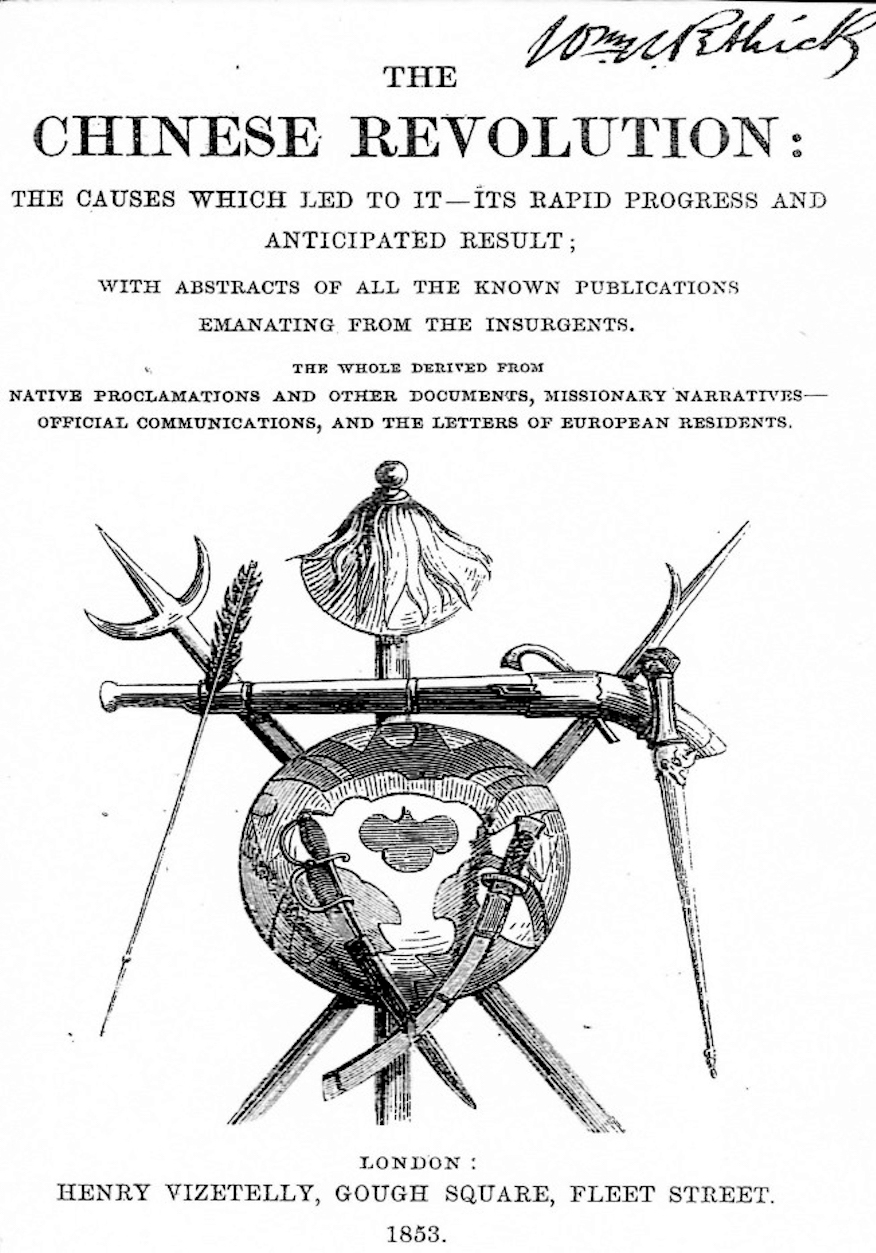
Figure 1 The cover of "Revolution in China: Causes of Revolution"
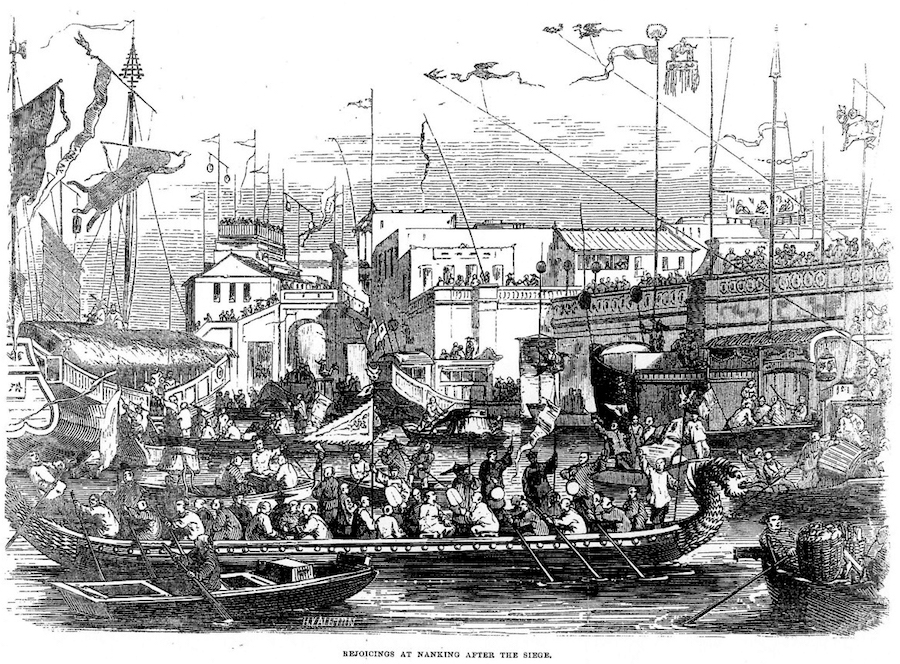
Fig. 2 One of Celebrating the Occupation of Nanking is contained in the anonymous Revolution in China: Causes of the Revolution.
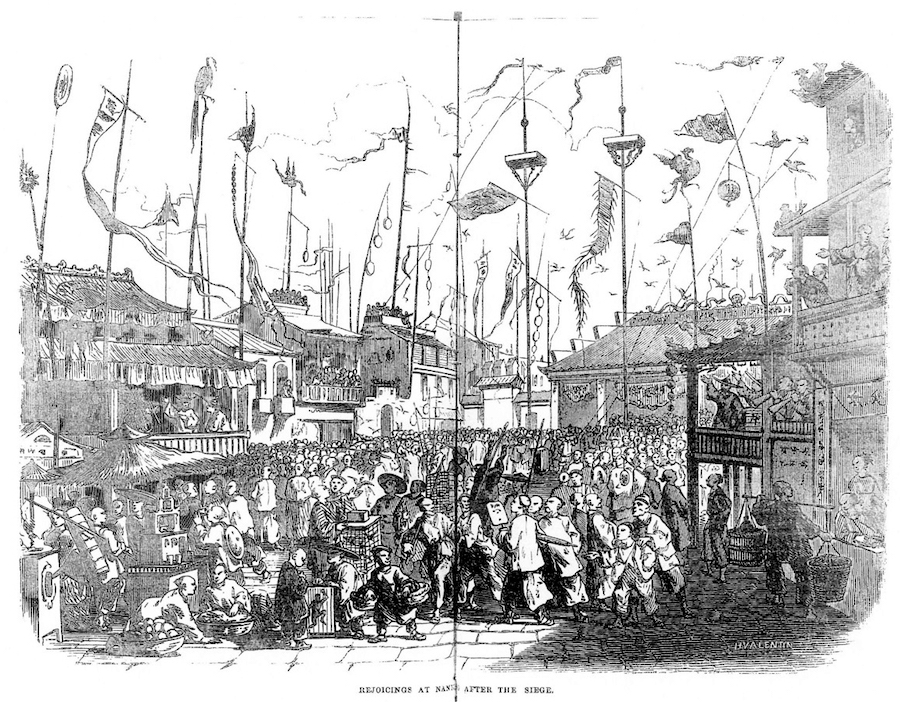
Fig. 3 Celebrating the Occupation of Nanking (Part II) is published in the anonymous Revolution in China: Causes of the Revolution.

The author of the book is unknown. From the preface, it can be seen that the author has not visited Nanjing. However, in the fifth chapter "Going to Nanjing", there is a detailed description of Nanjing by the British minister S.G.Bonham. It can be inferred that the author described the vibrant appearance of Nanjing at that time according to the minister’s report.

This book is notable for meeting with T.T.Meadows in Nanjing with Lieutenant Sprat, the British captain in Wei Changhui, the northern king. He described that the Taiping Army had a strong sense of mission, the Qing army was incompetent, the Taiping Army was supported by the people, and was keen to break the existing social order, especially the idolatry. Now he described it as follows:

They believe they have a mission from heaven to kill all the Mantchoos, and they certainly put this in execution as far as they can; and, without attempting to justify this practice, I believe that nothing short of driving the Tartars out of the country can make civilization progressive in China……

Confidence was said to be on the increase among the old population, and they were gradually returning to their homes, and I fully believe this to be the case, as we saw many carrying furniture and clothes, etc., into the city. We observed, also, that the houses of the better classes of Chinese were sealed up by the insurgent chiefs, I fancy to prevent their being plundered; not so those of the Mantchoos, which they evidently consider fair game─the disgorgement of unjust gain and plunder from them for other Chinese. Their clear principle is, China for Chinese.(p.127)

From this, it can be seen that the generals of the Taiping Heavenly Kingdom believe that it is a mission entrusted by God to destroy all Manchus. Although they didn’t use theory to justify this behavior, Sprat also thought that the Qing Dynasty should be expelled for the sake of China’s "civilization progress". In addition, the description that they saw that Nanjing’s population was gradually recovering and people were moving their belongings and clothes to the city gave a clear message that this was "China of Chinese", and it was unreasonable to blame those rich people whose mansions were occupied by the leaders of Taiping Army and their property was confiscated.

Secondly, Sprat pointed out that people in the Taiping Heavenly Kingdom have strict ethical norms, they try to separate men and women, and their courts are open to litigants, which is different from the practice of torture in the yamen of the Qing government. People call Taiping Army "Holy Army", Nanjing "Holy Capital" and "Brothers" to each other. Sprat also made the following comments on the incident of killing the flag bearer when the Taiping Heavenly Kingdom occupied Nanjing:

It is horrible to think that they cut off 20,000 Mantchoos, even to the infant at breast, but they seem hostile only to them; but it is still more horrible to think that the Mantchoos, in two of the many provinces, cut off as many in the name of justice within the year(we know of 2,000 in six weeks); and this in the name of justice! The former is the exception, the latter is the rule. It may prove the least sanguinary practice in the end. Like Cromwell’s severity at Drogheda, it has struck terror into their opponents; the Mantchoos are chapfallen and almost afraid to approach them; they say that six of them would beat any twenty imperialists; They talk of their strength, when we know a multitude of them are but boys, and or their red eyes, etc.

If they succeed,─and I fancy they will, and soon─they will deliver three hundred millions from the grossest of immoralities, the most grovelling of idolatries, and the most grinding of tyrannies. China will be opened to light, life and civilization, all which will be thrown with all their influences and importance into the Anglo-Saxon scale.(pp.128)

Sprat was really horrified at the massacre of more than 20,000 banners, including children, by the Taiping Army, but the targets of the massacre by the Taiping Army were limited to hostile people. He believes that the Taiping Army’s practices are different from those of the Qing Dynasty in the name of justice during this year. The massacre of Taiping Army was a case. On the contrary, the Qing Dynasty regarded the massacre as a means of rule, which was even more terrible. This is quite different from the view of E.G Fishbourne, who visited Nanjing at the same time. Fei did not believe that such an incident had happened, but Sprat’s view was actually relatively calm. Sprat also pointed out that after the Nanjing incident, the Manchu people were depressed and did not dare to confront the Taiping Army. On the contrary, even children in the Taiping Heavenly Kingdom were not afraid of the Qing Army at all. According to these facts, Sprat thinks that if the Taiping Heavenly Kingdom succeeds, 300 million people in China may be liberated from immoral, idolatrous and autocratic rule, and a civilization like that of Europeans will emerge, so he is full of expectations.

Wen Han, the British minister, and his party went to Zhenjiang after their visit to Nanjing, met with Luo Outline, exchanged some views, and discussed the prospect of Britain’s cooperation with or war with the Taiping Heavenly Kingdom in the future. This part of the content is basically the same as that described in Fei Shenbang’s book Impression of China. At that time, English historical materials often quoted each other, but from the time of publication, the content of this book can be considered to be relatively primitive. Chapters 5 and 9 of this book and The Doctrines of the Insurgents introduce the documents of the Taiping Heavenly Kingdom, Medhurst’s comments and the pastor’s letters published in the North China News, and also introduce Yang Xiuqing’s essays included in the Issuing Letters, recounting Yang Xiuqing’s proposition of expelling Manchus who were idolatrous and worshiping God.

From the foregoing curious documents, we are justified in inferring that there is evidently a tingle of fanaticism and of imposture in the religious cry raised by the insurgents, for, while they profess to venerate the religion of Jesus Christ, they do not scruple to style their own leader the younger brother of our load, who, they say, came down from heaven for the instruction of mankind in the Ting-yew year(1837), so that, although the foundation of their faith may be Christian, there is nothing to show that the superstructure is not as extravagant a superstition as Mormonism itself; and, as in the course of this narrative we have too frequently seen, they proselytize by massacre as much as by faith. Their belief in a special mission to destroy the Mantchoos—man, woman, and child , so that there may not be left a sprout for the race to reproduce itself—must certainly prove a bar to our perfect sympathy with them; and we are not surprised at the assiduity with which the English are recommending to their notice the New Testament in preference to the Old.(pp.166)

From this, the author believes that there are pains of fanaticism and fraud in the religious cry of the Taiping Heavenly Kingdom. Its foundation is Christianity. Although they are not as superstitious as Mormonism (a Christian sect that appeared in the United States in the 19th century), they use faith and cruelty to force others to convert. The Taiping Heavenly Kingdom took the mission of eliminating Manchu, and this belief became a stumbling block for Europeans to sympathize with them. It is understandable that the British advised them to attach importance to the New Testament and not to believe in the Old Testament. In other paragraphs, the book also compares the strong aggressiveness in the teachings of the Taiping Heavenly Kingdom with Islam and Mormons, and has doubts about the Taiping Heavenly Kingdom’s revenge on the flag bearer, polygamy (the lust of the leaders) and the desire for sovereignty.

Chapter 10 of this book "On the Political and Commercial Aspects of Revolution" predicts that after the continuous development of the Taiping Heavenly Kingdom, the demand for merchants to carry gold conveniently will continue to increase. Legalization of opium trade in Qing Dynasty will bring great influence to India and Britain (East India Company). It also pointed out that, unlike the progress of the revolution, the export volume of tea and inland commodities will decrease. In Chapter 11, "The Present Situation and Future of Guangdong and Beijing", the author has seen that under martial law, due to the influence of secret societies, Guangdong residents will appear anti-Qing movements. Rich people will take their property out to take refuge, Guangdong will be easily occupied, and once Beijing falls, Guangdong people will support the Taiping Heavenly Kingdom.

What is more interesting is the author’s account of Beijing. Unable to support the huge military expenditure, many banks have closed down one after another, and the price of rice has soared, which has dealt a great blow to the poor. Beijing’s grain has always relied on the transportation of the Grand Canal, and recently some maritime transportation has been opened. However, since the fall of Nanking, the Grand Canal can’t be transported, so we have stepped up planning to transport rice from Taiwan Province. However, it is doubtful how effective it is. The Qing government, which was in financial difficulties, confiscated the property of the defeated imperial envoys Sai Shang ‘a and Xu Guang ‘an, and executed some military generals. This was in fact a government suicide. Lu Jianying’s family, who was killed by the Taiping Army in Nanjing, was also severely punished, and the donation of rich nobles such as Mu Zhang ‘a and Jie Ying also aroused social resentment. It can be seen that Europeans at that time collected various information and paid attention to the success of the Taiping Heavenly Kingdom and its impact on the economy.

Revolution in China: Habits, Manners and Customs of China and Chinese.

The book to be introduced below is The Chinese Revolution, With Details of the Habits, Manners, and Customs of China and the Chinese, written by Charles Macfarlane. The author is famous all over the world with two books: Japan and the Life of Wellington. The main body of this book is divided into three chapters, which describes the process from the Qing Dynasty’s entry into the customs to the Taiping Heavenly Kingdom’s occupation of Nanjing. The appendix contains 10 kinds of historical materials related to the Taiping Heavenly Kingdom. What is striking is the relevant historical materials in Appendix 3, Religious belief, which lists seven categories of "Good points" and "errors" of God’s teaching.

In terms of "advantages", the first is their Belief in the One True God. The author points out that the teaching of God comes from the Old Testament Bible and the classics of China. According to the Taiping Heavenly Kingdom, ancient Chinese worshipped the true God. Before the birth of Christianity, Qin Shihuang began idolatry and gave up his belief in God. This statement is regarded as an example of China’s Origin of Western Learning, which holds that European ideas and cultures originated from Chinese civilization. However, the author did not criticize this argument as absurd, but evaluated it as their loyalty to the one true god. The second is "Adoption of the Decalogue of Moses". Regarding the fact that idolatry was strictly prohibited in the Taiping Heavenly Kingdom, he took the fifth rule "Be filial to parents" praised by most non-Christians as a teaching instruction, and compared with the indifferent attitude of the world not worshiping God, the father and the emperor, better explained the necessity of worshiping God. In addition, he also specifically described the fact that the Taiping Heavenly Kingdom prohibited adultery. On the seventh day, he advocated "it is not good to commit adultery" and "it is a crime to blow foreign cigarettes and sing evil songs". The third is the evaluation of their "Recognition of the Future State", thinking that they hold the concepts of heaven and hell.

Commentators list the "mistakes" of the Taiping Heavenly Kingdom: First, their understanding of Christian truth is incomplete. Second, they deny the "trinity" theory. As we all know, Hong Xiuquan later argued with missionaries about the "Trinity" theory. However, due to the lack of documents collected by Europeans at that time, even though the Taiping Heavenly Kingdom ignored the teaching of the New Testament, critics took a cautious attitude towards the criticism of the Taiping Heavenly Kingdom. In addition, the third and fourth "mistakes" of the Taiping Heavenly Kingdom were "Polygamy". Their comments are as follows:

I can not condemn them on account of these things so immediately and strongly as many do. Their obtaining among them, illustrates and confirms the view that they have not got the New Testament Scriptures, nor learned much from European or American missionaries. It is, believing this, that I cannot think very unfavourably or unhopefully of them, because of their offerings and their many wives. Should it turn out that they do those things, having the whole revealed will of God before them, and having had it enforced upon them in those very points by instructors, my opinion of them in those will be greatly modified. But at present, while from other grounds I infer their ignorance of our Christian records, there does not appear to me anything very culpable in the practices we are considering.(p.216)

It can be seen that the practice of polygamy by the leaders of the Taiping Heavenly Kingdom is the result of their failure to study the New Testament and the teachings of European and American missionaries. However, critics did not accuse the Taiping Heavenly Kingdom of polygamy or look at it with disappointment, but held a sympathetic mood. He thinks that since this is also the will of God, now they ignore the values of European Christianity, which has not caused much disappointment. As long as they improve their ethics, they will give up polygamy. Therefore, he thinks it is necessary to educate them fully and let them know the story about Adam and Eve in the second chapter of Genesis.

Polygamy of the leaders of the Taiping Heavenly Kingdom later became an important argument for European and American missionaries to accuse them of heresy, especially the fact that Hong Rengan, who lived in Hong Kong, had multiple wives was strongly criticized. Sprat also talked about this problem in his letter, saying that the Taiping King had 36 wives, but the general Taiping Army could not do so. They believe that this is the result of the lack of knowledge of the leaders of the Taiping Heavenly Kingdom. They only know the Old Testament and don’t know the New Testament. From this, it can be seen that for Europeans, polygamy has become their concern since they first came into contact with the Taiping Heavenly Kingdom.

Charles Macfarlane’s works also include important historical materials of missionaries’ understanding of the Taiping Heavenly Kingdom. One of them is a letter from J. Smith, bishop of the Victoria)J. Smith Hong Kong. His religious comments on the Taiping Heavenly Kingdom have many versions, similar to Mormons and Puritans, but their true image is unknown. In the information collected by Wen Han and his party, the religion of Taiping Heavenly Kingdom is a mixture of Christianity, superstition and China’s unique ideas, but the Bible translated by K. Karl Gützlaff can be seen everywhere in their tents. They are uncompromising iconoclasts and seem to have no communication with Catholicism. In addition, they call foreigners "foreign brothers" and have a friendly attitude. Except opium, they all intend to do business with foreigners. Wen Han and others predicted that the Taiping Heavenly Kingdom only took Nanjing as its temporary capital, and in the near future, they would attack Beijing.

According to this information, Smith made a positive evaluation, and thought that the Taiping rebels’ honesty to religion and patriotism of citizens could be seen from the leaders of the Taiping Heavenly Kingdom. Now China is facing great social changes, and the British Church should send outstanding talents from its own country to China to improve the level of Christianization in China. He also warned that Britain, as an empire with colonies, would eventually fall from the glorious throne if it failed to accomplish these missions and only pursued its own prosperity and wealth.

Regarding Smith’s evaluation of the Taiping Heavenly Kingdom, A.F. Lindley mentioned it in the History of the Taiping Heavenly Kingdom Revolution. However, the article "The Religion Character of Insurances" sent to the editor of China Mail by the missionaries in Guangdong at that time was quoted by the priest.

The Characteristics of Rebel Religion introduces in detail how Hong Xiuquan studied in Luo Xiaoquan after reading Good Advice to the World, and talks about the testimony of Hong Rengan after he fled to Hong Kong in 1852. Characteristics of Rebel Religion is similar to Luo Xiaoquan’s The Truth of Hong Xiuquan’s Revolution, but the author is not Luo Xiaoquan. The Characteristics of Rebel Religion also describes the rumor that Hong Rengan met T. Hamberg. However, the author is not Han Shanwen, but probably A.P.Happer who has done missionary, medical and educational work in Guangzhou.

The characteristic of the article "The Characteristics of Rebel Religion" is that although it talks about the persecution and suffering of worshipping God, it denies the armed uprising of the Taiping Heavenly Kingdom. The article holds that none of the Taiping Heavenly Kingdom’s doctrines and actions can satisfy people. What they did with the help of "the miracle hand of God" was a naked killing behavior full of hatred and fanaticism. Under the influence of the Old Testament, they destroyed idols and killed Buddhist monks, which was not so much what Jesus did as what Berial, the demon king of hell, did. The article also revealed the following killings initiated by the Taiping Heavenly Kingdom:

What has marked the whole course of this desolating scourge but plunder and exaction, bloodshed and murder─in many cases the most wanton and brutal murder of the peaceful and unresisting people, as well as of the officers and Tartars. The ears of the Canton people yet tingle at the mention of the wholesale and indiscriminate massacre of men, women, and children, at Tsiuen-chau city, in the north east corner of Kwang-si province. The number massacred at the capture of the three cities of Wu-chang, Han-yang, and Han-kau, will never be accurately known. Some letters state, that they themselves spoke, with the greatest coldness of feeling, of having massacred twenty-five thousand persons at the capture of Nankin.(p.132)

The author has mentioned in other papers that the massacre launched by the Taiping Heavenly Kingdom in Quanzhou, Guangxi in June 1852 described here is not a fact, but a fictional plot by people who were shocked by the uncompromising fighting image of the Taiping Army. However, from the historical data, we can know that this information has a great impact on people, and it has spread to all parts of Guangdong together with the news that the number of dead people in three towns in Wuhan is unknown and the number of dead people in Nanjing is as high as 25,000. The article holds that although the Bible forbids idolatry, it does not command them to destroy idols and temples by violent means, nor does it command them to kill monks and banners. The article also argues that missionaries in Shanghai should teach them well, and Christianity does not allow people to use weapons to resist persecution.

Charles Macfarlane pointed out that the two missionaries’ comments were too extreme, and in The Characteristics of Rebel Religion, they also agreed that the Taiping Heavenly Kingdom had a belief in the existence beyond the world. Confucianism has no feelings of faith, and people who converted to Buddhism can only worship idols if they are not satisfied in that cold philosophy. He thought that China needed a new religion at that time, and the Taiping Heavenly Kingdom was a movement initiated by people suffering from the cruel rule of the empire. Charles Macfarlane expressed the following views on the right and wrong of the Taiping Heavenly Kingdom using violent means:

As to the deduction of“conservative,”that these people cannot be Chriatians of any kind, because they wage war and shed blood, it is to be observed that Christianity never yet, immediately and on its first introduction, changed the whole character of a people. The English, the French, the Germans, the Spanish, the Italians, all engaged in wars after their conversion, and continued to carry on wars with ferocity and cruelty mane ages after Christianity had been preached to them, and their countries covered with Christian churches. One of the very first results of the Reformation was a long and bloody war, in which it can scarcely be said that the Protestants were much more gentle or merciful than the Romanist. The true Christian spirits was developed in Europe by very slow degrees; and how far we are, even at this days, from possessing it in fullness and purity, the last Annual Register , or the last newspapers, the records of a single week, or a glance at the actual condition of Europe(where the flames of war may be rekindled tomorrow), will give us sufficient proof and conviction.

We confess that we cling to the belief or hope that, however imperfectly, some seeds of the pure faith have been sown in China, and that great and happy results may be anticipated therefrom. At least this is clear, ─the Chinese have had awakening. Better almost anything than the dead sleep in which they have been lying for so many ages. Their condition, their vices, their government, their irreligion, were all so bad, that almost any change must be for the better. The empire was as a gangrened, putrefying corpse. There is at least life in this insurrectional movement. (p.137)

The above points out that there have been many wars and violence in Europe after accepting Christianity, and the result of religious reform is also a long-term bloody war. We can’t say whether Christianity is more gentlemanly or compassionate than Catholicism. Even the true Christian spirit developed in a very slow process in Europe. What is certain now is that Christianity spread in China, even though it is not complete, has already sown the seeds, and contacted China, who was awakening at that time.

Charles Macfarlane, after discovering the offensive intolerance in the religions of the Taiping Heavenly Kingdom, did not regard them as heresies, but made an internal reflection on the Christian society in Europe and made a positive evaluation of the Taiping Heavenly Kingdom. This argument is a missing part in past studies. In order to criticize Britain’s policy towards China, and in order to justify the "Taiping Christianity" advocated by Jane Eyre, there was a tendency to simplify the nature of God’s religion, and then the tendency of Europeans to regard the Taiping Heavenly Kingdom as a heresy began to strengthen. However, in July, 1860, a commentary was published in the North China News, pointing out that the Christian history in Europe is also bloody, because the Taiping Army, like the orthodox Christians in Europe in the past, carried out excessive idol destruction, and it was wrong to criticize the Taiping Heavenly Kingdom as a heresy. The exclusiveness of the Taiping Heavenly Kingdom, which was manifested in the massacre of flag-bearers, was the product of Jewish and Christian thoughts spread from modern Europe to the whole world together with evangelical enthusiasm. It can be said that the Taiping Heavenly Kingdom has prompted Europeans to reflect on this situation.

The Life of King Taiping-Rebel Leader in China, etc.

Next, I will introduce the book Life of Tai-Ping-Wang (Chief of the Chinese Insurrection) by J. Milton Mackie. The book was published later in 1857. Based on the information of Taiping Heavenly Kingdom introduced in magazines and books, it describes Hong Xiuquan’s career from childhood to Nanjing occupation in 47 chapters. In the 43rd chapter "The insurgent Creed", which recorded the religious thoughts of the Taiping Heavenly Kingdom, the idea of God teaching was summarized in a short sentence, that is, "There is only one God, and the Taiping King is the brother of Jesus (There is no God but God; and Tai-ping-Wang is the younger brother of Jesus.)”。 In addition, there are several interesting illustrations in the book, depicting Hong Xiuquan’s dream in 1837, the uprising of the God-worshipping army, the battle with the Qing army, and the offensive and defensive warfare near Hoonji, Nanjing (Figure 4-6). The God in white and the Taiping Army reminiscent of the Crusaders can be said to be the image of the Taiping Heavenly Kingdom held by Europeans.
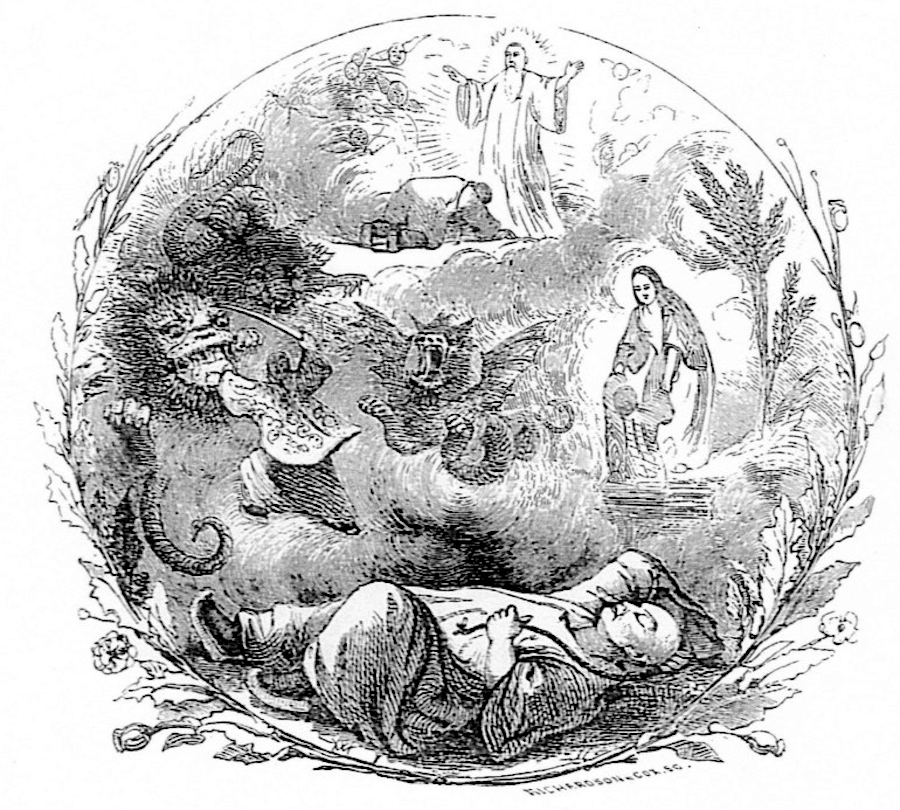
Fig. 4 Hong Xiuquan’s dream, contained in J. Milton Mackie’s The Life of King Taiping-Rebel Leader in China.
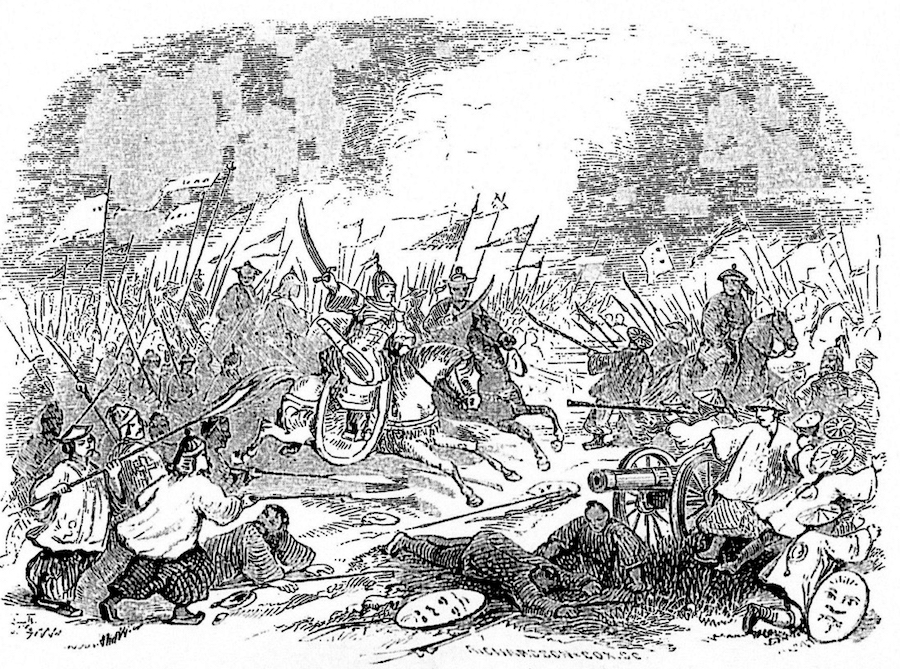
Fig. 5 Taiping Army defeated Qing Army, in J. Milton Mackie’s Life of Taiping King-Rebel Leader in China.
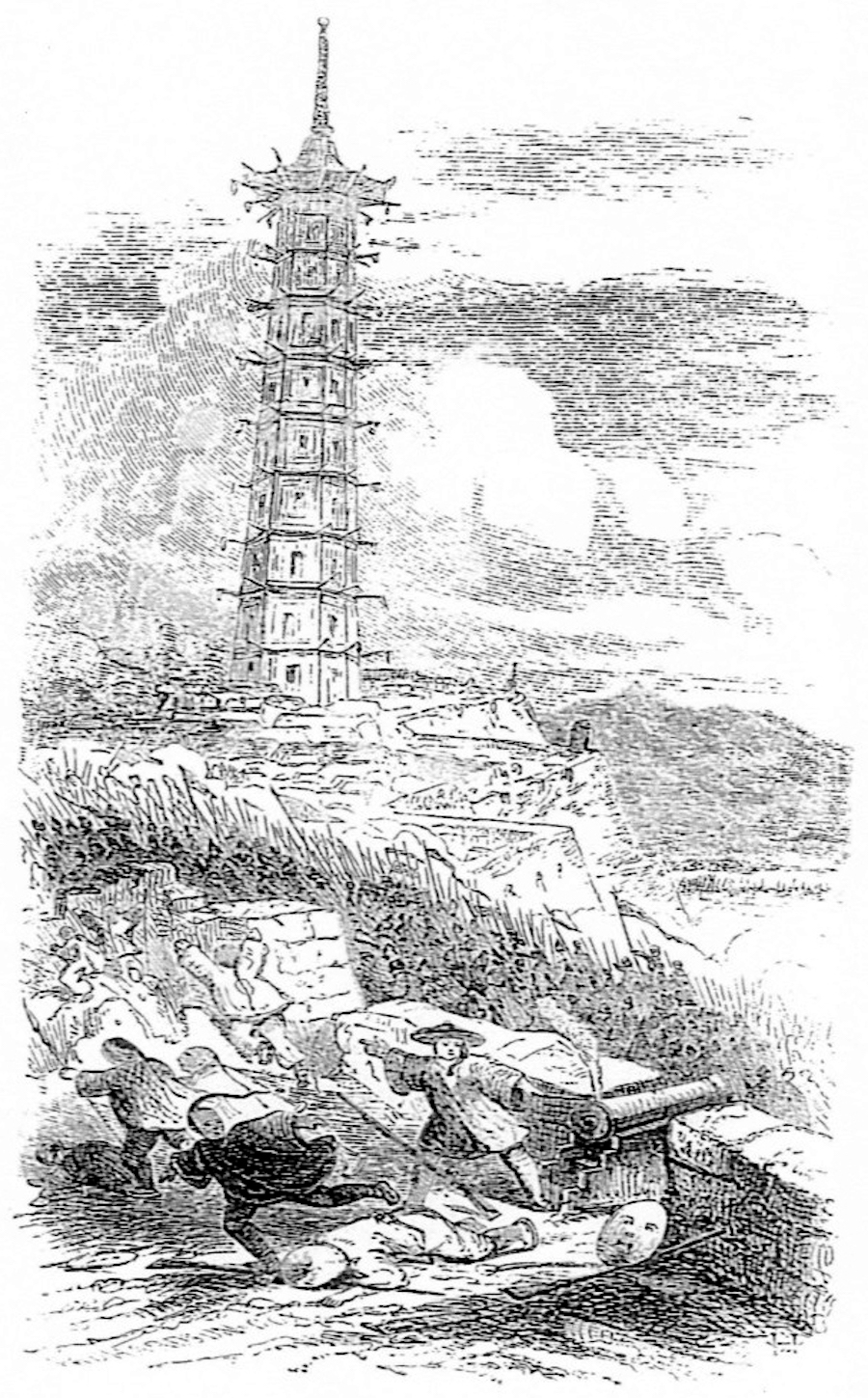
Fig. 6 Taiping Army captured Nanjing, in J. Milton Mackie’s Life of Taiping King-Rebel Leader in China.

Several letters from missionaries are also included in this book. For example, Tian Jiabi, a Catholic bishop, recorded in his letter that people in Jiangxi were expecting the arrival of the Taiping Army in 1852, and Luo Xiaoquan, who received a letter from Hong Xiuquan in 1853, sent a letter to the American Commissioner in China, Mashali, asking about the possibility of missionary work in the areas occupied by the Taiping Heavenly Kingdom. There is also a historical material that was not paid attention to before, which is a letter from Mgr. Rizzolati, Bishop of Huguang Region of Catholicism, to the Central Council in Lyon and Paris, France in August 1853:

They(the insurgent kings)have placed all the resources in a common treasury, and reorganized society on a new plan, that is, in groups of a certain number of persons of both sexes, who are prohibited from cohabiting together, under the most severe penalties. This rule is to be observed until the whole China shall have been conquered. All honorary titles are abolished, except those of officers in the army. The men are to adopt the appellation of brothers, and the women that of sisters. Each family has two chiefs; a man for government of the male members, and a woman for the females; and over all these individual dignitaries a hierarchy is established, comprising general presidents of both sexes. All these confraternities live in common, at the expense of the public treasury; and all of them are bound to perform military service, the men under the command of a male leader, and the women under that of the female; for there are captains of both sexes. After the conquest of the empire, the families, whose military services may no longer be deemed necessary, are to return to their cities, where there is to be no distinction of rich and poor, but perfect equality. However, according to the laws of their communism, the king, the princes, and generals are to have the exclusive right of possession and acquisition, and the subalterns are to remain in the service of their chiefs, and to receive, in reward for these services, such food and clothing as the generosity of their masters may induce them to bestow.(Note C, p.280)

The letter introduced the sacred storehouse system implemented by the Taiping Heavenly Kingdom in Yong ‘an Prefecture, Wuchang and Nanjing, and described the situation of dissolving families, managing separate camps for men and women, denying the gap between the rich and the poor, and implementing "perfect equality" before the Qing Dynasty was completely overthrown. In addition, it is mentioned that kings and generals can get privileges according to the laws they have made, and people serving in their palaces can get clothes and food there. G. J. Wolseley, a British general who visited Nanjing in 1861, also said that "people serve under the flag of their masters, who provide them with daily food, clothes and all daily necessities". Therefore, it can be seen that the ability of the king can be inferred from the degree of support of each palace for its subordinate personnel.

There is also a book "Christianity in China-its missionary history and present rebellion" (The Christianity in China, the history of Christian Missions, and of the present insurrection) in oriental library, and its title page contains portraits of Emperor Xianfeng and Hong Xiuquan (Figure 7). Chapter 12, "The Origin of the Rebellion in China and the Victory and Development of Christianity", introduces the process of the Taiping Heavenly Kingdom at great length. In addition, although there are not many descriptions of the Taiping Heavenly Kingdom in "China Mission, Embracing a History of the Various Missions of All Denominations About the Chinese", there are many biographies of missionaries related to the Taiping Heavenly Kingdom, but Luo Xiaoquan’s biography can’t be found. It is conceivable that Luo Xiaoquan was not highly praised by the missionary groups at that time.
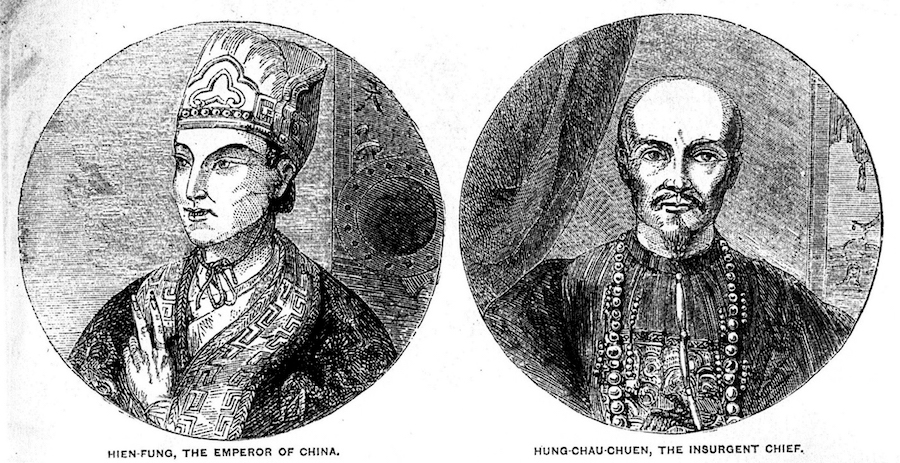
Figure 7: Emperor Xianfeng and Hong Xiuquan, contained in Christianity in China-The History of its Missionary and the Rebellion Now.

conclusion

Based on the English historical materials related to the Taiping Heavenly Kingdom in Nanjing, the capital of oriental library, this paper discusses the understanding of God in Europe. When most of them heard the news that the Taiping Heavenly Kingdom built Nanjing as its capital, they all looked forward to the opportunity for China to become a Christian country. At the same time, they also have many doubts about the Taiping Heavenly Kingdom’s tendency to attach importance to the Old Testament, the slaughter of the flag bearer, polygamy which deviates from European customs and so on.

In fact, the Taiping Heavenly Kingdom attached importance to the Old Testament, which was a direct result of the influence of missionaries in China at that time. As a Hakka, Hong Xiuquan is often treated unfairly because of his status, and naturally he will be strongly attracted by the contents of the Old Testament holy books of Jews who have scattered around the country because of the loss of their motherland. Retaliatory violence caused by the theory of relief of the oppressed people promoted the massacre of flag-bearer idolaters by the Taiping Heavenly Kingdom, and many missionaries who knew about this situation opposed the violent revolution. In addition, among those who have sympathy for the Taiping Heavenly Kingdom, they think that the history of Christianity in Europe is also accompanied by war and violence. Just because the Taiping Heavenly Kingdom is aggressive for the sake of justice for the weak, they cannot be defined as "heresies".

Christopher Lloyd’s What on Earth Happened? In The Complete Story of the Planet, Life and People from the Big Bang to the Present Day, China civilization, as a rare and strong civilization in history, has been highly appraised to this day. But on the other hand, he thought that the Taiping Heavenly Kingdom was "the worst military dispute in human history", and the victims of this war exceeded 20 million. One of the reasons for such a great sacrifice is obviously the relief thought of Jewish-Christian Millennium Kingdom accepted by Taiping Heavenly Kingdom. In the past, such cruel reality was over-beautified, or some people labeled the religion of the Taiping Heavenly Kingdom as a cult, thus exonerating the Jewish relief thought.